Our Mission

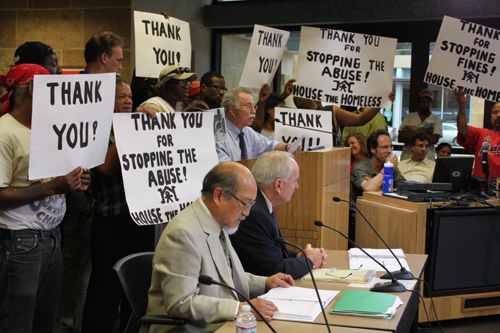
Founded in 1989, HtH is the oldest all volunteer, action, homeless organization in the state of Texas. The mission is Education and Advocacy around the issues of ending and preventing homelessness.

Urgent Issues

Re-Criminalizing Homelessness — Speak up now!

HtH supports the direction being taken by the City of Austin’s relatively new Homeless Strategy Office, led by a very committed and responsive David Gray, and with the commitment of Charles Loosen and other staff. We further strongly advocate ALL positions below that preceded The vote to basically criminalize homelessness — especially:

reinstating a camping ban must consider that those with disabilities, the aged, and in fact anyone with no place to go. The no sit/no lie ordinance is absolutely inhumane and unconscionable we must have at least 15 minute respites particularly for those with disabilities and make other provisions.

Mayor Kirk Watson, elected in 2023, is working to secure funding for homeless services from the State and within the City Budget.

2025 interests:

City Council approved a resolution making homelessness a top financial priority.

Increase the capacity of the Homeless Strategy Office to address and implement a comprehensive approach to strategic advancements in homelessness response. (Plan detailed in a 50-page memo from David Gray, June 2025).

Examples:

1. Expand HOST (Homeless Outreach Street Team) support including team members:

APD officers, EMS paramedics, behavioral health clinicians, social workers, peer support staff.

2. Support for Marshaling Yard operations.

3. Rapid Response housing and safe housing, especially for families.

4. Increase shelter beds with support; and more.


The Austin city council recently voted to put on its May 2021 ballot a vote to reinstate the no camping ban including the no sit/no lie ordinances. Now is the time to contact your mayor and council members particularly those who have supported decriminalizing homelessness, such as Mayor Adler, Kathy Tovo, Ann Kitchen, Greg Casar, Sabino Renteria, and others, we pray.

First call to action is cold weather shelter. Anyone that reads this, our urgent plea is to email our mayor and city council in this urgent time of cold weather. House the Homeless is encouraging to use the Convention Center or other alternatives sites that are already over burdened due to Covid-19 or at capacity.

A second call to action is to not displace unsheltered neighbors from bridges and the four major camp areas without having an immediate plan for alternative shelter/housing.

Finally, advise your mayor and council members that the wording for the May ballot regarding reinstating a camping ban must consider that those with disabilities, the aged, and in fact anyone with no place to go. The no sit/no lie ordinance is absolutely inhumane and unconscionable we must have at least 15 minute respites particularly for those with disabilities and make other provisions.

Federal Minimum Wage Debate

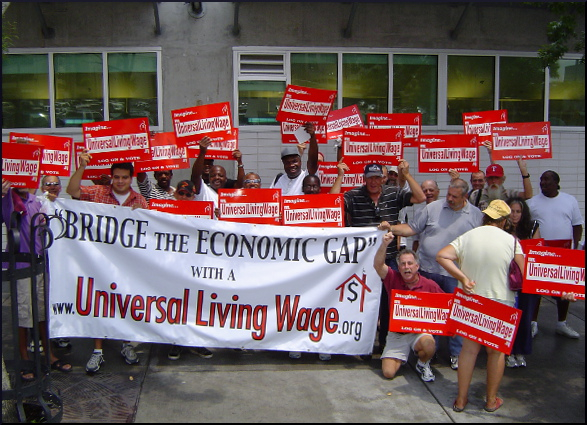
Federal resolve is insufficient; highly recommend Universal Living Wage formula indexed on the cost of housing wherever the person lives and works. 

Economic Homelessness in New York: One Man’s Story

The recession that has so far wiped out 15 million American jobs is still going on. It has given birth to a whole new huge category of citizens, the economic homeless. The concept of the working poor has been around a long time, but now we’ve got the working poor who, despite the fact that they are employed at least part of the time, still can’t afford living quarters — they are the economic homeless.

New York City is in pretty bad shape, with something like 50,000 people experiencing homelessness. Samm Gustin, Senior Writer at DailyFinance, chronicled the life of one of those people. Gustin, who has written for Wired, the Village Voice, and numerous other publications, met nearly a year ago with one of the working poor, Candido Gonzalez, and wrote a piece about him. Only last week, it was followed up by a look at how the subject of the story is doing now.

Gonzalez had worked for the city for nearly 20 years, and was Community Coordinator for the recycling bureau at the Department of Sanitation. That all ended in October of 2007, when he was laid off, a fate shared by tens of thousands of municipal workers nationwide. Despite 19 years of a fine work history, his classification as a provisional employee denied him the greater degree of job security enjoyed by titled civil service workers.

Unable to keep up with the rent, Gonzalez had to give up his Bronx studio apartment, and went through the inevitable period of couch-surfing, but was unwilling to add to the burdens of relatives for very long. Eventually, with his savings gone and still no job, Gonzalez wound up at the Bowery Mission, which swapped a living space for a job as intake coordinator. This institution, one of the oldest of its kind in the country, dishes out 1,000 meals a day and serves the homeless by providing 82 beds.

Gustin wrote of Gonzalez at the time,

Bright, articulate and hard-working, Gonzalez was given a job at the front desk (hence the bluetooth headset glued to his head during his shift). Since arriving at the Mission in September, he has been cheerfully greeting the homeless men who come there each day.

And that was how things remained for a while. Then, although it took three years, Candido Gonzalez landed a new job. It’s only part-time, but it does hold out the possibility of going full-time and paying something that approximates a living wage. Meanwhile, he is at least housed, sharing an apartment with his sister.

Gonzalez is now employed by the Davidson Community Center (DCC), located in the South Bronx, which could fairly be described as an impoverished area with a population that is 4/5 Hispanic and 1/5 African American. DCC is a nonprofit community outreach organization providing training, education, and advocacy for its clients. His job title is merchant liaison, and it involves technical support for new business development, in the push to revive the Burnside Avenue commercial district.

Looking back, Gonzalez says,

Living and working at the Bowery Mission really opened up my eyes to what life in the community is really like. It showed me how much we take for granted. I thought I had it bad, but every day, people come into the shelter just looking for food. It really changed my way of thinking.

If you’re visiting this site for the first time, Richard R. Troxell and House the Homeless invite you to learn more about the Let’s Get to Work Initiative.

Source: “The New Homeless: Candido Gonzalez at New York’s Bowery Mission,” DailyFinance, 12/16/09
Source: “A ‘New Homeless’ Revisited: A New Job and New Hope for Candido Gonzalez,” Daily Finance, 10/14/10
Image by jebb, used under its Creative Commons license.

Counting the People Experiencing Homelessness

Like many others, Richard R. Troxell prefers the term, “people experiencing homelessness” — and for a very good reason. Just “homeless” sounds too hardcore, a permanent condition, like an amputated limb. Sadly, in many cases, that is all too accurate. Far too many Americans have been experiencing homelessness for a very long time. Sometimes, “people experiencing homelessness” makes for an awkward sentence, so perhaps occasionally shortening it can be forgiven.

People experiencing homelessness are often the very same people who have experienced being housed, for most of their lives. It’s a good thing to keep in mind. They never wanted or expected to experience homelessness. No young person, reflecting on his or her future, thinks, “My plan is to be a wanderer with no address, destitute and hungry, hounded from the park to the street corner to jail by the solid citizens, and, maybe someday, set on fire while I’m asleep. There’s a career path with real promise!”

The phrase “people experiencing homelessness” is also a good reminder that you or I might someday share that experience, if we haven’t already. In fact, as the economic situation worsens, the odds that any given person will eventually experience homelessness increase dramatically.

For the individuals and organizations that care, keeping track of the numbers is important. Every 10 years, of course, the government takes a census. We looked back at an article written in the spring by Newly Paul, about how the census was conducted in Los Angeles. In many cities, only one day was devoted to an all-out effort, but because LA is so gigantic, it had allotted three days to the task, beginning March 29. Paul interviewed Herb Smith, president of the Los Angeles Mission, who tried his best to encourage all his clients to stand up and be taken notice of. Smith’s plea was,

If you are homeless and want a meal, get counted. If you’re homeless and you need a bed tonight, get counted. If you are homeless and you need a bus token, get counted. If you need showers or shelter, get counted. Because by getting counted it will provide all of us the resources to serve the community of L.A. and particularly the homeless.

In the Mission lobby, a census official had a table set up where people could fill out forms, and the television played a constantly repeating message about why that paperwork should be filled out. Other census workers visited soup kitchens and food vans, as well as areas where the more fortunate at least had vehicles to sleep in. They visited transitional and emergency shelters, as well as unregistered labor camps and settlements in remote and undeveloped areas.

These expeditions can be scary, and the safety of the census workers had to be considered, so the enumerators didn’t go alone. They were prepared by some training in how to ask questions in a non-threatening, non-confrontational way. When personal contact seemed too dangerous, or if the enumerators met with outright refusal, they were authorized to fill out the forms themselves, designating the counted as “Person 1,” “Person 2,” and so on.

There was, as always, resistance. Sometimes, folks who have had everything taken away from them were reluctant to part with the last thing they owned, personal information about their private lives. Some were cynical or hopeless, reluctant to take part in an exercise that they were pretty sure wouldn’t have done them any personal good, and possibly would not be of benefit to anyone.

This is a shame, because numbers do matter. Huge federal funds are at stake, as well as state and local money. A lot of it earmarked for housing programs and other aid for those experiencing homelessness, and every city wants to get as much of the pie as it is entitled to.

The Department of Housing and Urban Development has decreed that the homeless should be counted not just every 10 years, but every two years, in order to keep on top of the problem, and to make sure that the funds go where they are supposed to. In fact, many communities go further than that, doing a homeless census every year, on the last Wednesday in January.

Fred Berman, a Census Coordinator with the Department of Human Services Programs in Cambridge, MA, describes how seven teams of city employees and volunteers fanned out before dawn on that day, trying to get an accurate count. The weather makes a big difference — it’s January, after all. A person who might be accessible in milder weather has a tendency to find the warmest possible place to wait out the cold, a place where census workers might not think to look.

These efforts always depend heavily on the information provided by grassroots organizations and service providers. In Cambridge, the teams are guided to the right locations by members of the First Step program, among others. They do a shelter count, a street count, and a hospital count, and are particularly interested in knowing how many families with children are experiencing homelessness at any given time.

It’s great that municipalities and organizations take such trouble to figure out efficient ways of enumerating the people living in the street. Even better will be the day when there is no need for the homeless census, because everybody is under a roof.

Source: “Census 2010 aims to get an accurate count of homeless,” SCPR.org, 03/24/10
Source: “2010 Cambridge Homeless Census,” Cambridgema.gov, 2010
Image by Spotreporting, used under its Creative Commons license.
For Veterans: Beds and Stand Downs

Out of all Americans currently experiencing homelessness, some say that one in four is a veteran. Richard R. Troxell says it’s more like one in three, going by the figures gleaned by the National Coalition for Homeless Veterans, namely, 28-33%. And, out of that number, more than half are black or Hispanic. So, on top of being a general societal problem, it’s also a race issue.

Despite the best efforts of those who want to help house the homeless, these statistics are rather difficult to keep track of. Many homeless people have learned from hard experience that it’s a good idea to steer clear of any official types, no matter how benign they appear. Some of these folks probably don’t even know themselves who or where they are.

This week, some homeless veterans are getting help, as journalist Melissa Murphy reports from the ninth annual Veterans Stand Down in Dixon, California. The three-day North Bay Stand Down is a yearly event that does its best to provide vets with medical and legal help, along with jackets, underwear, sleeping bags, hygiene kits, boots, and other tangible goods.

The clothing and equipment are either government surplus or bought with grant money. Personnel from Health and Social Services are present, as well as the representatives from Employment Development. Substance-abuse counselors and legal aid people are also available to provide help. A valid ID is always a handy thing to have, and the Department of Motor Vehicles is on hand to facilitate that.

Volunteers from Travis Air Force base set up tents to house the visitors and the various activities. Even live entertainment by the Timebandits is part of the package, along with showers and hot meals.

The organizers expect attendance from the 250 individuals who have registered, with probably another hundred arriving unannounced. Most participants are bused in from the five surrounding counties, and most are in their late forties or early fifties. Murphy interviewed Patrick Stasio, executive director of the Stand Down board, who said,

They come home and there is no wind down time for them. They’re physically here, but their mind is still in the combat area. It’s hard for them to adjust. They’re not the same person when they come home.

Back in August, Aaron Glantz of the New American Media wrote about another California Stand Down, this one in Pleasanton, on the grounds of the Alameda County Fair. Glantz has published two books on the Iraq war, and has collaborated with veterans on the book titled Winter soldier, Iraq and Afghanistan: Eyewitness Accounts of the Occupations. The Pleasanton event drew more than 400 Americans who needed help to turn their lives around, including a break from the legal system. Glantz wrote,

A group of veterans stayed in camouflage canvas tents, met with employment counselors and even made their case to superior court judges, who prescribed modest penalties in exchange for dropping charges related to failed appearances on old warrants. Such warrants often started as unpaid traffic tickets, but the charges escalated as they were ignored.

The reporter talked with a former burn-unit medic who had worked extensively with Vietnam veterans. After a prison term, he hooked up with the Homeless Veteran Rehabilitation Program, which he credits with saving his life. This man had just had his resumé typed, which was stored on a flash drive and tied around his neck on a string for safekeeping.

There are about 400 “transitional housing beds” available in California, which has an estimated 12,000 homeless veterans. That’s about 30 in need, for every one existing accommodation.

Earlier this month, Eric K. Shinseki, the Secretary of Veterans Affairs, announced nearly $42 million in government grant money, which is supposed to supply additional space. According to the press release,

The $41.9 million is broken into two categories. About $26.9 million will help renovate, rehabilitate or acquire space for 1,352 transitional housing beds. A second group of awards, valued at $15 million, will immediately fund 1,216 beds at existing transitional housing for homeless Veterans this year.

About half of all veterans on the streets had served during the Vietnam era, a particularly damaging war in terms of long-term psychological effects on its participants. When idealistic young people enlist, hoping to serve their country, they’re thinking a three- or four-year hitch. Some end up staying in for a full 20, but very, very few of our youth sign up expecting that the consequences of their stretch in the military will be lifelong, consigning them to wandering, hunger, and neglect.

And maybe it doesn’t have to be forever. It’s wonderful that caring people put together the Veterans Stand Down, but no matter how wonderful, it’s only a bandaid on a gaping societal wound. Richard R. Troxell believes the Universal Living Wage could fix that. Here’s looking forward to the day when there is no longer any need for the Veterans Stand Down.

Source: “Dixon ‘Stand Down’ draws homeless veterans in need,” Daily Democrat Online, 10/13/10
Source: “Standing Up for Homeless Vets at ‘Stand Downs’,” New American Media, 08/18/10
Source: “Secretary Shinseki Announces $41.9 Million to Help the Homeless,” Dept. of Government Affairs, 10/01/10
Image by yummyporky (Vera Yu and David Li), used under its Creative Commons license.

HTH Health Survey Results 2010 for Austin, Texas

CONFIDENTIAL HEALTH SURVEY RESULTS

Once again, House the Homeless has conducted a survey of people experiencing Homelessness.  This brief survey focuses on core health issues.  The survey was conducted at the 9th Annual House the Homeless, Thermal Underwear Give Away Party conducted January 1st 2010 in Austin Texas.

1) Demographic Information

Males: 408
Females: 85    
Transgender: 8            
Average Age: 45.08    
Average Yrs in Austin: 14.30         
TOTAL: 501

2) Do you get a Disability Check

Yes: 9, with 10 pending.
Type: 
SSI 64    
SSDI 33   
VA 8   
VA and SSDI 3
= 108 Total Benefit Recipients

How much do you get each month total? 
$685.55 – Average monthly benefit total

3)  Do you have a Mobility Impaired Bus card? 
Yes – 116 total, plus 10 pending

4) Check ALL that apply.  Do you have?…

High blood pressure 204   
Mental Illness 175
What Type?  
Schizophrenia 16
Bi-Polar 86

Diabetes 84                                   
Shots 16                     
Panic Attacks 70

Arthritis 123                     
HIV/AIDS 10             
Seizures 45

Regular illegal drug user? Yes – 59

Do you believe you are an alcoholic? Yes – 92

5) Have you ever had a brain injury? Yes – 83

6)  Do you have cancer? Yes – 83

What type?          
Prostrate 6
Throat 3
Liver 3

                              Testicular        2

                              Cervical          2

                              Bone                2

                              Skin                 2

                              Kidney                       2

                              Colon              1

                              Lymphoma      1

                              Fibroid                        1

                              Pancreatic       1

                              Hodgkin          1

7) What other serious disease or condition do you have?

            Debilitating Chronic Back Pain                                             21

Debilitating Chronic Knee Pain                                             14

COPD                                                                                      11

Post Traumatic Stress Disorder (PTSD)                                 9

Asthma                                                                                    8

            ADHD                                                                                     6

            Generalized Pain                                                                    4

            Anxiety                                                                                   4

            Fibromyalgia                                                                          4

            Metal Plates/Ankle                                                                 3

            Hypoglycemic                                                                                    3

            Stroke                                                                                      3

            Sciatica                                                                                   3

            Emphysema                                                                            3

            Hip Problems                                                                          3

Heart Disease                                                                          2

High Cholesterol                                                                    2

ADD                                                                                        2

Intestinal Hernia – Massive                                                    2

GERD                                                                                     2

Metallic Ankle                                                                        2

Neuropathy                                                                             2

Paranoid Schizophrenic                                                          2

Hyper Active Deficit Disorder                                               2

Pancreatic                                                                               2

Eye Injury                                                                               2

Severe Hearing Loss                                                               2

Chronic Viral Bronchitis                                                        2

Degenerative Joint Disease                                                    2

Carpal Tunnel                                                                         2

High Cholesterol                                                                    2

Glaucoma                                                                               2

Degenerative Bone Disease                           `                       2

Neurological Disorder                                                                        2

Tinnitus                                                                                   2

Shoulder Plate                                                                        2

Scoliosis                                                                                  2

Circulatory Problems                                                             2

7) CONTINUED:  What other serious disease or condition do you have?

            Sleep Apnea                                                                            1

            Hyperthyroid                                                                          1

            Graves Disease                                                                       1

Pregnant                                                                                  1

            OC Disorders                                                                          1

            Walking Pneumonia                                                               1

            Delusions                                                                                1

            Cirrhosis                                                                                 1

            Dizziness                                                                                1

            Bad Feet Due to Circulation                                                  1

Arterial Sclerosis                                                                    1

Irritable Bowel Syndrome                                                      1

Muscle Control Loss                                                               1

Kidney Disease                                                                       1

Degenerative Rheumatoid Arthritis                                       1

Degenerative Disc Disease                                                     1

Phlebitis                                                                                  1

Standing and Mobility Issues                                                 1

Missing Digits                                                                        1

Tendonitis                                                                               1

Brain Bleeds                                                                           1

Hip Replacement                                                                    1

Cirrhosis of the Liver                                                             1

Broken Pelvis                                                                         1

Hepatitis B                                                                              1

Anti-Social Behavior                                                              1

Heart Pacemaker (Endocarditic)                                            1

Heart Murmur                                                                         1

Faucet Disease                                                                        1

Totally Blind in One Eye                                                       1

Thyroid                                                                                   1

Gunshot wound (GSW) to Head                                             1

Degenerative Nerve Disease                                                  1

Parkinson’s Disease                                                                1

Gall Stones                                                                             1

Chronic Gastritis                                                                    1

Plate in Elbow                                                                                    1

Chronic Ulcers                                                                        1

Osteoporosis                                                                           1

Degenerative Heart Disease                                                   1                                              Acid Reflux                                                                            1

Hallucinations                                                                        1

Arm Amputated                                                                      1

8) Are any of these conditions keeping you from working?  Yes – 241

9) Do you smoke cigarettes?  Yes – 381

            Less than 10 per day               130

            About ½ pack per day             78

            About 1 pack per day             129

            About 1 and ½ packs per day   23

            About 2 packs per day                          15

            More than 2 packs per day         1

10) Do you have severe shortness of breath?  Yes – 145

      Do you ever need to stop and rest when you are walking before you can continue?

      Yes – 330

11) Have you ever needed to sit down and been unable to locate a bench? Yes – 472        

END

METHODOLOGIES

On January 1st, 2010 at the 9th Annual House the Homeless Thermal Underwear Party, members of House the Homeless surveyed all  event participants by providing each person with

a confidential questionnaire while they waited in line for the event to begin.  501 surveys were successfully completed while 12 were rejected  as unintelligible.

IN THE FUTURE ADD:

1)         How long have you been  homeless?

2)         Need to box together the questions:  Do you have seizures?   and  Do you ever lose

            control?  Otherwise, people are marking that they loose control while not alleging          

that they are having seizures.

3)         Need to flesh out the alcohol question.

ADD:

      When was your last drink?

      How many beers/wine, hard drinks did you have?

      Did you drink most every day?

      Out of the last seven days, how many days did you have drinks (beer/wine or hard

      liquor?  1, 2, 3, 4, 5, 6, 7.

      If you had more money, would you have drunk more?  Yes/No

ADD:

4)         Do you have a criminal background that is keeping you from working?

OBSERVATIONS:

n    To obtain the greatest percent response to each question it is recommended that all       surveys are administered by an interviewer on a one-to-one basis.

n    Men taking the survey out numbered the women by almost 5-1.

n    The average age of “single” homeless survey resulted in an average age

of 45, which equates to the general conception of the general population.

n    The average number of years in Austin (14.30) indicates that the term “transient” is a misnomer, as these individuals are clearly long-term members of our community.

n    Given the number of persons experiencing various types of cancer (26) and number of people with other disabling conditions (186) as when compared to those receiving disability benefits (108) indicates that this is again a seriously under served faction of our community.

n    Of those surveyed, 241 said that a health condition keeps them for working (48.10%).

n    381 surveyed said they smoked a significant amount of cigarettes per day ranging from “less than 10” (130) and “about 2 packs per day” (15) with the heaviest concentration smoking “about 1 pack per day” (129).  With 381 of the 501 persons surveyed yielding 76.04% overall one can see a possible relationship between this and the perspective that cigarette smoking is the number one cause of death among people experiencing homelessness.

n    Not surprisingly, 145 folks said that they experienced shortness of breath, with 330 people finding that they “needed to stop and rest when walking before they were able to continue.”

n    Finally, 472 or 94.21% of all surveyed said that when they needed to sit down, they were “unable to locate a bench.”

Looking Up at The Bottom Line

Dear Friends and Supporters,

Richard R. Troxell here. As many of you know, I’ve been working on a book about my life’s work. I have great news, Looking Up At The Bottom Line: The Struggle For The Living Wage! was released on Friday, October 1st, 2010. It not only tells my story and the story of the working poor; but most importantly, it launches the platform for the Universal Living Wage – ULW (National Locality Wage – NLW).

Enactment of the Universal Living Wage – ULW (National Locality Wage – NLW) will end Homelessness for over 1,000,000 minimum wage workers. At the same time, it will prevent economic homelessness for all 10.1 million minimum wage workers.

You can buy my book on Amazon right here. All proceeds go to support efforts to end economic homelessness.

"Looking Up At The Bottom Line: The Struggle For The Living Wage" by Richard TroxellMy book is an intense personal, political, and educational guide through the last 30 years of homelessness in America. I returned from Viet Nam confused and homeless. Wandering across America, I landed in Philadelphia. I was lucky. I met Max Weiner, a pioneer in consumer activism. After several years of pain, he changed my life.

My early years as an advocate for consumer’s rights and fighting foreclosures got me off the streets and led me to a life-long career with Legal Aid. I began refurbishing abandoned houses only to have them threatened by a declining economy and drug lords. So, I fought for and created Mobile Mini-Police Stations, which saved my neighborhood and are still in use today in several cities. Life taught me that the solutions to hard problems lie in the problems themselves.

In 1989, I founded the non-profit House the Homeless (HtH). I challenged a No Camping Ordinance for 5 years that criminalized the homeless for their economic circumstances by fining them $500 for sleeping outdoors. House the Homeless posed the question: Jail the homeless or job train them?

When Bergstrom Air Base was repurposed to become an airport, I tried to activate the McKinney Act, which allows federal property that is no longer in use or underutilized to be used for people experiencing homelessness. Again, in spite of a law to support my efforts, the hospital that worked for the military was deemed unsuitable for the homeless.

Do you know the primary cause of homelessness is the minimum wage? According to the US Conference of Mayors, a person working 40 hours a week, at a minimum wage of $7.25, doesn’t have enough money to afford a one-bedroom apartment anywhere in the United States.

Again, “the problem points to the solution.” Looking Up At The Bottom Line offers the solution: The Universal Living Wage – ULW (National Locality Wage – NLW). The Universal Living Wage – ULW (National Locality Wage – NLW) adjusts the federal minimum wage, and indexes it to the local cost of housing throughout the US. By doing so, any person who works 40 hours a week is able to afford basic rental housing (including utilities) along with food and clothing.

Please buy my book and let everyone know that there is an answer to economic homelessness. Enactment of the Universal Living Wage will conservatively end economic homelessness for over 1,000,000 people and prevent economic homelessness for all 10.1 million minimum wage workers.

It starts with purchasing Looking Up At The Bottom Line. We encourage you to purchase a copy for your local library or shelter — vital resources for the economic homeless.

You can learn more about the Universal Living Wage – ULW (National Locality Wage – NLW) at UniversalLivingWage.org or HouseTheHomeless.org.

Thanks for buying my book and for being a part of ending economic homelessness.

Richard

Richard Troxell’s Health Survey Testimony

Troxell’s testimony before City Council’s Health & Human Services Committee, July 2010

Between 2008 and 2010, House the Homeless (HtH) conducted several surveys and gathered other surveys conducted by both the City of Austin and the City of Houston that demonstrated that a majority of people experiencing homelessness want to work. To that end, we have been collaborating with Mobile Loaves and Fishes in our “Let’s Get to Work” Jobs Initiative. A more recent survey conducted in 2010 by House the Homeless shows that 48%, or about half, of those experiencing homelessness, are suffering debilitating health problems that are so severe that they are rendered incapable of working.

472 of the 501 people surveyed in this most recent survey felt that they periodically needed to sit down and rest from time to time, but 94% said they were unable to do so as they could not find a bench. Compounding the situation, there exists a “Quality of Life” ordinance in Austin that prevents people from sitting or lying down making them subject to fines of up to $500. This ordinance contains only one medical exception and that’s for people already sitting in a wheel chair. There aren’t even exceptions for people on crutches or using orthopedic leg braces. With health concerns ranging from Degenerative Heart Disease to Parkinson’s Disease to Degenerative Rheumatoid Arthritis, half of the homeless population is in need of exceptions to the ordinance.

We are now promoting 19 possible exceptions that range from Disability Award letters from the Social Security Administration or the Veterans Administration to participant letters in the David Powell-AIDS Program to people standing in line at a health clinic and so on. Two city-wide stakeholder meetings resulted in two additional recommended exemptions: evidence of taking psychiatric medications or when the heat index hits 100 degrees or more.

House the Homeless has met with all members of City Council and received favorable support. We pointed out that if exceptions are granted (as they should be) then people will be sitting down all over the city. We do not feel that people suffering disabilities should be sitting on the sidewalks etc. House the Homeless took 350 signatures of people requesting benches to the Mayor. We think that as we encourage people to be more “Green” and to leave their automobiles to create a “world class city” we should provide an ample number of benches to accommodate all citizens. This should include pregnant women, people with Christmas packages and those suffering disabilities. In response, Mayor Lee Leffingwell has directed the City Council Health and Human Services Committee to review the 19 “exemptions” requested by HtH and consider benches as part of the mitigation response.

Some social service providers have been opposed to benches suggesting their use may lead to illegal drug sales. HtH contends that drugs can be sold in either a sitting or standing position and in any event, this is a question of enforcement. The benches that House the Homeless recommends have center dividers so as to deter lying down.

The “Stakeholders” who attended the two meetings consisted of the Downtown Austin Alliance, The Austin Chamber of Commerce, about 10 uniformed police officers, their attorney, an attorney for Travis County, Downtown Community Court, City Staffers, a representative from the Omni and the Driscoll Hotels, downtown neighbors, representatives from the Austin Resource Center for the Homeless, ARCH and a representative from Caritas. They were all joined in opposition and led by Charles Betts from the Downtown Austin Alliance. As a group and to the last person, they opposed any exceptions or any additional benches intended to be a response to this issue. Really? A doctor working for the United States Government determines that a person is disabled after a process that often takes up to 15 months to complete its findings is somehow unacceptable to this group? Or finding of a disability of a Military Medical Review Team for a person willing to sacrifice a leg in Afghanistan is unworthy of either an exception or a bench?

Today, HTH continues to look toward the Americans with Disabilities Act (ADA) as possible legal recourse to provide the health relief associated with this issue.

Finally, City staff members have reported that “the Ordinance is working.” Really? For whom? In reviewing COA No Sit/No Lying Down ord. citations secured under the Open Records Act, the Community Court showed 2,729 tickets were issued between January 2009 through December 31st 2009. 70 tickets were subsequently dismissed with 708 convictions. So while the HtH survey indicated 48% of these folks had major disabilities, only 2.3% were dismissed on the basis of disability throu gh the court. At the same time, it has been observed by advocates that this ordinance has been used indiscriminately to sweep areas of people regardless of their disabilities. Using the Community Court as a filtering mechanism, in this instance, has proven unduly burdensome on this disabled population and ineffective. It would seem more humane and more cost effective to properly train police officers in an amended ordinance that clearly states specific exceptions.

While it is recommended that a strict list of exemptions be identified by Council, it is nonetheless the belief of HtH that the best common sense, practical response to the issue in a city seeking to attain world class stature, would be for us to simply provide an ample supply of benches available to all citizens.

At one point in time, it seemed okay to value other people in this country as 3/5th’s of that of other people. Almost everyone lined up behind that concept…but not everyone.

Richard R. Troxell
President, House The Homeless0

HTH Health Survey Results 2010

CONFIDENTIAL HEALTH SURVEY RESULTS     
by Richard R. Troxell

Once again, House the Homeless has conducted a survey of people experiencing Homelessness.  This brief survey focuses on core health issues.  The survey was conducted at the 9th Annual House the Homeless, Thermal Underwear Give Away Party conducted January 1st 2010 in Austin Texas.

 These are the results of the House the Homeless health survey conducted at the 9th annual House the Homeless Thermal Underwear Give Away Party.  We interviewed 501 people experiencing homelessness.  We found the results a bit shocking and very pointed.  We have sent the results and suggestions with recommended changes to Michael Stoops where he will adapt for AmeriCorp survey in Florida and Georgia. We had four principle goals in conducting the survey: 1) gather core health information, 2) address the No Sitting/No Lying Down “Quality of Life” Ordnance in a pyramidal/progressive fashion, 3) address the unsympathetic characterizations that depicts people  experiencing homelessness as unworthy of our nations sympathy and resources and 4) lay the ground work for a possible ADA lawsuit.

1) Males 408               Females 85     Transgender 8             Average Age 45.08    

Average Yrs in Austin 14.30          TOTAL 501

2)  Do you get a Disability Check?  Yes – 9, with 10 pending.

 Type:  SSI 64     SSDI 33    VA 8    VA and SSDI 3 = 108 Total Benefit Recipients

How much do you get each month total?  $685.55 – Average monthly benefit total

3)  Do you have a Mobility Impaired Bus card?  Yes – 116 total, plus 10 pending 

4) Check ALL that apply.  Do you have?…

     High blood pressure 204    Mental Illness 175      What Type?  Schizophrenia 16

                                                                                                          Bi-Polar 86

     Diabetes 84                                    Shots 16                      Panic Attacks 70

     Arthritis 123                      HIV/AIDS 10              Seizures 45

 Regular illegal drug user? Yes – 59

     Do you believe you are an alcoholic? Yes – 92

5) Have you ever had a brain injury? Yes – 83

6)  Do you have cancer? Yes – 83

What type?           Prostrate          6

                              Throat             3

                              Liver               3

                              Testicular        2

                              Cervical          2

                              Bone                2

                              Skin                 2

                              Kidney                       2

                              Colon              1

                              Lymphoma      1

                              Fibroid                        1

                              Pancreatic       1

                              Hodgkins          1

7) What other serious disease or condition do you have?

            Debilitating Chronic Back Pain                                             21

Debilitating Chronic Knee Pain                                             14

COPD                                                                                      11

Post Traumatic Stress Disorder (PTSD)                                 9

Asthma                                                                                    8

            ADHD                                                                                     6

            Generalized Pain                                                                    4

            Anxiety                                                                                   4

            Fibromyalgia                                                                          4

            Metal Plates/Ankle                                                                 3

            Hypoglycemic                                                                                    3

            Stroke                                                                                      3

            Sciatica                                                                                   3

            Emphysema                                                                            3

            Hip Problems                                                                          3

Heart Disease                                                                          2

High Cholesterol                                                                    2

ADD                                                                                        2

Intestinal Hernia – Massive                                                    2

GERD                                                                                     2

Metallic Ankle                                                                        2

Neuropathy                                                                             2

Paranoid Schizophrenic                                                          2

Hyper Active Deficit Disorder                                               2

Pancreatic                                                                               2

Eye Injury                                                                               2

Severe Hearing Loss                                                               2

Chronic Viral Bronchitis                                                        2

Degenerative Joint Disease                                                    2

Carpal Tunnel                                                                         2

High Cholesterol                                                                    2

Glaucoma                                                                               2

Degenerative Bone Disease                                                 2

Neurological Disorder                                                            2

Tinnitus                                                                                   2

Shoulder Plate                                                                        2

Scoliosis                                                                                  2

Circulatory Problems                                                             2

7) CONTINUED:  What other serious disease or condition do you have?     

            Sleep Apnea                                                                            1

            Hyperthyroid                                                                          1

            Graves Disease                                                                       1

Pregnant                                                                                  1

            OC Disorders                                                                          1

            Walking Pneumonia                                                               1

            Delusions                                                                                1

            Cirrhosis                                                                                 1

            Dizziness                                                                                1

            Bad Feet Due to Circulation                                                  1

Arterial Sclerosis                                                                    1

Irritable Bowel Syndrome                                                      1

Muscle Control Loss                                                               1

Kidney Disease                                                                       1

Degenerative Rheumatoid Arthritis                                       1

Degenerative Disc Disease                                                     1

Phlebitis                                                                                  1

Standing and Mobility Issues                                                 1

Missing Digits                                                                        1

Tendonitis                                                                               1

Brain Bleeds                                                                           1

Hip Replacement                                                                    1

Cirrhosis of the Liver                                                             1

Broken Pelvis                                                                         1

Hepatitis B                                                                              1

Anti-Social Behavior                                                              1

Heart Pacemaker (Endocarditic)                                            1

Heart Murmur                                                                         1

Faucet Disease                                                                        1

Totally Blind in One Eye                                                       1

Thyroid                                                                                   1

Gunshot wound (GSW) to Head                                             1

Degenerative Nerve Disease                                                  1

Parkinson’s Disease                                                                1

Gall Stones                                                                             1

Chronic Gastritis                                                                    1

Plate in Elbow                                                                                    1

Chronic Ulcers                                                                        1

Osteoporosis                                                                           1

Degenerative Heart Disease                                                   1                                         

     Acid Reflux                                                                            1

Hallucinations                                                                        1

Arm Amputated                                                                      1

8) Are any of these conditions keeping you from working?  Yes – 241

9) Do you smoke cigarettes?  Yes – 381

            Less than 10 per day               130

            About ½ pack per day             78

            About 1 pack per day             129

            About 1 and ½ packs per day   23

            About 2 packs per day                          15

            More than 2 packs per day         1

10) Do you have severe shortness of breath?  Yes – 145

      Do you ever need to stop and rest when you are walking before you can continue?

      Yes – 330

11) Have you ever needed to sit down and been unable to locate a bench? Yes – 472        

                                                            END

METHODOLOGIES

On January 1st, 2010 at the 9th Annual House the Homeless Thermal Underwear Party, members of House the Homeless surveyed all  event participants by providing each person with

a confidential questionnaire while they waited in line for the event to begin.  501 surveys were successfully completed while 12 were rejected  as unintelligible.

IN THE FUTURE ADD:

1)         How long have you been  homeless?

2)         Need to box together the questions:  Do you have seizures?   and  Do you ever lose

            control?  Otherwise, people are marking that they loose control while not alleging          

that they are having seizures.

3)         Need to flesh out the alcohol question.

ADD:

      When was your last drink?

      How many beers/wine, hard drinks did you have?

      Did you drink most every day?

      Out of the last seven days, how many days did you have drinks (beer/wine or hard

      liquor?  1, 2, 3, 4, 5, 6, 7.

      If you had more money, would you have drunk more?  Yes/No

ADD:

4)         Do you have a criminal background that is keeping you from working?

OBSERVATIONS:

  •    To obtain the greatest percent response to each question it is recommended that all surveys are administered by an interviewer on a one-to-one basis.
  •  Men taking the survey out numbered the women by almost 5-1.
  •  The average age of “single” homeless survey resulted in an average age of 45, which equates to the general conception of the general population.
  •  The average number of years in Austin (14.30) indicates that the term “transient” is a misnomer, as these individuals are clearly long-term members of our community.
  • Given the number of persons experiencing various types of cancer (26) and number of people with other disabling conditions (186) as when compared to those receiving disability benefits (108) indicates that this is again a seriously under served faction of our community.
  • Of those surveyed, 241 said that a health condition keeps them for working (48.10%).
  • 381 surveyed said they smoked a significant amount of cigarettes per day ranging from “less than 10” (130) and “about 2 packs per day” (15) with the heaviest concentration smoking “about 1 pack per day” (129).  With 381 of the 501 persons surveyed yielding 76.04% overall one can see a possible relationship between this and the perspective that cigarette smoking is the number one cause of death among people experiencing homelessness.
  • Not surprisingly, 145 folks said that they experienced shortness of breath, with 330 people finding that they “needed to stop and rest when walking before they were able to continue.”
  • Finally, 472 or 94.21% of all surveyed said that when they needed to sit down, they were “unable to locate a bench.”

March 2010 Action Response to the 2010 House the Homeless Health Survey, above, Addressing Necessary Exceptions to the City of Austin No Sitting/Lying Down Ordinance  by Richard R. Troxell

House the Homeless wishes to respond to the health needs expressed by people experiencing homelessness in the 2010 Health Survey to sit down when necessary.  We have sent the following recommendations to the Austin City Council for recommendation by the Health and Human Services City Council Committee.  We anticipate “consent” passage on April 8th with return and recommendations to Council within 60 days.

Presently, the No Sitting/No Lying Down Ordinance forbids sitting in the downtown area with the only health exceptions being for people relegated to wheel-chairs. however, there are other people with significant health issues who should also be exempted from the ordinance.

Whereas 501 people experiencing homelessness were surveyed exposing the fact that 241 of them have dire health conditions severe enough to keep them from working ranging from degenerative nerve disease to bone cancer to debilitating, chronic back pain, and

Whereas, 145 of them expressed severe shortness of breath, and

Whereas, 472 of the 501 surveyed stated when they needed to sit down, they were unable to locate a bench.

Should Therefore be permitted to sit down without fear of reprisal or of being ticketed when presenting any of the following documents or evidence-

-A Mobility Impaired Bus Pass

-Documentation of Hospital Care within the previous two weeks

-Documentation of Food Stamp Work exemption

-An Award letter from the Social Security Administration for Disability

-Documentation of Recuperative-Care within the previous two weeks

-A doctor’s note of disability

-A Letter of disability from DARS

-A letter of participation at the David Powell Clinic

-A letter of participation f/t Community Court for Court Ordered Substance Abuse Treatment

-A letter of participation with the Austin Recovery Center

-Evidence of participation in a Physical or Occupational Therapy Program

-Any person in line to get health services

-Any person using a cane, crutches, or walker0

Ending Homelessness from a Socio-economic Perspective

HOUSE THE HOMELESS

Ending Homelessness from a Socio-economic Perspective

by Richard R. Troxell

Livable Incomes Coordinator

National Coalition for the Homeless

News Flash; If you think that we can just put homeless people back into a broken socio-economic system …think again.

As we look at the socio-economic condition of homelessness, we recognize that we can view homelessness into two major categories, those who can work and those who cannot work.  

Hard working people are falling out of our work force. They are ending up homeless on our streets.  We see these people as broken individuals standing on our street corners, painfully visible and asking for help; some call it begging, others know it as panhandling.  In any event, they are no longer seen as members of a family that they once were.  Now, she lives in a shelter and he stands on a street corner…broken and pleading for help from his fellow human beings. 

We respond as best we know how.  We, “the community,” brush these individuals off, detoxify, them, teach them the art of resume writing and interview talking and place them into jobs and point them to the general housing market.  Well done!  Bravo!  Everyone pitched in to help.  The entire community rallied behind our needy…our homeless.  But what has really occurred?  Who knows?  Without follow-up evaluation one year later, we won’t learn if the minimum wage job or even the $10.00 per hour job into which they were placed was or wasn’t enough to sustain them through the economic bumps ahead.  However, we do know that the minimum dollar amount needed to sustain them can be simply stated with the phrase: “Living Wage.”   A “Living Wage” is the base amount necessary for a person to afford basic food, clothing and shelter…no more no less.  This is the same vision and understanding embraced by the U.S. Congress following the Crash of 1929 and the subsequent Great Depression in the 1930s.  Then, in 1938, in response to the wage problem, the U.S. Congress created the Federal Minimum Wage.  This worked fairly well until the 1980s when because the wage was not indexed to the cost of living, or anything for that matter, our nation’s housing rents outstripped the wage being earned.  So now we must “reset” the wage just like a clock and index the wage to the local cost of housing throughout the entire United States.  Therefore, that is what we have done.  Using existing Government Guidelines, we have devised a single national formula that ensures that if a person works 40 hours in a week, they will be able to afford basic food, clothing, and shelter (including utilities).  In other words, a roof over their heads…other than a bridge. 

But in further examining the idea of simply putting people back into the work force, we must explore what that looks like. Minimum wage workers work 5-6 days a week, fifty-two weeks a year.  They are only assured (hopefully) of a day off to celebrate Thanksgiving and Christmas. Additionally, he rigorous demands of daily work are ever accelerating and continue to expand exponentially.  Think about the technological advances in the last ten years alone that range from desk top computers to laptops, cell phones, camera phones, Blackberries and i-phones with Apps.  Think of the world as a merry-go-round full of a dozen kids spinning like crazy and holding on for dear life.  As the merry-go-round accelerates, regardless of the strength of their white knuckle grips, some can’t hold on and they go flying off as the speed continues to increase.  It’s the same in the work place.  Minimum wage workers don’t get two weeks paid vacation.  They don’t get vacation time, personal time or even the luxury of getting sick.  Minimum wage workers are subject to endless stress.  As the stress demands increase, so does the pressure on the individual worker.  They must show up day in and day out regardless of their problems at home, their energy levels, or routine bouts of depression.  The instant they say, “I can’t go in tomorrow, I’m calling in sick,” they get replaced. They spin off the merry go-round of life and end up homeless on the streets of America.

It makes little or no difference what kind of worker you’ve been.  To the employer, what matters is that you show up day in and day out…no matter what.  Failure to show up every single day will get the minimum wage worker the instant boot.  Someone else is waiting in the wings who is desperate to fill the worker’s vacant slot.  Clearly, the employer must have workers present everyday to accomplish what needs to be done to advance the business.

But what if we start “thinking outside the box with both employer and employee’s welfare in mind?  Example:  Employer with financial means purchases production equipment beyond the means of the individual workers such as a $5,000 hot dog stand.  The employer leases the use of the equipment to an individual worker or workers.  The worker operates the equipment on a daily basis as one would expect.  However, to address the employee needs for time-off, another (swing) worker is tapped to come to work and fill in the vacant times so that the equipment is used to its fullest. This is referred to as “flex” work.  In this fashion, both the employer and the employee attain what they need and want: job stability and economic growth.  This is one simple example of the kind of change and flexibility needed to enhance our chances of successfully ending homelessness for workers. 

For those who cannot work, the U.S. Congress established a government based financial support system, Supplemental Security Income, SSI, designed to provide a small monthly monetary stipend.  This is presently set at $674 nationwide.

However, ours is a nation of thousands of local economies ranging from poverty in Clay, West Virginia to the opulence of New York City. And yet, the current approach is to award a single uniform dollar amount to every individual with disabilities no matter where they live throughout America. Clearly, this “one size fits all” approach is an illogical response that has the result of leaving millions of recipients susceptible to the economic forces of homelessness.

This solution is simple.  We must index this stipend to the local cost of housing throughout the United States.  As with the Universal Living Wage, we can use the Housing and Urban Development, HUD, Section 8 Fair Market Rents to ensure that we properly index the SSI stipend to local economies across America.  This will ensure that whether someone is working forty hours in a week or struggling with disabilities, they will be able to afford the basics of life: food, clothing, shelter (utilities included) and have access to the emergency room.  And finally, if others are working by utilizing  flex work days of an unlimited nature, they will be able to re-enter the work force in a calm, productive, stress free manner, that provides them a living and the employer the work performance required for a successful business. 

We are committed to creating the systemic and attitudinal changes necessary to prevent and end homelessness.0

Worker’s Hotel

Subject: Immediate help/action required-Worker’s Hotel 
 
On Thursday, January 7th, I testified before The Community Development Commission in response as how best to spend the remaining 34 million dollars in General Operating Housing Bonds that we created in 2006.  Thus far, none of these funds have gone to aid people experiencing homelessness.  It seems to me that tax dollars should be used to aid the truly destitute.  Our meager request  is the only proposal that gets down to the economic level of people living on the street.  Today, I am making a personal plea to you to help us help the truly poor in our City not just the near poor or the housed poor. 

Please send your e-mail, letter of strong support and my core proposal to Kathleen.saenz@ci.austin.tx.us. She is with the Community Development Commission. Ask her to immediately distribute my statement and your letter of support to the entire Commission.  The CDC will make it’s recommendation to City Council before this Thursday. 
 
AND 
 
Most Importantly, please then also send my statement and your strong letter of support to each of the City Council members: 
Lee.Leffingwell@ci.austin.tx.usMike.Martinez@ci.austin.tx.us
Randi.Shade@ci.austin.tx.usCheryl.Cole@ci.austin.tx.us
Chris.Riley@ci.austin.tx.usLaura.Morrison@ci.austin.tx.us
Bill.Spelmaman@ci.austin.tx.us 
 
Thank you for helping. 
Richard 
 
PS please shoot me an e-mail so I will who was able to accomplish this task.  Thanks again. 
 
Richard R. Troxell, President of House the Homeless, has just testified before the Community Development Commission and made the following recommendation for the expenditure of some of the General  Operating Housing Bonds. 
 
Presentation: By recent head count, there are 4,4,00 people experiencing homelessness in the Austin area.  The last several U.S. 
Conference of Mayors’ reports have stated that at the current Federal Minimum Wage of $7.25/hour, a full time worker is unable to afford basic rental housing, not only in Austin, but also in any urban center across the United States. 

Recently, a firestorm of controversy over highly visible homeless people who are panhandling/soliciting caused the City of Austin to 
commission an  explanatory survey with the University of Texas.  The study showed that 51% of those surveyed, (103), wanted job training, and 52% were looking for work.  Their over-riding common theme was that they were “soliciting for daily survival.” By a more recent House the Homeless survey of 527 people, 90.7% said they would work 40 hours  a week for a living wage.  Additionally, 
37.8% said they were working at the time of the interview.  In fact, these people are helping to build this city even as we speak and yet the wage that they are being paid is insufficient for them to be housed. 

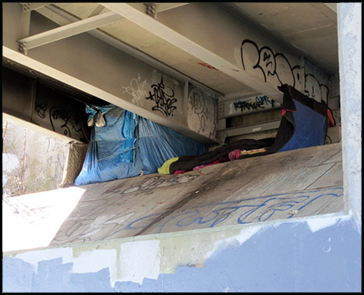
In the past, we had a national network of highly affordable worker rental housing.  The Young Men’s Clubs of America, YMCA, offered single room occupancy units, SROs, where a worker could pay his $10.00, get a cheap room by the day, stash his belongings, get a good nights sleep, get up in the morning well rested, go down the hall, take a shower, and head out to find work.  Every worker was able to chase his own version of the American dream.  That housing network no longer exists.  Now our 4,000 plus people try the impossible task of fitting into only 600 emergency shelter beds by way of nightly lottery or trying to work while living under a bridge.  Well, in November, 2009, House the Homeless read the names of 158 men, women, and children who have lived and died on our streets in the last year alone.  People, businesses, community leaders, and whole neighborhoods are clamoring for relief from the rapidly growing number of homeless people in our streets, on our sidewalks, in our parks, and in our green belts. 

Proposal 

At present, there is no pathway for minimum wage workers to exit homelessness.  There is no single door where we can say, “Line up  here, take that job, work hard, and you can work your way out of homelessness.” 

If our businesses are not going to pay living wages, we can still create a pathway out of homelessness if we create a Workers Hotel.  This would replicate the YMCA format of old.  It would create a pathway and incentive for minimum wage homeless workers to work themselves off the streets of Austin.  The hotel should be located in downtown area at a site like the fallow Young Women’s Club of America, YWCA building on Guadalupe Street. 
 
This is an historic moment in Austin’s history.  We have an incredible opportunity for the Commission and City Council to take the first proactive step in turning the head of homelessness in Austin.  We can’t afford to miss this opportunity.0

10th Annual House The Homeless Thermal Underwear Party

On January 1st, we had our 10th annual House The Homeless Thermal Underwear Party.

If you prefer, you may send a check* to:
House the Homeless
P.O. Box 2312
Austin, TX 78758

*A check means that 100% of your dollars goes to those we serve.

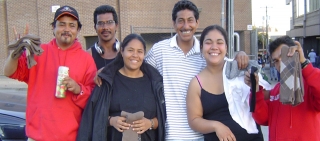
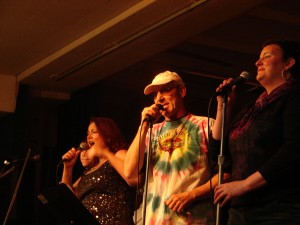
On New Year’s Day, House the Homeless, with 40 volunteers from the community and from the First Baptist Church, provided a city wide Thermal Underwear Party for homeless citizens from Austin. Rockin’ Gospel Project provided the music and entertainment while a ham lunch was serviced and participants received thermal tops and bottoms, socks, gloves, hats, and ponchos to help them survive this winter’s weather.

Thank you to Trianon Coffee House, Central Market, Sweetish Hill Bakery, Whole Foods, Texas honey Ham, and JoAnn Koepke and Family for providing many donations to make the holiday lunch a success.

Thank you and Happy New Year to all!

Richard0