

Our Mission

Founded in 1989, HtH is the oldest all volunteer, action, homeless organization in the state of Texas. The mission is Education and Advocacy around the issues of ending and preventing homelessness.

Urgent Issues

Re-Criminalizing Homelessness — Speak up now!

HtH supports the direction being taken by the City of Austin’s relatively new Homeless Strategy Office, led by a very committed and responsive David Gray, and with the commitment of Charles Loosen and other staff. We further strongly advocate ALL positions below that preceded The vote to basically criminalize homelessness — especially:

reinstating a camping ban must consider that those with disabilities, the aged, and in fact anyone with no place to go. The no sit/no lie ordinance is absolutely inhumane and unconscionable we must have at least 15 minute respites particularly for those with disabilities and make other provisions.

Mayor Kirk Watson, elected in 2023, is working to secure funding for homeless services from the State and within the City Budget.

2025 interests:

City Council approved a resolution making homelessness a top financial priority.

Increase the capacity of the Homeless Strategy Office to address and implement a comprehensive approach to strategic advancements in homelessness response. (Plan detailed in a 50-page memo from David Gray, June 2025).

Examples:

1. Expand HOST (Homeless Outreach Street Team) support including team members:

APD officers, EMS paramedics, behavioral health clinicians, social workers, peer support staff.

2. Support for Marshaling Yard operations.

3. Rapid Response housing and safe housing, especially for families.

4. Increase shelter beds with support; and more.


The Austin city council recently voted to put on its May 2021 ballot a vote to reinstate the no camping ban including the no sit/no lie ordinances. Now is the time to contact your mayor and council members particularly those who have supported decriminalizing homelessness, such as Mayor Adler, Kathy Tovo, Ann Kitchen, Greg Casar, Sabino Renteria, and others, we pray.

First call to action is cold weather shelter. Anyone that reads this, our urgent plea is to email our mayor and city council in this urgent time of cold weather. House the Homeless is encouraging to use the Convention Center or other alternatives sites that are already over burdened due to Covid-19 or at capacity.

A second call to action is to not displace unsheltered neighbors from bridges and the four major camp areas without having an immediate plan for alternative shelter/housing.

Finally, advise your mayor and council members that the wording for the May ballot regarding reinstating a camping ban must consider that those with disabilities, the aged, and in fact anyone with no place to go. The no sit/no lie ordinance is absolutely inhumane and unconscionable we must have at least 15 minute respites particularly for those with disabilities and make other provisions.

Federal Minimum Wage Debate

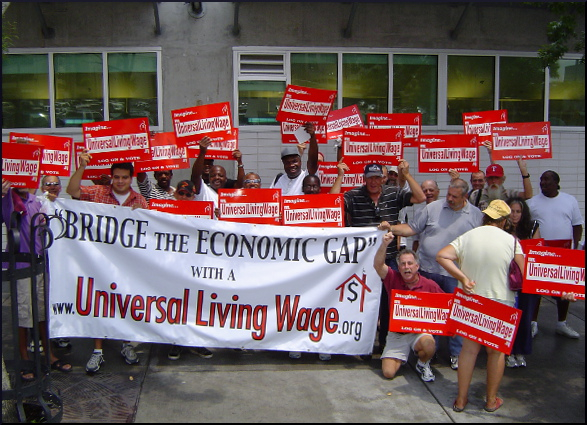
Federal resolve is insufficient; highly recommend Universal Living Wage formula indexed on the cost of housing wherever the person lives and works. 

How to Become Homeless: Be a Puerto Rican Addict

“Como Se Dice ‘Not It’?” is a prime example of why the public radio series This American Life is famous. A chance meeting with a street person led Chicago newspaper editor Adriana Cardona to uncover an astonishing story that leaves numerous questions to be considered before rendering judgment. Cardona’s approach to the story is beautifully even-handed, and we hope that our summation of the basic points will inspire the reader to go for the full experience and listen to the episode.

Through her casual conversation with a homeless man, the editor learned that heroin addicts are regularly shipped from Puerto Rico to Chicago, Philadelphia, New York, Boston, and cities in New Jersey, Florida, South Carolina, and Wisconsin. In each destination they are taken to places that on-air host Ira Glass describes as “flop houses open 24 hours a day with group therapy going till late at night, sometimes 10 or 13 hours straight.”

Cardona found 14 branches of this rehab outfit in Chicago alone, and became most familiar with a branch called Segunda Vida (Second Life). Other facilities have such names as El Grito Desesperado (The Desperate Scream) and El Ultimo Paso (The Last Step). They all operate under the auspices of the Puerto Rican organization De Vuelta a la Vida (Return to Life). In the United States, the organization flies under the banner of Alcoholics Anonymous, but AA disowns them, and indeed their methods are unorthodox. Glass says:

The therapy was really just basically like AA meetings led by former addicts who did very un-AA things like yell at them and berate them. When the guys would go through detox, because there was no medicine or methadone or professional staff, they were sometimes given folk remedies, like an onion to bite on, or alcohol would be poured in their belly buttons.

When Cardona showed up at Segunda Vida, she encountered tough men, allergic to microphones and cameras, who claimed there was nobody in charge and therefore nobody she could speak with. The gatekeepers handled all requests from anyone, about anything, with a recommendation to “come back in a few days.” Her persistence finally won a meeting with one of the group’s founders. Efren Moreno confirmed every negative thing that Cardona had heard about the organization, but he did not seem exploitative or evil. Her impression was of…

… someone who wanted to be part of the solution, that he wanted to bring services to those who were not able to get rehab services out there… But at the same time—and he even said—each group has its own rules. And because there is no oversight, it’s really hard to know what are those other groups doing.

In a Chicago facility, an addict gets free room and board for three months, and then is charged $50 to $75 a week, which still includes meals. At some branches, residents are encouraged to sign up for food stamps and contribute their allotments to the kitchen that feeds everybody. This bit of mandatory socialism, while probably not legal, is far from outrageous. Moreno would prefer to get by with no government assistance at all. A recovering addict himself, he claims to really help junkies kick their habits, and says anyone who quits the program is a weak individual who didn’t really want to get better. Apparently that is a large category, because one of Cardona’s co-researchers found, in Chicago alone, 93 men who had quit the program.

Addicts Off the Grid

When Cardona visited Puerto Rico, she was met with astonishment that anyone should question or doubt this successful narcotics rehabilitation program. De Vuelta a la Vida is no secret to municipal authorities or to Puerto Rico’s governor. Glass says:

It’s run by the state police. They help drug addicts get food, clothing, hygiene, and other services on the island. But also, they arrange for lots of them to fly off the island to these unlicensed programs in the United States.

Of course, none of the Puerto Rican bureaucrats knew that the rehab centers are unlicensed. In every place where De Vuelta a la Vida has established outposts, they seem to operate totally under the radar. According to any city records or public health department or professional registration bureau or licensing agency, officially they don’t exist.

What Does De Vuelta a la Vida Have to Do With Homelessness?

Puerto Rican addicts are recruited dishonestly, lured by a fantasy of gleaming premises, plenty of doctors and nurses, and even a swimming pool. In return for a one-way ticket to a mythical luxury rehab center, they sign a waiver that absolves the Puerto Rican government of any further responsibility for them. If they ever want to return, they have to figure it out for themselves. When the men arrive stateside, they lose what little benefits were available in their homeland, including HIV meds and methadone.

Even a successfully cleaned-up Puerto Rican immigrant is unlikely to find work, and will probably end up on the street or, at best, in a shelter. For those who quit the program, life is grim. Unable to speak the language, and still in need of opiates every day, they have to survive brutal winters in a place very unlike the tropical island of their birth.

For these penniless men, going home is an impossible dream. Family members have suffered already from abuse of their trust, and will ignore any plea for help, even with a fancy story about being stranded in America. Also, Segunda Vida and the other centers tend to hang onto identity documents, as Cardona learned by trying to help a newly-arrived HIV-positive addict who had quit the program almost immediately and lived, like so many others, in Chicago’s streets.

Reactions?

Source: “Not It!,” ThisAmericanLife.org, 04/10/15
Image by BluEyedA73

The Economics of SNAP

government website enumerates the SNAP (Food Stamp) Program rights of people experiencing homelessness.(“Food Support” is the term some states use, and others have their own individual monikers like Wisconsin’s FoodShare, Vermont’s 3SquaresVT, and of course CalFresh.) We are told that homeless persons have even more rights than the housed, because they don’t need to give a permanent address to apply. (In the realm of extra-fancy privileges, that one is underwhelming.) Besides, we keep hearing that homeless applicants still need to give a mailing address, even if it is as ephemeral as a drop-in center.

In order to receive SNAP benefits, a person doesn’t need a place to cook or store food (although it sure helps). And even those who live in shelters where meals are served are eligible. While sources seem to agree that $200 per month is the largest SNAP benefit that an individual might be eligible for, information on the standard amount is confusing. One website says that in 2014, the average benefit was $125 per month, and another says that in 2015, the average was $194 per month, which is more, and that seems odd because as time progresses, these payments are constantly cut. (Even the higher number, however, amounts to less than $7 a day.) An online commenter called Goth Farmer states that a homeless person receives $189 per month.

Currently, people fortunate enough to have Section 8 housing are shocked into awareness that a break on the rent is considered to be quite enough in the way of help, because their SNAP allowance is now under $20 a month. This is a stern reminder that SNAP stands for Supplemental Nutrition Assistance Program. In other words, food stamps are not meant to sustain life, merely to complement the acquisition of food by (chiefly) other means.

For people experiencing homelessness, this brings up issues that even the best-intentioned humanitarians disagree on. Should a shelter or a soup kitchen charge the people who eat there by taking part of their Electric Benefit Transfer funds? Well, yes, because the facility needs help acquiring the food, and it might not even be able to stay open if not for these contributions.

As for the diners, people attain dignity by paying for the things they consume. But on the other hand, after the soup kitchen meal is over, they will need other meals on other days, and their “food stamps.” There is no guarantee of finding a free meal on any given day, and the rules page says, “They cannot force you… to pay for food at the shelter. They can only request that you voluntarily use your SNAP/Food Stamps to pay for meals.”

The SNAP Situation Is About to Get Worse

No matter how bad things are, they are about to get worse for about a million unemployed childless adults, many of whom are either homeless or at risk of becoming so. Members of this demographic typically receive between $150 and $200 per month, according to Ed Bolen, writing for the Center on Budget and Policy Priorities. After this year, it will be tougher to qualify. The rule was already on the books, with each state having the option to petition for a waiver—which many have been doing. In 2016, it appears that almost no states plan to apply for renewal of that waiver. Bolen explains:

Even SNAP recipients whose state operates few or no employment programs for them and fails to offer them a spot in a work or training program—which is the case in most states—have their benefits cut off after three months irrespective of whether they are searching diligently for a job… This leaves it up to individuals who can’t find a job to try to find training or work program openings on their own, which few are able to do, especially since most training programs have insufficient resources to meet demand, resulting in substantial waiting lists.

Getting back to Goth Farmer, he (or she) says:

There you have a massive flaw in the idea all homeless always have the option of SNAP for food. Then, you have the identity issue. You have to prove identity to qualify and fact is many homeless can’t. They have no proof of who they are. No photo ID, no SS card, not birth cert. or voter card. Many homeless are underage and avoid any contact with any agency or shelter due to fear of being returned to what they ran from… The mentally ill are often not capable of far simpler tasks then wading through a ream of paperwork to get SNAP.

So, things are seldom as simple as they appear, and sufficient nourishment is still a problem for many Americans.

Reactions?

Source: “Homeless Persons’ Rights under the SNAP/Food Stamp Program,” frac.org, undated
Source: “Policy Basics: Introduction to the Supplemental Nutrition Assistance Program (SNAP),” CBPP.com, undated
Source: “”Supplemental Nutrition Assistance Program (SNAP),” USDA.gov
Source: “Approximately 1 Million Unemployed Childless Adults Will Lose SNAP Benefits in 2016 as State Waivers Expire,” CBPP.org, 01/05/15
Image by U.S. Government

Homeless Eating Advice

Critics enjoy suggesting that the Supplemental Nutrition Assistance Program offer courses teaching people how to prepare healthful food from scratch, and maybe they wouldn’t buy so much junky processed stuff. Courses are available here and there, not necessarily under the auspices of SNAP. However, such courses are nothing like a comprehensive answer to junk food issues, because even if food is available, cooking can present a real challenge for people with no kitchens.

Certain things can only be done by those who are housed, however marginally. Even a family living in a single motel room is at a tremendous advantage if there is a refrigerator. Sure, a large tub of yogurt is more economical to buy, and can last all week, but there has to be somewhere to keep it. Certainly, a 10-pound bag of rice or a 50-pound sack of dried beans can save a bunch of money—but you need a cupboard to store it in, and clean water, and a range or even just a hotplate for cooking.

Say you find a sweet deal on ten pounds of chicken thighs. With kitchen appliances, you can cook the meat, separate it into units for separate meals, and refrigerate or even freeze them. Then you can use the stock to make soup. If you can’t eat all the soup, you can stick it in the refrigerator, too, and have it tomorrow. Even with only a sink, a bag of ice can preserve coolness short-term or on special occasions. Millions of Americans take for granted the simple ability to keep food on hand. They don’t know what it’s like to have to eat what is in front of you, right now, or lose it. This reminder comes from a Reddit.com respondent:

Uh, believe it or not, many low income families have no way to actually store perishable food or cook it. When I was homeless, it was boxed, jar, or canned food all of the time. I gained 50 lbs and felt like I was starving most of that time.

We found descriptions of culinary coping written by individuals, like vehicle-dweller William Bonnie of Seattle, who invested about $150 in a decent-quality camp stove and mess kit. Camp stove fuel, of course, is an ever-recurring expense. Bonnie was cautious enough to not park or sleep or start a cooking fire within the municipal borders. Of course gasoline costs money, so that meant a lot of driving back and forth to the woods—“an expensive commute every day.” Imagine having to drive to the kitchen every time you wanted to cook something. Bonnie says:

The food stamps were helpful….but severely hindered by the realities of my situation…With little exception, you can only buy stuff that needs to be prepared at home… If you’re homeless, that means it’s kind of like one of those cruelly ironic wishes granted by a genie.

In a piece called “How to be ‘Stealth’ Homeless,” Ted Heistman related the ease with which an Electronic Benefits Tranfer (EBT) card could be obtained, but that was back in 2012 and things seem to have changed since then. Of course a lot depends on the particular city where a person is experiencing homelessness, and its current political climate. At that time, Heistman wrote:

Most towns have enough free meals for a person to get fat on. If you wanted to, you could eat six times a day if you timed it right, plus load up every few days at a food bank, plus buy food with your EBT.

Jon Mixon, who works with homeless veterans, wrote for Quora about other possibilities. A street person whose relationship with authorities and institutions is problematic may not even have the borrowed address of a shelter to use when applying. On the streets, people with easily stealable EBT cards are subject to predation.

As to what can be purchased, the rules have relaxed in some cities, with some vendors. In the past, you could buy a couple of potatoes and half a pound of ground beef and figure out how to turn them into an edible meal. Now, you can buy a burger and some fries. While fast-food menus might not provide optimal nutrition, at least people can get food that is cooked and hot. For those who do have cooking facilities, a provision in the 2014 Farm Bill allocated funds so SNAP recipients who go to participating farmers’ markets can swipe their EBT cards and get tokens worth twice as much.

Always, too, a great deal depends on luck. Only the young and healthy can thrive by eating whatever comes along. Older and disabled homeless people have other things going on—like teeth that are in no shape to chew that crunchy fresh produce; or meds that need to be taken at certain times, with food; or allergies that severely limit what they may eat. It’s never as easy as it looks.

Reactions?

Source: “SNAP Challenge raises awareness for hunger, can you eat for $4.50 per day?,” Reddit.com, 2014
Source: “7 Things No One Tells You About Being Homeless,” Cracked.com, 11/12/13
Source: “How to be “Stealth” Homeless.” Disinfo.com, 10/25/12
Source: “Why don’t homeless people use food stamps?.” Quora.com, 04/08/13
Image by U.S. Department of Agriculture

Eating While Homeless Is Not Easy

Recently, actor Gwyneth Paltrow made news by taking part in a publicity stunt designed to raise awareness and empathy by challenging celebrities and others to live on the $29-per-week food allowance given by SNAP (aka food stamps). Her choices included one lime for every day of the week, which will surely keep scurvy at bay. Also, her menu excluded meat.

Illinois blogger Rebecca Vipond Brink put together a more plausible list, with all amounts and prices noted, comprising the following items: potatoes, eggs, frozen chicken breasts, cheese, milk, apples, oatmeal, celery, peanut butter, raisins, fresh carrots, and rice. Brink points out that she did not have to attempt the challenge in a food desert:

I lived it in a suburb that was safe. I lived it with a car, even if it was a car that was on its last legs.

Let’s imagine a homeless person who follows Brink’s lead. $2 is cheap for 5 pounds of potatoes—except you have to carry them around with you. Chicken at $1 per pound is a screamin’ deal, but after eating part of it, you’re still stuck with a few pounds of meat that needs to be stored in a refrigerator. So do the eggs and cheese; and so does the milk, which may be available for $2.50 per gallon, but who carries a container of souring milk around? Unfortunately, milk in the more practical pint cartons costs more per ounce.

Unrefrigerated celery and carrots tend to go unappealingly limp rather quickly. While 4 pounds of apples may be $3, buying them individually would cost more. At $2, a 16-ounce jar of peanut butter is quite a deal—but then, like a soldier in the field, you have to hump it. Raisins are tasty and need no preparation, but they are one of the fruits most likely to retain hideous amounts of pesticides, and the organic variety costs considerably more.

More Obstacles to Eating Well

A 3-pound bag of dry oatmeal might not be too weighty a burden, but how to prepare it? With a saucepan, and clean water, and a source of heat capable of first boiling the water and then moderating to a simmer. Same goes for the rice, and the pot definitely needs a lid for the steaming process to work correctly. Neither potatoes nor eggs should be eaten raw, and cooking the chicken is another challenge.

Brink did not stock up on dried beans, one of the cheapest foods available, which are often mentioned in connection with food banks and government handouts. They really need to be soaked in water overnight before cooking, and to avoid the flatulent effects, they should be rinsed and the water replaced several times. For this fancy maneuver, a person would need to carry around a strainer or colander. And dried beans have to cook for quite some time before they soften enough to eat. Throw in some catsup pilfered from a fast food joint, and you’ve got yourself a meal. Maybe you are even lucky enough to have a little paper packet of salt, if it didn’t melt when the rain soaked through your backpack.

You’d have to carry around, at bare minimum, a bowl, a fork and/or spoon, and a cooking pot. You’d need a can opener, and luckily the GI model is tiny and lightweight. Also easy to lose, and useless to a homeless person with arthritis in her hands. To cut a melon in half, or cut a free loaf of unsliced bread, or section an apple, you’d need a nice sharp knife. Which is also, technically, a weapon—the possession of which can get a street person into a world of trouble.

SNAP Regulations

Under the rules, SNAP benefits can’t be used to buy alcohol or cigarettes, or non-food items like toilet paper, a toothbrush, or soap. Nor can they be used to buy vitamin supplements, which is puzzling. Most inexplicable of all is the prohibition against hot foods, or even cold foods, if consumable on the spot, like potato salad from the deli counter. If a food stamp recipient wants to enter a convenience store and buy an embalmed hot dog from the rolling grill, why on earth should that be forbidden? It would protect public safety more efficiently than making the customer buy cold wieners to cook over a little blaze in the park. Citizens are always upset to hear that an empty house or a sector of wooded land has burned, but it’s a miracle there are not more runaway fires. And it isn’t just the homeless, as this Reddit commentator points out:

You can have a home but not a stove or other appliances. Where do you think poor urban families are going to get logs and coal from if they can’t afford basic gas and electricity? They’re going to steal it or try to build fire with illegal/dangerous materials in an illegal/dangerous way.

The federal SNAP rules allow restaurant meals for the elderly, disabled, and homeless—but that program is implemented in only two states, and parts of three others. In addition, people themselves have built-in limitations—like an allergy to peanut butter, or one of any number of other edible substances. A person might need to carefully follow an anti-diabetes diet, or might have teeth too damaged and painful to chew with, or no teeth at all. And in many places, people experiencing homelessness have to use up a portion of their SNAP benefits just to obtain drinkable water.

Reactions?

Source: “What $29 A Week For Food Looks Like For Actual Low-Income People (And Not Gwyneth Paltrow),” TheFrisky.com, 04/10/15
Source: “SNAP Challenge raises awareness for hunger, can you eat for $4.50 per day?,” Reddit.com, 2014
Image by Michael Mayer

Colorado Coalition for the Homeless in Denver

A recent House the Homeless post outlined the poor management of the construction of a new hospital that has brought the Veterans Administration into the news. This affects all veterans, including those experiencing homelessness, and health care is especially important to those who are at risk of becoming homeless because they are unable to work or, in many cases, adjust to society.

Today we look at another side of Denver, a more positive side, which is particularly apt because House the Homeless President Richard R. Troxell recently attended a National Coalition for the Homeless conference in the city. He also took part in a gathering aimed at organizing a national movement to address the growing criminalization of the homeless through limitations on public eating, sleeping, going to the bathroom, and other basic functions.

While in Denver, Richard visited one of the many facilities that the Coalition for the Homeless has created, the beautiful Stout Street Health Center, shown above. The Center offers dental, vision, and behavioral services, along with a wide array of basic health services. Help is available to those enrolling in Medicaid. New patients are seen four mornings per week, and existing patients can get same-day appointments. It has its own pharmacy, and offers such thoughtful amenities as bicycle locks for patients don’t have their own, but need to secure their bikes while being seen. In addition,

The Coalition operates a mobile medical clinic that makes scheduled stops at homeless shelters and drop-in centers in Denver and at Colfax Avenue motels that have become a shelter of last resort for families.

Supportive Housing for the Homeless

The same capacious building contains the Renaissance Stout Street Lofts, consisting of 78 housing units, which in this location are one and two-bedroom apartments with on-site property managers and social workers. The brochure says:

The Lofts blend supportive housing units for chronically homeless individuals, families, and youth… Amenities include on-site laundry facilities, a community room with a common kitchen and outdoor courtyard, a computer room, elevator access, video surveillance systems, and secured electronic access with underground parking.

Also nearby and adjacent to the Health Center are the Renaissance Off Broadway Lofts, with 81 units varying from studio apartments to even a few 3-bedroom apartments, open since 2001 and billed as “the first newly-constructed, affordable rental lofts project in Denver’s history.” Half the units are occupied by formerly homeless tenants and the rest by people who work downtown but can’t afford the high central city rents. And of course, on-site case management and support services are available to residents who need this help.

These are only two of the many properties described in the brochure that have been built or re-purposed to house the homeless in Denver. Some of the principles behind these residences are nearness to transportation, safety, environmentally friendly features that reduce energy costs, accessibility for the disabled, and nearby employment opportunities. Thanks to these numerous and well-planned facilities, the city experiences:

…significant savings in municipal costs resulting from fewer emergency room visits, inpatient hospital stays, detox visits and days in jail…Services such as counseling, life skills training, financial literacy and employment assistance contribute to housing stability for those that once were homeless.

Behind Denver’s Success: John Parvensky

The scene in Denver is of course attributable to the hard work and dedication of hundreds of individuals who have devoted themselves over the last 30 years to helping and housing the homeless. Particularly noteworthy are the contributions of John Parvensky, who has served as President of the Colorado Coalition for the Homeless since 1986 (and is President of the Board of Directors of the National Coalition for the Homeless). He supervises more than 500 employees and administers more than 40 programs that each year help around 15,000 people experiencing homelessness. We close with a few more selected excerpts from Mr. Parvensky’s extensive biographical notes:

He has also spearheaded the production of 16 distinct, integrated housing developments that combine high-quality housing for homeless individuals and families with affordable units for community residents with lower incomes, resulting in homes for 2,300 households… He earned a 2010 Housing Colorado! Eagle Award for his long-standing work to expand affordable housing in the state…Mr. Parvensky was also chosen by his peers to receive the 2010 People’s Choice Award, an honor awarded by housing professionals in the private sector, government and non-profit arenas. In April 2012, he received the 2012 Be More Award from Rocky Mountain PBS for his outstanding, innovative leadership and direction in social justice benefiting the entire community.

Reactions?

Source: “Stout Street Health Center Services,” ColoradoCoalition.org, undated
Source: “No Place Like home,” coloradocoalition.org, undated
Source: “John Parvensky Bio,” ColoradoCoalition.org
Image by Colorado Coalition for the Homeless

Two Exemplary Advocates for People Experiencing Homelessness

Francis “Pat” Fitzpatrick, photographed by Jenny O’Donnell

Last year, Gene Estess died at the age of 78. His story was an unusual one. After a privileged upbringing and a college education, he spent 20 years working on Wall Street. His family had everything they needed and more, but something about the lifestyle didn’t set right with him. The malaise, according to his surviving wife, stemmed from a feeling that his time and talents had not served any philosophically or morally significant purpose.

In 1984 his attention was caught by a mentally ill homeless addict who hung out with her poodle in Grand Central Terminal. Taking on the project of finding a place for her to live, he connected with the practically brand-new Jericho Project. He was invited to join the nonprofit’s board, and ended up being its director for 18 years. In addition, he was the motivating force behind the establishment of many residences. Helping formerly homeless women get their children back was a particular interest of his.

Estess Left Wall Street Behind

In the summer of 1987, the world of high finance was thriving, but Estess was done with it. He walked away, and a few months later, as if to vindicate his choice, the stock market collapsed. Shortly afterward, he took the post of director at Jericho and worked his first year for no salary.

Imagine writing a movie script about his life. The temptation would be great to invent a scene in which a ruined speculator turns up seeking shelter, and encounters the man he had mocked for abandoning the soulless financial district—who is now running the organization designed to help the homeless. Douglas Martin said in the New York Times:

Today the Jericho Project serves 1,500 adults and children, including more than 500 military veterans, with housing and services. It says it spends $12,000 a year for each adult client—less than half the cost of a cot in a New York City shelter.

Fitzpatrick’s Work in Florida

In Gainesville, Florida, Cleveland Tinker published a tribute to Frances Fitzpatrick on the occasion of his election to the Hall of Fame by Florida’s Martin Luther King Jr. Commission. Perhaps Fitzpatrick’s destiny was shaped by his undergraduate years as a history major, from which he went on to earn a degree in rehabilitation counseling. His career included time in the military, a period of living in his car and catching fish to eat, and a couple of years as a Vista volunteer helping migrant workers in what he calls the “brutal poverty” of the Everglades.

He was hired by the United Farm Workers to handle, in his words:

…slave and peonage cases where they had this curator system where the curator is hired by the grower, and he exploits the hell out of these people. There were people in slavery, and there was actually a crew that got paid only in wine.

He worked for the Florida Coalition Against Hunger, and as a drug counselor in the prison system until privatization put an end to that. Living by the teachings of St. Francis of Assisi, in the 1990s he served on the board of directors of a shelter and soup kitchen named after the saint. Unlike his fellow directors, who only showed up for meetings, Fitzpatrick stuck around to mingle with the residents.

In 2002 he was part of the group that founded the Home Van, Alachua County’s mobile soup kitchen and clothing distributor. The principled troublemaker has picketed City Hall, and been arrested for giving people food. When Gainesville passed an ordinance that put an arbitrary limit of 130 on the number of meals the soup kitchen could serve in a single day, Fitzpatrick’s spirited objections cause him to be ejected from City Commission meetings numerous times. But in the end, the restriction was repealed. A highly regarded documentary film, Civil Indigent, http://civilindigent.com/was made about that chapter of his life.

In 2013 he was interviewed for the University of Florida’s Samuel Proctor Oral History Program. Among other matters, he spoke of his fondness for the Food Not Bombs organization:

They’re not only into charity but also into justice—getting rid of the reason people have to stand in soup lines… We’re really good at charity but we’ve got to get better at justice.

Reactions?

Source: “Gene Estess, Who Left Wall Street to Aid the Poor, Dies at 78,”
NYTimes.com, 04/19/14
Source: “A Champion for the Homeless,” Gainesville.com, 01/13/12
Source: “Civil Indigent,” civilindigent.com, undated
Source: “History and the People Who Make It: Pat Fitzpatrick,” Gainesvilleiguana.org, 03/08/13
Image by Jenny O’Donnell

The Denver VA Hospital Debacle

Caring for a vet at the VA Hospital in Portland

America engages in constant military activity and pays lip service to the honor and respect owed to the troops on the ground. But actions speak louder than words and, sad to say, once the veterans are back in the USA, the country does a lax job of taking care of them. House the Homeless has been looking at examples of both individual and institutional wrongdoing that end up being detrimental to veterans who are homeless or at risk of becoming homeless.

It isn’t just the government. Other entities have plenty of opportunity for wrongdoing. And it isn’t just homeless vets who get shortchanged. Having a place to live doesn’t guarantee timely attention or good care. The thing is, every adverse event that happens to a vet makes it more likely that she or he will at some point end up on the street. Once there, the climb back to conventional life is so much more difficult.

One of Four Troubled VA Projects

In mid-December, construction of a new Veterans Administration hospital ground to a halt, and a panel of three federal judges ruled that the VA was in breach of contract. The contractor Kiewit-Turner, which had kept working until $100 million of its own money was sunk into the project, was allowed to quit.

Only 62% completed, the new hospital was already over budget by hundreds of millions of dollars. It was supposed to replace the existing Denver VA hospital, in business since 1951 and described in a comment appended to this Wall Street Journal article as a “gilded rat hole.” If it is ever finished, it will serve over 80,000 vets, or nearly 500,000, depending on which news source you look at.

The original contract said Kiewit-Turner would complete 10 hospital buildings, a research and treatment center, a 30-bed rehab center, and three parking garages for $600 million. It required that construction begin even though plans had not been finalized. This backwards approach led the contractor to warn that the whole thing, as conceptualized, would cost over a billion dollars. Apparently the VA told the company to go ahead and keep on building, or else it would be in breach of contract. Reporter Ben Kesling wrote:

VA management problems led James Lynn, a top employee at the VA’s construction manager for the project, to describe it as having “the least effective and most dysfunctional staff on any project that he had ever seen.”

Then in January it was double-whammy time, as a VA whistleblower revealed how the existing Denver VA hospital had lied about its secret waiting lists that kept hundreds of veterans from getting timely care. Senator Jerry Moran of Kansas started a movement to cure the “system that rewards mediocrity and failure” by giving the VA secretary more power to discipline the high-ranking executives responsible for messes.

In 2012, Eric Shinseki had created a Construction Review Council to oversee VA projects and put some accountability in place, but it was too late to help the Denver project. And by the time Sen. Moran got on the case, after the nationwide scandal over waiting times in the VA medical system, Shinseki was no longer Secretary.

A New Start for VA Hospital Projects

Earlier this month, in the wake of hearings held by the House Veterans’ Affairs Committee, more details of the Denver hospital project emerged, like how multi-million dollar machines could not fit into the rooms designed for them, because nobody had taken correct measurements. It was determined that the final cost for the facility will work out to about $9.5 million for each of its 182 beds. Normal is, at most, $2 million per bed.

Meanwhile, the General Accounting Office added the Denver project to a growing list of other VA hospital projects—in Orlando, New Orleans, and Las Vegas—where similar bungling and a total disconnect with reality had run up hundreds of millions of dollars of cost overruns. Representative Mike Coffman of Colorado was quoted as saying:

The VA couldn’t lead starving troops to a chow hall when it comes to managing a construction project. They need to get out of the construction business.

Reporter Emily Wax-Thibodeaux of The Washington Post added:

Internal VA e-mails dating to 2010 show that VA contracting officials were ignored when they warned their supervisors about mounting cost overruns.

They were not only ignored, but fired, like the unfortunate whistleblower Adelino R. Gorospe, Jr., who was let go by Glenn Haggstrom, executive director of the Office of Acquisition, Logistics and Construction. Haggstorm is the same VA bigwig who was awarded more than $50,000 in performance bonuses for unexplained reasons, before retiring in the face of investigation of the Denver project.

As it stands, the Army Corps of Engineers has been given responsibility, and Kiewit-Turner is back on the job, and aside from a paltry emergency $56 million that was allotted, nobody knows where the rest of the funding will come from.

Let the Punishment Fit the Paycheck

Often, the people who cheat veterans work directly for the government, and are even high officials, but the public only learns about a small fraction of what goes on. The workings of the military bureaucracy keep the threat of retribution active. It is possible to make a case against anyone, so almost no one dares to report anybody, because they can be made to appear equally bad, even if they never did anything wrong. The threat hangs over every whistleblower that he or she will be next on the chopping block.

Apparently, there isn’t a lot of oversight, and the old question of “Who watches the watchdogs?” is appropriate. On the rare occasion when someone is caught doing something criminally culpable on the job, it might help if the punishment were proportionate to pay grade. If a top administrator steals, the sentence should be many times longer than it would be for an Army private.

Reactions?

Source: “VA Hospital Project Grinds to a Halt Amid Budget Overruns
WSJ.com, 12/10/14
Source: “Video: Denver VA reverses denials, admits using secret wait lists
Hotair.com, 01/30/15
Source: “VA building projects riddled with mistakes and cost overruns
WashingtonPost.com, 04/13/15
Image by Parker Knight

Veterans are Being Shortchanged

In my hometown, we often saw a “character” who, according to local legend, was a World War II veteran with shell shock. He lived in a shack by the railroad tracks and all he did was walk, all over town, all day, every day. Because there was only one of him, he was locally famous. Now, thousands of versions of “Joe Walk” live all over America.

When people are inducted into the military, the contract is supposed to be mutually enforceable. When an enlisted member or an officer violates the agreement, the consequences of military justice can be dire. But who is to stop the other party from breaking the trust? When the U.S. government misbehaves, who can call it to account? Who can make it meet its obligations to homeless veterans, veterans at risk of becoming homeless, and homeless civilians?

VA Administrator Behaving Badly

DeWayne Hamlin was arrested in Florida for sitting in a car drunk in the middle of the night, refusing a breathalyzer, and not having a prescription for his oxycodone. Leaving aside the question of why the police bothered someone who was merely sitting in a car and not, apparently, breaking any law, it happened.

mug shot is not a good look for the chief administrator of a Veterans Administration hospital, a man who had achieved the highest rank bestowed upon career civil service employees, with a paycheck of nearly $180,000 a year. But we all make mistakes. The worrisome thing is that when the Washington Examiner looked into Hamlin’s attendance records, they discovered that he was in the habit of only showing up for two out of three work days. In a one-year period he was absent 80 days. That is a lot of downtime for someone in charge of the health of a large number of America’s vets. Reporter Luke Rosiak notes:

Veterans Affairs leadership has seldom fired or disciplined its own. Under severe scrutiny recently from Congress and the news media, department leaders occasionally accept retirements by employees… instead of pursuing disciplinary action.

Hamlin is alleged to have done his share to maintain a culture of intimidation and retaliation. When a lower-level employee reported his arrest to VA headquarters, he tried to get the whistleblower fired, and when an investigator didn’t agree, he tried to get the investigator fired. Even before this incident, he had sent around a memo warning everyone who worked for the VA Caribbean Health Care System that any and all complaints must be kept inside the organization, and no outside snitching would be tolerated.

Gambling Away VA Funds

Right around the same time, in Nashville, Birdie Anderson was sentenced to two years in prison for defrauding the Veterans Administration. She had received grants to buy a house for veterans, then a specially fitted van and another house. The first building was actually purchased, but was foreclosed on two years later. The veterans housed there, who according to the contract were to have stayed at least seven years, had to leave after being there less than three years.

The second residence and the van were never purchased, and Anderson is said to have gambled away $364,000 that was supposed to have brought some homeless veterans in off the street. Maranda Faris reported for the Tennessean that the convicted woman is a retired Army Reservist. An even more interesting detail is that she…

…also made false statements that she was a CEO of an organization within the Veterans Administration as well as having spent time in covert operations in Afghanistan during Operation Desert Storm. Anderson never did a tour of duty in Afghanistan, but remained at Fort Bragg, N.C., as a desk clerk during that time.

The VA has all the might and power of the U.S. government at its disposal, but in this case it could have performed due diligence without even going outside the agency. All it had to do was look inside its own database. But the VA failed to determine that this person did not really run an organization within the VA itself. It couldn’t even figure out whether or not a member of the military had ever been in Afghanistan.

Who is in charge of verifying the information on grant proposals? Who blithely hands out taxpayers’ money without doing the most rudimentary background checks on the applicants? Who gave away more than a third of a million dollars to someone who should not have gotten a penny? Who was asleep at the wheel? Who colluded in robbing homeless veterans? Why are they not Ms. Anderson’s cellmates?

Reactions?

Source: “Veterans Affairs hospital chief draws $179k salary despite missing 80 days a year,” WashingtonExaminer.com, 03/30/15
Source: “Woman gets 2 years for misusing $364K for homeless vets,” Tennessean.com, 04/18/14
Image by OccupyDemocrats.com

Raw Deals for Homeless Vets

Compared to some other countries, America cares well for its military veterans—which is similar to being the prettiest corpse in the morgue, because any illusion of superiority is only relative. In absolute terms however, vets often find that service in the armed forces is a ticket to oblivion. Some can never get their lives back on track, the suicide rate is alarming, and an astonishing number of veterans also become part of the homeless demographic.

This is not to say that all veterans should be given free everything, forever. But what they are entitled to, they should not be cheated out of. A veteran should be returned to civilian society in a condition as close as possible to the state of well-being and functionality that he or she enjoyed before signing up. David Finkel wrote for The New Yorker:

If the studies prove correct, the wars in Iraq and Afghanistan have created roughly five hundred thousand mentally wounded American veterans.

Two causative factors are blamed: Post Traumatic Stress Disorder, which is said to affect between 20 and 30 percent of returning vets; and Traumatic Brain Injury. Dr. Mark Gordon believes that it’s all of a piece, and all traceable to TBI. Small, unrecognized, repeated concussions disrupt the body’s production of hormones, and the results are “depression, anxiety, nightmares, memory problems, personality changes, [and] suicidal thoughts.” For these patients, it very much looks like interventional endocrinology should be the VA’s main focus, rather than narcotics, anti-depressants, anti-psychotics, and other drugs of that kind.

It seems like pharmaceutical corporations, not veterans, are the main beneficiaries of VA policy. The trend is even more pronounced among active duty personnel, who appear to be insanely over-prescribed. For the New York Times, Richard A. Friedman wrote:

The number of prescriptions written for potentially habit-forming anti-anxiety medications—like Valium and Klonopin—rose 713 percent between 2005 and 2011. The use of sedating anticonvulsants—Topamax, Neurontin and Lyrica—increased 996 percent during this period.

There is an analogy, perhaps, between the military’s use of psychoactive drugs and the practice of pumping athletes full of steroids so they can continue to compete despite physical pain; athletes—and also soldiers—whose performance is chemically enhanced in this way may, however, unwittingly sustain more serious injuries as a result.

The last few words of that sentence are a big part of the problem. A soldier needs to be alert, not sedated. A soldier is in an environment where anxiety is entirely appropriate, and medicating it away can create a dangerous degree of relaxation that leads to more and worse injuries.

Mental illness is often tied to homelessness, and we know by now that the number of homeless vets is staggering:

Although flawless counts are impossible to come by… the U.S. Department of Housing and Urban Development (HUD) estimates that 49,933 veterans are homeless on any given night… About 1.4 million other veterans, meanwhile, are considered at risk of homelessness due to poverty, lack of support networks, and dismal living conditions in overcrowded or substandard housing.

For some reason the best numbers on incarcerated veterans are about ten years old, and even then, about 140,000 veterans were in state and federal prisons. Here is an interesting piece of information:

Combat service was not related to prevalence of recent mental health problems. Just over half of both combat and non-combat veterans reported any history of mental health problems.

There seems to be a revolving door between the military, the prison system, and homelessness. Kids who grow up homeless are attracted to the military life because it provides a living wage, structure, and a place to belong. For a long time, it was traditional for judges to give youthful offenders the choice between jail and enlistment. Some discharged veterans do crime because their brains are too messed up to have good judgment, or because poverty seems to offer no other alternative. Homeless vets wind up in jail. Vets who get out of jail wind up on the streets. Here are more details:

Veterans between the ages of 18 and 30 are twice as likely as adults in the general population to be homeless, and the risk of homelessness increases significantly among young veterans who are poor.

About 53% of individual homeless veterans have disabilities, compared with 41% of homeless non-veteran individuals.

Homeless veterans tend to experience homelessness longer than their non-veteran peers: Veterans spend an average of nearly six years homeless, compared to four years reported among non-veterans.

The average wait to get a disability claim processed is now eight months. Payments range from $127/month for a 10% disability to $2,769 for a full disability.

All these factors contribute to paint a very unflattering picture of the human misery behind America’s military might. Vets have the right to expect the help they need, and we can do better.


Source: “The Return,” NewYorker.com, 09/09/13
Source: “Wars on Drugs,” NYTimes.com, 04/06/13
Source: “Background and Statistics,” NCHY.org
Source: “Veteran Homelessness Facts,” Greendoors.org
Image by The U.S. Army

Some Housing Solutions

America is full of empty houses, a circumstance that House the Homeless
has been exploring to figure out why people can’t live in them. A Cleveland, Ohio, man took that question from theory to reality when he began to practice urban homesteading six years ago. Mr. Hayes is, by all reports, a model neighbor who maintains the small abandoned house in which he lives as well as possible, considering that he is not allowed either water or power.

He gets around these strictures by paying a neighbor to use some electricity via an extension cord, and collects rainwater to filter for drinking and to fill the toilet tank. A disability check covers his modest living expenses and those of his two dogs. The building’s owner is not even a real person, but a corporate entity of whom reporter Mark Naymik says:

The company, whose leaders are nearly impossible to track down, owes tens of thousands in back taxes and penalties on its properties. The company owes $27,000 alone on the house Mr. Hayes is living in.

But Mr. Hayes pays property taxes, and keeps the place neat, and helps an elderly neighbor. He asked a city council member:

Would you, please, introduce an amendment to the ordinance so that qualified people may put to good use properties that are verifiably abandoned?

Why is there not such a law in every city across the country? Curious journalist Matt Lemas took the question a step farther and explored the notion of letting people live in the 77,000 empty buildings owned by the U.S. Government. In contrast to Mr. Hayes’s minimalist dwelling, many of these places even have electrical service. That’s right—regulations keep the power on to satisfy “safety requirements” for the structures, while actual humans live unsafely outside in the dark and cold. In fact, the upkeep for empty government-owned buildings costs taxpayers $1.7 billion per year.

The Philadelphia Stabilization Program

House the Homeless is not Richard R. Troxell’s first project. He has been involved in many other programs and initiatives to improve the lives of people experiencing homelessness. In the 1980s he lived in a Philadelphia neighborhood where a 55-block area held 110 abandoned houses, the overwhelming majority of which were built from stone or brick.

The first step of his group’s master plan was to prevent further deterioration by securing doors and windows with plywood to keep the weather out. They negotiated a deal with the union to have the roofs repaired, and put sturdy Lexan in the windows. Crews gutted the interiors, businesses donated paint, and kids recruited from the anti-graffiti program painted the exterior trim. The result would be a sturdy structure with the soft parts stripped down and prepped. Richard recalls:

A local bank agreed to offer a mortgage with rehab and wrap-around loans so the buyers could purchase the shells and have money to rehabilitate them.

His group kept the lawns mowed and transformed vacant lots into community gardens. They opened talks with city authorities and HUD, looking for support from the Community Development Block Grant program so potential homeowners with the fixer-upper mindset could afford mortgages and rehabilitation loans.

Progress was moving along nicely when the drug epidemic hit. The Philadelphia neighborhood, like many others all across the country, became a war zone, and the group realized that it had to move quickly to stabilize the neighborhood as it was rapidly being turned into fortified crack houses. Charged with the impossible responsibility to fully, completely, and permanently pacify the neighborhood, the rehabilitation group found that financial government support was about to be pulled. A further response by the fast-thinking neighbors enabled them to go forward with their stabilization plan.

Absent the crack epidemic, the basic plan was solid. At the time, the United Nations was researching best practices as part of the International Year of Shelter for the Homeless. Richard was urged to submit the plan, under the name of “Permanent Housing of Homeless People in Philadelphia,” and received special recognition for it.

The whole story is in his book, Looking Up at the Bottom Line, along with many other fascinating and instructive episodes.

Source: “Homeless man pays property taxes after moving into abandoned Cleveland home to fulfill homesteading dream,” Cleveland.com, 02/20/14
Source: “Could We House the Homeless in America’s 77000 Empty Government Buildings?,” RYOT.org, 2014
Image by w.marsh