Our Mission

Founded in 1989, HtH is the oldest all volunteer, action, homeless organization in the state of Texas. The mission is Education and Advocacy around the issues of ending and preventing homelessness.

Urgent Issues

Re-Criminalizing Homelessness — Speak up now!

HtH supports the direction being taken by the City of Austin’s relatively new Homeless Strategy Office, led by a very committed and responsive David Gray, and with the commitment of Charles Loosen and other staff. We further strongly advocate ALL positions below that preceded The vote to basically criminalize homelessness — especially:

reinstating a camping ban must consider that those with disabilities, the aged, and in fact anyone with no place to go. The no sit/no lie ordinance is absolutely inhumane and unconscionable we must have at least 15 minute respites particularly for those with disabilities and make other provisions.

Mayor Kirk Watson, elected in 2023, is working to secure funding for homeless services from the State and within the City Budget.

2025 interests:

City Council approved a resolution making homelessness a top financial priority.

Increase the capacity of the Homeless Strategy Office to address and implement a comprehensive approach to strategic advancements in homelessness response. (Plan detailed in a 50-page memo from David Gray, June 2025).

Examples:

1. Expand HOST (Homeless Outreach Street Team) support including team members:

APD officers, EMS paramedics, behavioral health clinicians, social workers, peer support staff.

2. Support for Marshaling Yard operations.

3. Rapid Response housing and safe housing, especially for families.

4. Increase shelter beds with support; and more.


The Austin city council recently voted to put on its May 2021 ballot a vote to reinstate the no camping ban including the no sit/no lie ordinances. Now is the time to contact your mayor and council members particularly those who have supported decriminalizing homelessness, such as Mayor Adler, Kathy Tovo, Ann Kitchen, Greg Casar, Sabino Renteria, and others, we pray.

First call to action is cold weather shelter. Anyone that reads this, our urgent plea is to email our mayor and city council in this urgent time of cold weather. House the Homeless is encouraging to use the Convention Center or other alternatives sites that are already over burdened due to Covid-19 or at capacity.

A second call to action is to not displace unsheltered neighbors from bridges and the four major camp areas without having an immediate plan for alternative shelter/housing.

Finally, advise your mayor and council members that the wording for the May ballot regarding reinstating a camping ban must consider that those with disabilities, the aged, and in fact anyone with no place to go. The no sit/no lie ordinance is absolutely inhumane and unconscionable we must have at least 15 minute respites particularly for those with disabilities and make other provisions.

Federal Minimum Wage Debate

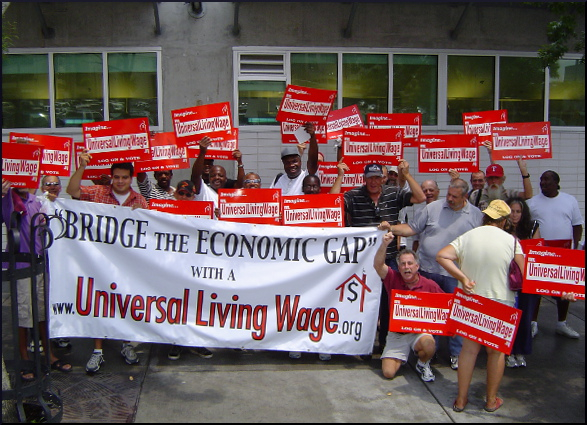
Federal resolve is insufficient; highly recommend Universal Living Wage formula indexed on the cost of housing wherever the person lives and works. 

People Experiencing Homelessness = Lab Rats

Studying up on homelessness in America, a person is constantly astonished by both the magnanimity of some of our fellow citizens and the cluelessness of others. Today’s excursion into the realm of the media turns up a story titled “To Test Housing Program, Some Are Denied Aid.” When it appeared on the front page of the print version of The New York Times, it was called “New York Study on Who May End Up Homeless Called Cruel.”

Put them together, and they sum up the gist of a rather bizarre story reported by Cara Buckley, who has written hundreds and hundreds of pieces for this most venerated newspaper. Buckley starts with a brief reminder for those of us who might have been sleeping in class one day:

It has long been the standard practice in medical testing: Give drug treatment to one group while another, the control group, goes without.

That method is infinitely adaptable and used in all the sciences, but anybody can do it. If you play classical music to half of your plants and no music to the other half, and then measure all the plants’ heights and compare the results, you have just done an experiment according to the scientific method of empirical testing.

Now, apparently, a New York bureaucracy known as the Department of Homeless Services is messing around with people’s lives and touting their actions as useful science. The first impression is that somebody is playing God in a particularly nasty way, with questionable ethics, treating desperate families like guinea pigs or lab rats. So let’s hit the high points of Buckley’s story and see if it gets any better.

The program is Homebase, which is supposedly preventative. Among other things, it supports people who are about to be evicted, so maybe they won’t end up joining the homeless population of the city, which is already quite substantial. The officials put on their “research” hats and implemented the experiment. Buckley writes,

Half of the test subjects… are being denied assistance from the program for two years, with researchers tracking them to see if they end up homeless.

The first thing that comes to mind is that the intolerable delays are already an integral feature of social welfare programs. We hear constantly about the waiting periods, roadblocks, the uncertainty of funding, and myriad other factors that make help so slow in coming for so many of the people who need it most. There is never enough help available, so it seems like there would be plenty of unserved people to study, in the natural course of events, without purposely creating a situation where available help is denied to some for capricious reasons.

Where this particular program was concerned, there did not seem to be any need for such evaluation because it had already been judged efficacious. As Buckley notes,

Advocates for the homeless said they were puzzled about why the trial was necessary, since the city proclaimed the Homebase program as ‘highly successful’ in the September 2010 Mayor’s Management Report, saying that over 90 percent of families that received help from Homebase did not end up in homeless shelters.

As the old saying goes, “If it works, don’t fix it.” And especially, don’t use it to hurt people who could be helped when there is so much other useful work that could be done instead. Plus, the study itself is costing nearly $600,000, for which a better use could have been found. Like paying rent for potential evictees.

Buckley quotes a University of Pennsylvania professor Dennis P. Culhane whose field is social welfare policy. He says there is widespread doubt over the effectiveness of eviction-prevention programs, and there is no evidence that people helped by the Homebase program would be homeless otherwise. Say what? I may be missing something here, but I suspect that a large proportion of the New York City’s homeless population just might be living in temporary shelters or on the streets because people couldn’t pay rent and got evicted.

The Coalition for the Homeless website states,

Surveys of homeless families have identified the following major immediate causes of episodes of homelessness: eviction; doubled-up or severely overcrowded housing; domestic violence; and hazardous housing conditions.

What part of “Immediate cause of homelessness = eviction” does the New York City bureaucracy not understand?

The Coalition for the Homeless also notes that in October 2010, 38,000 people were sleeping in New York City’s municipal shelter system each night. There are probably more by now. And how many are there on the streets? No way to know how many thousands, but the Coalition says that the official numbers are consistently underestimated. And the overall situation can only get worse with the lack of affordable housing even for those who are supposedly making a living wage, which becomes more of a joke every day.

As we suspected, the first impression doesn’t get any better. It gets worse. Buckley says,

New York City is among a number of governments, philanthropies and research groups turning to so-called randomized controlled trials to evaluate social welfare programs.

Reactions?

Source: “To Test Housing Program, Some Are Denied Aid,” NYTimes.com, 12/08/10
Source: “Basic Facts About Homelessness: New York City,” CoalitionfortheHomeless.org
Image by Dr. Savage, used under its Creative Commons license.
0
One City Stands in for Many Cities — Lubbock, Texas

The microcosm reflects the macrocosm. In other words, one way to get a real grasp of a national problem such as homelessness is to look at a snapshot of a particular place at one point in time. That is exactly what Elliott Blackburn, a reporter for the Lubbock Avalanche-Journal, provides. In a piece called “Homeless committee braces for quick pace, tough problem,” he outlines the position this Texas city of about 220,000 souls finds itself in at the end of 2010.

In Lubbock, there is a new homeless committee, and Lynn McClendon is chair. There are 16 other members, including church custodian and former homeless person Toby Billings. The group plans to meet twice a month. What they aim to do first is figure out exactly what kind of problem Lubbock is faced with because, as Blackburn notes,

Homelessness can include everyone from someone forced to live on the streets to a person who has to stay with friends and family for some period of time, making it difficult to put a firm figure to the problem in the city.

A mutually agreed definition isn’t always easy to come to, but anyone staying in a shelter or a transitional housing facility, or any other place not intended to be a permanent home, is generally defined as homeless.

A survey was conducted, which identified 719 people experiencing homelessness in Lubbock, with three-quarters of them newbies and relatively unfamiliar with the world of homelessness, because they just entered it for the first time within the last three years.

As in most places, the homeless population of Lubbock includes a good number of the working poor. About 20% are day laborers or some other kind of part-time workers, and about another 20% work regular, full-time jobs. And yet, they are homeless! Obviously, a paycheck is not the same as a living wage, not even for people who are actually working 40 hours a week or more.

This is something that housed people with good-paying jobs often fail to wrap their heads around. Some folks complain or rage because they have to give up their vacation home. They don’t have a clue what it’s like to have no home at all, and certainly find it difficult to understand that it is possible to work full time and still not be able to afford housing.

Richard R. Troxell, president of House the Homeless, has written a document called the Protected Homeless Class Resolution. The full text is found in Looking Up at the Bottom Line, and here are a few of the points he makes:

— There is a shortage of affordable housing stock nationwide.
— The national minimum wage is an insufficient amount of money to secure safe, decent, affordable housing even at the most basic financial level.
— More than the minimum wage is required in every state to be able to afford a one bedroom apartment at Fair Market Rent, as set by the U.S. Department of Housing and Urban Development.
— The combined effect of these and other circumstances create a group of people that have no alternatives to living on the streets of our nation; and
— It is estimated that nationwide, there are at least 760,000 persons living without a permanent, fixed, individual residence on any given night.

As in any other city, resources for the homeless are not always easy to access. In this particular city, food is not a problem, but shelter is, and there is a need for a day center. One thing that almost everyone agrees on is the need for more centralization and coordination, and Blackburn captured a marvelous quotation from committee member Doug Triplett, who likened the various efforts to a bunch of free-range horses, saying,

If somehow we can harness all these, put the horses behind one thing, we can pull a stagecoach.

Coordination appears to be the trend in the state, with the Texas Homeless Network showing the way. THN is a nonprofit organization that provides training and technical assistance to the people and agencies working to end homelessness. Its mission is,

Providing solutions to end homelessness in Texas communities through education, resources and advocacy.

THN also keeps track of statistics, recording, for instance, the fact that this summer 719 people were identified as experiencing homelessness in Lubbock.

One of the training programs is Stepping Stones to Recovery, or SOAR, where staff members and benefits specialists learn how to help homeless individuals apply to receive federal social security and disability benefits. This is no easy task, especially for people who are mentally affected. Even a person with ordinary mental capacity can be so jangled and confused by finding themselves homeless that dealing with a bureaucracy and a pile of paperwork is a daunting task.

Holding onto all the necessary and required paperwork is no easy thing either. When you have to carry around everything you own, even paper gets heavy. Rain falls, and everything is soaked, and all your documents turn to pulp. Or somebody steals your backpack.

THN holds an annual conference, and mostly it trains the providers of homeless services all over the state. There is a training manager — the job is currently open — who travels about 1/3 of the time, teaching the local workers how to help the homeless.

Reactions?

Source: “Homeless committee braces for quick pace, tough problem,” LubbockOnline, 12/07/10
Source: “What We Do,” THN.org
Image by quinet (Thomas Quine), used under its Creative Commons license.

Veterans Seen as High Priority

At Stone Soup Station, we find an eloquent description of compassion fatigue, which anybody who helps the homeless is prone to. It’s written by Veteran’s Services Coordinator Steven Samra, who puts together Operation Stand Down Nashville. Here it is:

The rate of burnout for those of us in street outreach and case management is high, and a large part of the responsibility of this is vicarious trauma; that is, suffering trauma from hearing, feeling and dealing with the trauma of our clients, consumers, customers, fellow human beings. It takes its toll on the soul, the psyche and the spirit, chipping steadily away until one day you awaken with irreversible compassion fatigue and basically, you just can’t take any more trauma.

There is a good reason why the average person can benefit from hearing about this. The reason is, it enables us to realize what it means when we send in a check, or donate a pair of socks, or volunteer for a shift at the soup kitchen. See, we’re used to thinking, “I’m glad my donation could help that vet,” or, “It’s not much, but at least some homeless person got a meal.”

But there’s more to it than that. Every time we pitch in to help, even if the contribution seems small, keep this in mind, and don’t forget it. Our contribution doesn’t only help a person experiencing homelessness, or even a whole bunch of them. It also helps the people who do this work full-time. Every kind of social services worker, whether paid or volunteer, is a soldier at the front. They are in the line of fire, day after day, week after week.

Any little bit that we can help, it removes part of the burden from the people whose lives are immersed in helping. It takes some of the weight from a compassionate, hard-trying person who wants to hang in there but fears the approach of the breaking point.

Samra talks about the frustration of having to tell needy people that you just can’t do anything for them because the resources simply are not there. And even worse is knowing — absolutely without a doubt — that just a small amount of help could get this person’s life back on track.

Fortunately, now there is a program that looks promising, SSVF or Supportive Services for Veteran Families. The details are on the website, and there’s also a link to the same information in a PDF file. Here is what Steven Samra says about it:

I’m holding my breath and crossing my fingers that those holding the purse strings have finally figured out what those of us in the field have known for a long time now; help those folks before they are considered ‘chronically homeless’ and once they get back on their feet, just get outta their way…

Meanwhile, we learn from Alexandra Zavis that veterans are one of the major subgroups of people experiencing homelessness that the city of Los Angeles is determined to help. Government and private enterprise have gotten together and come up with a five-year plan. The chronically homeless and homeless veterans, two groups that have a large overlap factor, are the focus of this effort.

Their plan seems to involve reallocating existing funds, and that type of decision must be so hard to make. When there are only x dollars, who gets them? The person in worst shape, who has been suffering the longest? Or the person who is just on the verge of losing his or her dwelling place and belongings, and could be saved by the application of some ready cash? The word “reallocate” is a scary one. Reallocate from where? Being in charge of decisions like that could give you a pretty good case of burnout, too.

Looked at from one angle, there is sound economic common sense behind the decision to put $230 million into supportive housing for the most long-term and seemingly hopeless street people. As Zavis explains,

Although the chronically homeless make up just a quarter of the homeless population, they use up a disproportionate share of services, including beds in emergency shelters, hospitals and jails.

She quotes an official who says it is 40% cheaper to create supportive housing with treatment and counseling than to abandon the chronically homeless to the streets. Other cities have found this to be true. Hopefully, the tax dollars freed up will then provide more services to the other three-quarters of the homeless population.

As always, there are several sides to the issue. The most extreme form of the “housing-first” philosophy insists on just that, taking people as they are, getting them housed first, and then dealing with other problems such as alcoholism and drug addiction. The opponents would prefer that the clients clean up first, and show that they deserve housing. And a strong faction believes that veterans of our armed forces should be given any and every kind of help, immediately, unconditionally, and with no questions asked.

And, of course, as always and everywhere, Los Angeles would have to deal with the “Not In My Back Yard” problem, or NIMBYism. But that’s a post for another day.

Reactions?

Source: “Supportive Services for Veteran Families (SSVF) Program: Finally, “Sumthin Comin” To Those Who Need It NOW?,” Stone Soup Station, 12/03/10
Source: “Plan to house homeless vets and chronically homeless gains wide support,” LATimes.com, 12/02/10
Image by foxtongue (Jhane), used under its Creative Commons license.

Success Stories — Yes, There Are Some

People experiencing homelessness are all over the news, and it’s too easy to feel hopeless and discouraged about the overwhelming amount of need in every corner of the nation. And then a bright ray of meaningful progress shines from the gloomy prospect. Back on My Feet (BOMF) is a super-organized, super-regimented running-based program for helping people reenter the world of the employed and the housed.

It appears to be a mixture of boot camp and Life College, and there are chapters in several U.S. cities. Philosophically, BOMF seems tuned into the ancient wisdom expressed in the saying, “Give a man a fish, and he will eat for a day. Teach a man to fish and he will eat for a lifetime.” BOMF is not the place to get a bowl of soup or a blanket, but it just might be the place to get a new life.

Building self-sufficiency is the name of the game, and the building blocks are confidence, strength, and self-esteem. The nonprofit organization’s self-description talks about teamwork and leadership, equality, respect, and discipline. And, of course, it’s not for everybody. BOMF is not the answer for a mentally ill, chronically homeless person who has been on the streets for a decade.

But for someone who is physically healthy and alert enough to benefit from education, it sounds like a dream come true. Participants have to make a commitment and get up early in the morning. BOMF teams are formed at homeless shelters, they go out running three times a week, and many of these energetic, determined achievers enter marathons. They attend financial literacy sessions and finish up their high school education through GED if they don’t already have a diploma. They collect letters of recommendation.

Through the Next Steps program, they connect with various agencies that have the power to move lives forward. The organization is so thorough, it collects donations of suits, shirts, ties, and other necessary business-type clothing for participants to wear to job interviews.

What happens next? In most cases, a degree of success the person might not have been able to imagine. According to the BOMF website,

On average across chapters, BOMF has a success rate of over 50 percent in helping members move their lives forward; this metric is a testament to the efficacy and sustainability of the program.

For more revealing statistics, let’s look at the BOMF blog that tells us that the Philadelphia chapter alone has 59 formerly homeless members who have obtained housing, 73 members who have enrolled in either school or job training programs, and 97 members who have gotten jobs. Via the Baltimore chapter, 48 entered training or re-education, 57 have found jobs, and 21 have found housing.

The website doesn’t go into detail about what the jobs are, or how close they come to providing an actual living wage, but even if some of these folks are still stalled at the level of the working poor, that’s better than being unemployed. In the world of work, it’s always been axiomatic that it’s easier to find a new job if you’re already employed than to find a job if you’re not working. So any job is a move in the right direction. In fact, it may be true now more than ever. I’ve heard that nowadays potential employers only want to take applications from, or schedule interviews with, people who are already working.

The Philadelphia Inquirer says there are about 3,000 people experiencing homelessness in the city. Another source says there are 5,000 homeless children in Philadelphia, and that’s not even counting grownups. Without attempting to determine the exact number, let’s just say, thousands. So, when Philadelphia BOMF and its Next Steps program succeed in getting 59 people housed, a pessimist might be tempted to say, “A mere drop in the bucket. What is that, compared to thousands in need?”

But an optimist would say, “Hot damn!” Because these people who have joined up with BOMF and fulfilled the expectations will probably stay housed. They probably will not wind up in the revolving-door syndrome, in and out of shelters. This will probably stick.

As long as we’re in the area, here’s a magnificent Philadelphia story reported by Christine Olley. The subject of this profile is Nikki Johnson-Huston, who spent part of her childhood in homeless shelters with her alcoholic mother, then later blew a great opportunity by flunking out of college, and still managed to turn her life around. Eventually she earned three degrees and is now an attorney for the city, and a volunteer with Project H.O.M.E.

Reactions?

Source: “The Back on My Feet Program,” BackonMyFeet.org, 11/15/10
Source: “Once homeless, city attorney tells her story to inspire others,” Philly.com, 12/04/10
Image by esbjorn2 (Esbjorn Jorsater), used under its Creative Commons license.

People Experiencing Homelessness Exploited by So-Called Entrepreneurs

Bumfights — A Video Too Far, produced and directed by Bruce Hepton, chronicles the regrettable history of a disgusting phenomenon. The film that started it all was Bumfights: A Cause for Concern (don’t you love the pretense of a social conscience?). Basically, a bunch of affluent teenagers paid some down-and-outers to assault each other and degrade themselves for their prurient camera.

Hepton’s documentary features an interview with Ryan McPherson, who claims the dubious honor of inventing the genre. The former skateboard dude got together with several accomplices and bribed homeless men to perform dangerous stunts, fight each other, and, in the case of Vietnam veteran Donnie Brennan, to have the Bumfights logo tattooed across his forehead. When Brennan’s leg was broken and he ended up in the hospital,
who do you suppose paid the bill, “producer” McPherson, or the taxpayers?

Publicity supplied by Fox News spread the notoriety of Bumfights around the world and spawned a whole subculture, with an endless stream of imitators. Teams of inspired copycats went into the business of inciting and orchestrating violence between and against people experiencing homelessness. In an Australian town with only one homeless person available to persecute, a gang of teenagers tried to get him to participate in their videotaping fun, and burned him to death for refusing.

McPherson and his band of toxic youths made money off their revolting enterprise, then got screwed by some other thug entrepreneur. (Ha ha.) “It’s a disgusting video,” he says, “but you can’t keep it from selling.” What? Yeah, you can, or at some point could have, by not making it in the first place. He says, “It may not be the right thing, but… whatever.” Now, there is some insightful commentary.

The documentary also interviews social workers, journalists and cops who have to deal with the results of the fad started by McPherson. Then it’s back to him again, saying, “There’s no exploitation, it’s just good friendly filming…” With a philosophy that’s way beyond libertarian, he believes that no crime was committed, and these homeless men had opted in. A person might also choose to sell one of their own kidneys, too, but does that mean a civilized society ought to allow it?

McPherson defends his opus as “very truthful.” What’s truthful about inciting alcoholics to do revolting things like pull out their own teeth with pliers? In the old days, when sleazy carnivals traveled from town to town, the show might include a geek, a burnout case who would bite off the head of a live chicken or snake, or do some other gross thing, for a payment of moonshine and a quiet place to drink it. You may have seen a 1947 film called Nightmare Alley, where Tyrone Power portrayed an overly ambitious man who ended up being a sideshow geek. In the years since then, society has apparently made very little progress.

One of the seminal works that sparked the civil rights era was Ralph Ellison’s Invisible Man, a novel which won a National Book Award in 1953. The protagonist, a Southern black youth, is class valedictorian, but before he can claim the scholarship offered by the rich white folks, he is forced to get in the boxing ring and fight another black youth. At least he gets an education out of it, not just a bottle of beer.

Truthful of not, Bumfights upset a lot of people. In Looking Up at the Bottom Line, Richard R. Troxell relates how the National Coalition for the Homeless mobilized protests against many retail outlets that sold the film. A partial victory was achieved, but Bumfights and its numerous imitations are of course available online.

Of the two Bumfights “stars,” Donnie Brennan is still on the streets (and still bearing the forehead tattoo). But the life of Rufus Hannah, formerly known as “the stunt bum,” took a radically different turn, and he went on to publish a book called A Bum Deal. This autobiography is reviewed by Cali Zimmerman, social media guru and Communications Coordinator for PATH Partners, a group of agencies concerned with helping people experiencing homelessness, and others in need, in Southern California. Zimmerman writes,

Co-written with Barry Soper, the man who helped Hannah escape the exploitation of Bumfights and turn his life around, A Bum Deal is a story of confronting personal demons and journeying to recovery.

Zimmerman recounts the story of how Hannah and Soper have met, before the Bumfights film was made, and how when they came into contact again, Soper helped both Hannah and Brennan get legal representation, to try and win some compensation for the permanent injuries they have suffered through cooperating with McPherson’s reprehensible manipulation of their vulnerable state.

Zimmerman says,

With Soper’s help, Hannah has since taken legal action against the creators of Bumfights and has been sober for eight years. He is employed full-time, remarried, has worked to heal his relationship with his children and get his life is back on track.

The review finishes up with some words from Rufus Hannah:

I just hope that somebody can read this and see that it doesn’t matter how low it gets, you can always get up again.

Reactions?

Source: “Bumfights – A Video Too Far,” YouTube.com
Source: “Nightmare Alley,” Dusted Off, 05/04/10
Source: “A Bum Deal: One Formerly Homeless Man’s Journey,” Poverty Insights, 10/21/10
Image by PinkMoose (Anthony Easton), used under its Creative Commons license.

Holiday-Giving Advice from the Homeless

When I was a kid in the deep-freeze known as wintertime Western New York, my grandmother told me about an incident. She was shopping on Main Street, looking at a display window full of holiday gifts. A man came out of the liquor store next door, holding a small brown paper bag. After taking only a step or two, he lost his balance on a patch of unseen ice. The bag dropped from his hand, and there was the sound of breaking glass.

Grandma said,

He just stood there for a minute. Then he shook his head, slow, and he said, ‘Christmas, you came, and you went.’

Of course, knowing Grandma, I’m guessing she has slipped him a couple of bucks to bring Christmas back. But that’s not the point. And nobody is suggesting that liquor is always the best choice for everybody’s holiday celebrations. That’s not the point either. The point is, it stuck in my mind for more than 50 years: “Christmas, you came, and you went.”

What brought this on? Eric Sheptock did, by courageously publishing a piece called “Donating to the Homeless at Christmas.” This Washington, D. C., writer is a brave man, because one of the hardest things to do in this world is to tell your benefactors that they’re doing it wrong. Not that he is ungrateful. Speaking of the housed citizens who generously give cash and food, and those who donate time as volunteers, Sheptock says,

Some give from the heart. Others may do it to appease their conscience. Or it might be a tax write-off. Regardless of the reason, we’ll take ’em all — and appreciate them all.

But it can be a problem when so much giving is all lumped together into the holiday season. People experiencing homelessness can get six meals on a holiday, which might be helpful if they could somehow store and keep the extra food for future use — except they can’t.

When Sheptock talks about the do-gooders, he’s not putting anybody down. It’s just a simple word for people who get out there and do some good. But how do you tell the do-gooders that their kindest impulses are slightly misdirected? People who have something to give also have a very strong desire to make sure that nobody goes hungry on Thanksgiving or Christmas. And that’s great. But Sheptock has some ideas about how the bounty could be coaxed into stretching farther, through more careful planning.

Sheptock blows the whistle on the tendency of some homeless people to take more than they need. When the vans and pickup trucks full of blankets, boots and other supplies come around to the parks and other distribution points, the mood can approach anarchy. Sheptock says,

As far as the hoarding is concerned, shelter staff (which sometimes consists of homeless people) is notorious for ‘getting theirs off the top’ when donations come in. They often get more than they need and they always get the cream of the crop.

It is truly educational to read Sheptock’s analysis of the traditional giving systems, and his suggestions about how they could be improved for greater effectiveness and fairness. He has the street cred to back up his ideas about spreading out the generosity so it won’t be a case of “Christmas, you came, and you went.” This would benefit everyone: the people in need, and the people who give from limited resources, who would like their gifts to do the most possible good.

The website where Eric Sheptock’s writings are found is called STREATS, which stands for Homeless Individuals Striving TReach Educate And Transform Society’s views on homelessness while simultaneously Striving TReach Educate And Transform Self.

Here is one of his insights about people experiencing homelessness:

They tend to enjoy pleasant company (I especially enjoy that.) Many of us homeless like to spend hours on end just talking to the groups of people who come to serve us. We also love to sing with these groups. So, even if you don’t have any material goods to give out, come and give your love. I promise we won’t fight over that.

——————————————–

Richard R. Troxell and House the Homeless would like to thank the reviewers who have taken the time to contribute their thoughtful comments to the discussion of Looking Up at the Bottom Line and the Universal Living Wage. They include Steven Samra of Stone Soup Station, Esther Robards-Forbes of Westlake Picayune, and W. D. of The Austin Chronicle. The review written by Ellen, who writes under the pen name of “Confessions of an Overworked Mom,” appears online at blogcritics.org and at seattlepi.com.

Reactions?

Source: “Donating to the Homeless at Christmas,” EricSheptock.com, 11/08/10
Image by gemb1 (Gemma Bardsley), used under its Creative Commons license.

People Experiencing Homelessness Continue to Die

One source states that being chronically homeless cuts a person’s life expectancy by 35 years. Various factions have difficulty agreeing on statistics of this kind, and there are a number of good reasons. For starters, a huge number of people who currently experience homelessness will eventually graduate into the high-risk lifestyle of chronic homelessness, and they will certainly impact the bookkeeping.

The official federal definition of chronic homelessness can be found, among other places, on the website of the National Policy and Advocacy Council on Homelessness:

A ‘chronically homeless’ person is defined as ‘an unaccompanied homeless individual with a disabling condition who has either been continuously homeless for a year or more, or has had at least four episodes of homelessness in the past three years.’

This group does not include children who are homeless with their own parents, and doesn’t include their parents either. No matter what age, the person has to fit the time requirements, and has to be willing to let the bureaucracy declare them disabled. From these facts alone, it’s easy to see that more people are chronically homeless than are included in the government numbers. And, regardless of the official definition, different people probably mean different things when they talk about chronic homelessness.

The point is, arguing over exact numbers is a waste of energy when lives are slipping away. People experiencing homelessness are dying all over the place. Once you start paying attention, it becomes apparent that this is a trend. All too often, these lonely deaths go unremarked. Most of the dispossessed are as invisible in death as they were in life. If the circumstances are unusual, they make the news.

Last week, Eileen Kelley reported from Cincinnati, Ohio, on the tragedy of a man accidentally burned alive in a lean-to (not even qualifying as a shack) that he has shared with several others. William Floyd was only 44. Kelley quotes the executive director of the Greater Cincinnati Coalition for the Homeless, Josh Spring:

On any given night in Cincinnati between 1,200 and 1,500 people sleep in homeless shelters or transitional housing rooms, in their cars, in doorways and abandoned buildings.

About two weeks ago, Jessica Gottlieb wrote about the 39-year-old homeless man found dead near her children’s school in Los Angeles. She recounted the discussion she has had about it with her daughter and son.

A couple of weeks before that, Katherine Cummins wrote about a 44-year-old John Alexander, whose partly decomposed body was found in a field in Fulton, California. He too was a person experiencing homelessness.

Around the same time in Dallas, Texas, where between 600 and 1,000 of the chronically homeless dwell, Richard Antwine brought the city’s rush-hour traffic to a halt by hanging himself from a viaduct. Antwine was 49, with a long history of mental illness and a revolving-door lifestyle that took him from the street to treatment facilities to jail, over and over again.

At the time of Antwine’s death, journalist Kim Horner was already familiar with his particular situation because of her work last year on a series of reports on homelessness for the Dallas Morning News. Despite his disability, he was occasionally employed, but kept getting in trouble for minor infractions like staying out past the curfew when living in a halfway house. Horner gives an example of the type of problem Antwine, like so many others, would habitually encounter:

The article about Antwine detailed how he was sent to jail in March 2009 for missing a meeting with his parole officer. Antwine’s lawyer argued that her client had a good reason: Antwine was in Terrell State Hospital, a psychiatric facility, at the time.

On Thanksgiving Day, Kirk Mitchell of the Denver Post tells us, the outside temperature was below zero degrees when a homeless woman showed up at a fire station at around five o’clock in the morning. Suffering from severe hypothermia, she was taken by ambulance to the hospital. She didn’t die, but somebody else will, in Denver, this winter — you can bet on that.

At this year’s Homeless Memorial Service in Austin, Texas, the name of Edward Forrest Dutcher was the most recent addition to a long list of people experiencing homelessness, who have died in the city and Travis County in the past year. Dutch was, in the words of Richard R. Troxell of House the Homeless, “just a regular person trying to survive” — another of the too-often obscure individuals of whom Richard says,

… [O]ur homeless friends: women, men and children who have lived and died in abject poverty on our streets. May you find peace.

Reactions?

Source: “Questions & Answers about the “Chronic Homelessness” Initiative,” NPACH.org
Source: “Homeless camp fire fatality ID’ed,” Cincinnati.com, 11/29/10
Source: “A Homeless Man Died at the Kid’s School Today,” JessicaGottlieb.com, 11/12/10
Source: “Homeless man identified, autopsy to be performed Monday,” The Fulton Sun, 11/05/10
Source: “Man’s suicide in Dallas renews calls for help for the homeless,” The Dallas Morning News, 11/22/10
Source: “Homeless woman nearly freezes to death,” Denver Post, 11/26/10
Image by Ed Yourdon, used under its Creative Commons license.

“No Sit-No Lie” Ordinance Passed in San Francisco

Change.org is a website where you go to sign petitions, or to start a petition, and to learn from the informative articles why it would be a good idea to support each cause that has a petition attached. The site covers a dozen general areas including animals, criminal justice, education, environment, gay rights, health, human rights, human trafficking, immigrant rights, poverty in America, sustainable food, and women’s rights.

Under the heading of Poverty in America, there’s a recent piece by Josie Raymond, a Change.org editor, whose beat is usually the South Bronx. She has titled it: “Sitting Is Now Illegal in San Francisco. Next up: Breathing.” A bit sarcastic? Maybe not. No doubt there are citizens who, if they could figure out a way to do it, would deny the privilege of breathing to people experiencing homelessness.

Is this San Francisco, California, law aimed at people experiencing homelessness? Well, duh. Who else sits on sidewalks, except the occasional child having a tantrum? Presumably it’s okay to sit on a chair, on a sidewalk. Otherwise, a lot of upscale cafés would be out of business.

Speaking of business, Raymond notes that the “Yes on L” group raised $280,000 for its campaigning efforts. Wow, that’s a lot of dough. How many tents or socks or hot meals could that money have bought? How many folding chairs could it have bought? There’s an idea — supply a portable chair for each person experiencing homelessness so they could be in compliance.

On a purely practical basis, the money would have been better spent taking homeless people to the bus station and buying them tickets to the destinations of their choice. At least a fair percentage might have someplace to go that would actually welcome them, a friend or relative willing to help out, if only they could get there.

And many others would wind up elsewhere, unable to afford the price of a return ticket, and become some other city’s problem. As long as we’re being sarcastic: As the bus pulled away, the farewell committee could wave and shout, “Just don’t leave your heart in San Francisco!”

Who would have imagined that sitting could be outlawed? And, of all places, in San Francisco, where, within living memory, they used to wear flowers in their hair? Yet here, in all its ugly reality, is news of how the city by the bay has voted for Proposition L, informally known as the sit-lie ordinance. No sitting on any sidewalk between 7 o’clock in the morning and 11 o’clock at night.

Raymond gets into the interesting details, such as the fact that sitting and lying on sidewalks is okay during the nighttime hours. She writes,

So everyone’s admitting they’re ok with homelessness to the point of people sleeping on the sidewalks, as long as the homeless wake up and move along by rush hour?

Apparently so. Imagine the gratitude in the hearts of the dispossessed, who are allowed the generous boon of being permitted to sit on a sidewalk between 11 PM and 7 AM. What a magnanimous gesture!

Despite the fact that the Mayor and the Chief of Police supported this ordinance, San Francisco isn’t all bad, of course. It has some great programs going, like Project Homeless Connect, and the people experiencing homelessness have a strong local advocate in Craig Newmark.

Rev. Billy Wirtz has been out there demonstrating against Proposition L, and the organization Sidewalks are for People has not given up. It is planning a citywide action on December 18, and encourages all interested parties to sign up at its Facebook page. This is peaceful protest. Folks are urged to get out there and play hopscotch, paint watercolors, share tea with their neighbors, have a game of chess, or do any other creative activity that claims the sidewalks as the rightful place for human beings.

This group thinks public spaces are safer when people use the sidewalks and other areas in ways that express the diverse and vibrant culture of the city. Here’s what they proclaim:

We believe in freedom of expression, the right to peaceably assemble, and the pursuit of happiness on our sidewalks!…We think it’s a terrible idea to criminalize the act of sitting in public space and we’re quite sure it’s a violation of our constitutional rights. We intend to challenge Prop L in the courts.

Reactions?

Source: “Sitting Is Now Illegal in San Francisco. Next up: Breathing,” Change.org, 11/03/10
Source: “Sidewalks are for People Day: SAT 12/18,” Sidewalks Are For People, 11/24/10
Image by Franco Folini, used under its Creative Commons license.

Austin, Texas, Debates Best Approach to Homelessness

Recently, the Editorial Board of the Austin American Statesman has made a wise observation:

It is very difficult for a man or woman to gain stability, get and keep a job, recover from substance abuse or stay out of jail if they are living on the street or in a temporary shelter.

Somebody in that group comprehends a basic concept that many housed people fail to grasp. If you’re homeless, how do you get a job?

Where do you keep your social security card and birth certificate and a tattered copy of your most recent resume, saved from back when you had access to a typewriter or a word processor? How do you wash and iron your shirt? Where do you shave or style your hair? Where do you leave the rest of your stuff when you go to apply for this job? Will the guard in the office building lobby watch your duffel bag for you?

The Editorial Board marked the end of National Hunger and Homelessness Awareness Week by publishing a piece called “Better approach needed for housing the homeless.” It recaps how the City Council plans to create 350 units of permanent housing, and some of the difficulties the project will face. It goes on to say that the same problems apply to a proposed RV park. The City Council likes the blending and integrating approach better, the proposed Marshall Arms Apartments in particular. The Editorial Board says,

Ideally, permanent housing for homeless people would be matched with a host of services to address their medical, mental, employment and social needs, giving them their best shot of overcoming factors that keep them down and out.

So we’re looking at how one city is attempting to cope with a situation faced by many cities. Below is the reaction of a local Austin citizen, intimately familiar with the workings of the municipality, Richard R. Troxell, founder of House The Homeless:

The lead editorial stated that a ‘Better approach (is) needed for housing the homeless.’Our organization, House The Homeless, could not agree more. The paper praised the City Council for creating 350 units of permanent supportive housing, as do we. But in searching for a better approach, let’s consider that it took our community almost 10 years to create a Housing Trust Fund and pass a bond that produced the millions of dollars needed for the 350 units. It is also estimated that the units will be built over four years with the push past NIMBYism taking an additional two years, if then. (In other words, one of the forces to be dealt with is the tendency of residents to react by saying, ‘Not In My Back Yard.’)

And that’s only 350 units. With 4,000 folks experiencing homelessness, to get everybody housed would bring the total to 11 times that amount, at a cost of half a million dollars per person, and a response time of a couple years. We can hardly wait that long, not with 159 names of men, women, and baby girl Vasquez having been read this year alone at the Homeless Memorial.

Now, add into this equation that the Federal Government (according to the last several US Conference of Mayor’s Reports) has set a minimum wage so low that even a full-time worker cannot afford basic housing anywhere in this country! Instead, 40-hour-a-week workers are unable to afford the basics of food, clothing, and shelter. They end up living under bridges, in our woods, and panhandling for survival on our streets.

House The Homeless views those experiencing homelessness in two categories: those who can work and those who cannot work. As a taxpayer, am I expected to take care of all 3.5 million people experiencing homelessness nationwide? I gag at the thought. HTH completed a survey in January, of 501 people experiencing homelessness in Austin. The results exposed that 52% of the homeless can work but are lacking one thing… opportunity. If the only roof the full-time worker can expect is a bridge… then why bother? The alternative of selling drugs or the girl down the street is a lot easier and much more rewarding financially.

So, here’s how to cut the need for subsidized housing in half — by employing that 52% who just need an opportunity and a job that pays enough to live on. Then they can make their own housing arrangements. Then taxpayers only need to be concerned with the other half, the people experiencing homelessness who are unable to function as full-fledged participants in the economy. With the entire population need reduced by half, and the remaining folks being so vulnerable and needing focused support, then collective site programs such as the Mobile Loaves and Fishes mobile home park, just might be the thing.

Again, for those who can work, let’s consider the idea where the Federal Minimum Wage ensures a Living Wage: enough to afford the very basics; food, clothing, shelter (including utilities), as both halves of Congress had originally intended following the last depression. Wouldn’t the result be better all around? See House the Homeless for complete information on the Universal Living Wage.

Reactions?

Source: “Better approach needed for housing the homeless,” Austin American Statesman, 11/20/10
Image by Krikit, used under its Creative Commons license.

The Bridge in Dallas Aids People Experiencing Homelessness

Going by press reports, Texas is a happening place when it comes to dealing with the growing problem of people experiencing homelessness. Quite a lot of events went on there during the recent Hunger and Homelessness Awareness Week. Other efforts and institutions are ongoing, although, of course, the Week is a special time.

The city of Dallas estimates that about 6,000 people experiencing homelessness live within its borders. The Bridge has fed 900 people at a kickoff breakfast for Help the Homeless Week. The keynote speaker was Chris Gardner, who wrote the novel, The Pursuit of Happyness, that became a movie. Mike Rawlings, long known as the city’s “homeless czar,” was honored for his five years’ service in the volunteer position.

Reporter Kim Horner tells us,

Mayor Tom Leppert said at the event that the homeless alliance has helped reduce chronic homelessness in Dallas by 57 percent and saved government agencies millions by caring for people who otherwise would go to more costly institutions, such as jail.

The facility called The Bridge, owned by the city and operated by the Metro Dallas Homeless Alliance, offers meals, shelter, and a wide variety of services including counseling. Founded only two years ago, it was designed to deal with 600 clients a day, but now serves 1,400. (Not sure how that squares up with the mayor’s statement about having reduced chronic homelessness by 57%.)

One thing is for sure, The Bridge is looking at $200,000 worth of red ink this year if its current fundraising efforts are not successful. In this area, as in many others, government funding is drying up, and private donations are going to make all the difference.

It’s kind of an ironic name, in a way, because one of the stereotypes of homelessness is that people live under bridges and freeway overpasses. And indeed, some do. But this is a whole different thing. Now it’s time to get up on the bridge and make the crossing from one way of life to another. The Bridge is known as “Dallas’ Way Back Home,” a bridge that, for many people, through the years, has spanned the gap between hopelessness and a future.

We mentioned The Bridge before, in relation to the Dallas Observer columnist Jim Schutze and his endearing way of poking fun at Dallasites who don’t like the shelter. We have all heard of the NIMBY phenomenon, where residents of a town agree that some kind of place has to exist to help people experiencing homelessness — only the location of this place should be Not In My Back Yard.

Well, part of Schutze’s article tells about an opposite case, which started out as a NIMBY problem, and then turned around. The journalist relates a conversation he had with Dan Millet, who owns a printing company in the downtown neighborhood of The Bridge, and it’s beautiful. He tells it so well it would be a shame to steal his thunder. So please just go read it, and feel better all day!

Reactions?

Source: “Official says The Bridge in Dallas needs donations to cover shortfall,” The Dallas Morning News, 11/05/10
Source: “We’ve Banned Their Shopping Carts… ,” Dallas Observer, 09/02/10
Image by williamedia, used under its Creative Commons license.