

Our Mission

Founded in 1989, HtH is the oldest all volunteer, action, homeless organization in the state of Texas. The mission is Education and Advocacy around the issues of ending and preventing homelessness.

Urgent Issues

Re-Criminalizing Homelessness — Speak up now!

HtH supports the direction being taken by the City of Austin’s relatively new Homeless Strategy Office, led by a very committed and responsive David Gray, and with the commitment of Charles Loosen and other staff. We further strongly advocate ALL positions below that preceded The vote to basically criminalize homelessness — especially:

reinstating a camping ban must consider that those with disabilities, the aged, and in fact anyone with no place to go. The no sit/no lie ordinance is absolutely inhumane and unconscionable we must have at least 15 minute respites particularly for those with disabilities and make other provisions.

Mayor Kirk Watson, elected in 2023, is working to secure funding for homeless services from the State and within the City Budget.

2025 interests:

City Council approved a resolution making homelessness a top financial priority.

Increase the capacity of the Homeless Strategy Office to address and implement a comprehensive approach to strategic advancements in homelessness response. (Plan detailed in a 50-page memo from David Gray, June 2025).

Examples:

1. Expand HOST (Homeless Outreach Street Team) support including team members:

APD officers, EMS paramedics, behavioral health clinicians, social workers, peer support staff.

2. Support for Marshaling Yard operations.

3. Rapid Response housing and safe housing, especially for families.

4. Increase shelter beds with support; and more.


The Austin city council recently voted to put on its May 2021 ballot a vote to reinstate the no camping ban including the no sit/no lie ordinances. Now is the time to contact your mayor and council members particularly those who have supported decriminalizing homelessness, such as Mayor Adler, Kathy Tovo, Ann Kitchen, Greg Casar, Sabino Renteria, and others, we pray.

First call to action is cold weather shelter. Anyone that reads this, our urgent plea is to email our mayor and city council in this urgent time of cold weather. House the Homeless is encouraging to use the Convention Center or other alternatives sites that are already over burdened due to Covid-19 or at capacity.

A second call to action is to not displace unsheltered neighbors from bridges and the four major camp areas without having an immediate plan for alternative shelter/housing.

Finally, advise your mayor and council members that the wording for the May ballot regarding reinstating a camping ban must consider that those with disabilities, the aged, and in fact anyone with no place to go. The no sit/no lie ordinance is absolutely inhumane and unconscionable we must have at least 15 minute respites particularly for those with disabilities and make other provisions.

Federal Minimum Wage Debate

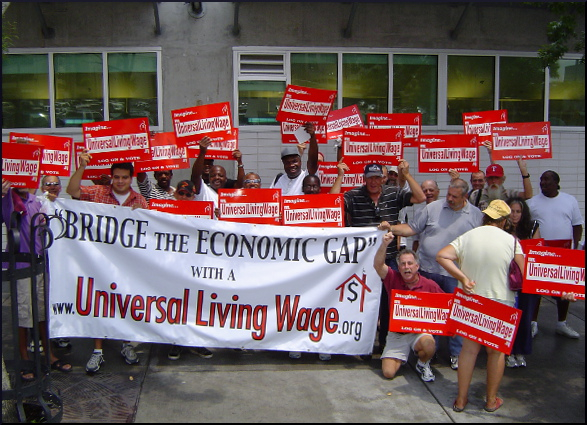
Federal resolve is insufficient; highly recommend Universal Living Wage formula indexed on the cost of housing wherever the person lives and works. 

Parents Told to Dump Disabled Children at Homeless Shelters

As if there weren’t enough problems and obstacles already for programs that are trying to house the homeless, or at least trying not to let things get any worse, things are still getting worse. Really, it’s one of those news stories where you think, “Hey, is this from The Onion?” We’re all in favor of parody and satire, and The Onion is a great publication, but when an Onion-like story is slipped in amongst the “real” news, as if we’re supposed to believe it, well, that takes a joke a little bit too far.

Except… the Associated Press is not generally known for its sense of humor, and Ken Kusmer is their man in Indianapolis for coverage of social services and diversity issues. Somehow, we don’t think he’s kidding. This is actual reportage from the great state of Indiana.

“Ind. parents told drop disabled kids at shelters,” the story is titled. Kusmer says social workers are telling parents to drop off their disabled children at homeless shelters. This is not a one-shot deal. He mentions several instances.

First, it’s important to understand what a Medicaid waiver is, and a four-minute video from an organization called Arc explains it. The program allows Medicaid to fund home-based and community-based services for children and adults with disabilities, in their own homes or neighborhoods.

This is a wonderfully humane alternative to sending people to facilities. Which don’t exist anyway. The program was developed so the state could close all state-funded institutions for people with developmental disabilities, and although we’re just looking at Indiana here, we’re betting the overall situation is pretty much the same throughout America.

Medicaid waivers are concerned with two types of need: primarily medical need, and need motivated by the developmental disabilities, including autism. Ideally, when this program is up and running, and has funding, the services available would include 24-hour residential support, employment services, adult day services, respite care, support to participate in the community, family and caregiver training, behavior supports, transportation, and various modalities of therapy.

So, forget everything you’ve just learned, because the darn thing is broken anyhow. With very few exceptions, the waiting lists have always been long, sometimes reportedly as long as 10 years, which would take us just about back to when the program was initiated. Now, the waiting lists stretch into infinity.

What happens when aging parents can no longer care for a disabled adult child, because the parents need care themselves? Institutionalization? Not an option. Independent living? If the person could live independently, she or he probably would be doing so already. What happens when both parents work, and even with both parents working, there’s no way they can afford to hire help because they just barely make a living wage? What happens when there is only one parent? When there is only one parent and more than one disabled child? When there is only one parent and more than one disabled child, and the parent has to go into the hospital for surgery? What happens is, in most cases, nothing.

Except that a state social worker, overburdened with unfillable requests, burned out from having to say “no” over and over again, might suggest dropping off the disabled family member at a homeless shelter. Of course, giving this kind of advice is not official policy, and a bureaucrat interviewed by the journalist said any employee who made such a suggestion would be disciplined. And nobody has actually done it… yet. Kusmer says,

There have been no confirmed cases of families dumping severely disabled people at homeless shelters because Indiana wouldn’t provide the care needed. But some families have been on waiting lists for waivers for 10 years. The lists contained more than 20,000 names last month…

Kusmer also spoke with Kim Dodson of The Arc of Indiana, the group responsible for making the YouTube video mentioned above. She says,

It is something we are hearing from all over the state, that families are being told this is an alternative for them. A homeless shelter would never be able to serve these people.

Truer words were never spoken. “Emergency housing shelters are consistently full,” says Richard R. Troxell, whose familiarity with homeless shelters is matched by few people in the entire nation. For instance, assessing the situation at the time when Austin, Texas, decided to ban outdoor living, which is pretty much the only kind of living available to people experiencing homelessness, Troxell wrote,

The number of homeless in Austin was estimated to be several thousand, which far out-numbered the few hundred beds at the Salvation Army, the only shelter in town at that time.

And now there is even more need, everywhere, and fewer resources. Shelters are just hanging on by the thread, trying desperately to help people who possess the ability to make it through the door on their own, and wait in a line. Even when made in jest — and not a very funny jest, at that — the idea that homeless shelters could take on another whole population is the least humorous idea of the decade.

Source: “Ind. parents told drop disabled kids at shelters,” Yahoo News, 10/27/10
Source: “Indiana’s Medicaid Waiver Program,” YouTube
Source: “Looking Up at the Bottom Line,” Amazon.com
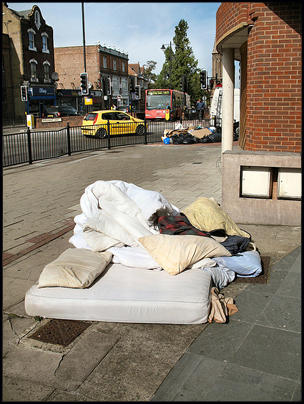
Image by Alan Stanton, used under its Creative Commons license.
Austin Chronicle’s Wells Dunbar Keeps an Eye on the Homeless

Austin, Texas, has been the scene of many of Richard R. Troxell‘s liveliest campaigns for social justice, especially when it comes to housing the homeless. But if you’re not from Austin, don’t turn the page. We are at a point in history where every city needs to listen to every other city, to find out who is doing something right, and how they can be imitated. And to learn from each other’s mistakes. We can’t afford an extended learning curve. Hundreds of thousands of desperate people need help now.

So, how has the Austin Chronicle been covering the latest events in this area of civic responsibility? Earlier this month, Wells Dunbar, one of the publication’s regular columnists, described a City Council meeting where a very thorough presentation was given by Dianna Lewis, the director of the Texas chapter of the Corporation for Supportive Housing, a nonprofit organization.

When those who are wrestling with the homeless problem meet, “housing first” is always a topic of discussion. Seems like there wouldn’t be any reason for debate about such a basic notion. Homelessness is solved by getting people housed. The complications arise when individuals need so much more than a mere set of walls and a roof.

Many of the people experiencing homelessness have other issues too, such as addiction or mental illness. They don’t only need a place to sleep, but a way to deal with the problems that may have put them on the street in the first place. Some people will never be able to make it entirely on their own. They need permanent supportive housing, or PSH, which was the topic Lewis addressed. The ideal would be to provide leased rental units complete with treatment for medical health and mental health, along with the substance-abuse treatment if needed, and job training, if feasible.

Austin estimates that it needs nearly 2,000 such housing units, and the city passed a resolution last spring to get started on 350 of them. It’s going to cost a lot, not only to build these units, but to maintain them. This is where the expertise of Dianna Lewis comes in, when it’s time to explain how a lot of money will be saved in the long run. For instance, there will be many fewer calls for emergency medical services. Court costs and jail costs will be reduced.

Somebody has figured out that the 112 homeless people who most frequently use the emergency room run up more than $3 million worth of bills a year. Surely it would be a lot more economical to make more of an effort to keep them healthy in the first place. Like, for instance, to keep them out of the elements.

There is a lot more to it, of course, but this is the type of thing that cities need to be thinking about — the relative intelligence of spending an X number of dollars now, no matter how difficult those dollars are to come by, versus spending a Y number of dollars later, when the funding might be even more difficult to find. And, of course, no decisions should be made without input from the Austin Neighborhoods Council, because no plan for any project can work well without the support of the area residents.

In the course of discussing these matters in his column, Dunbar focused his attention on the work of Richard R. Troxell, House the Homeless, and the book that tells the whole story, Looking Up At The Bottom Line. The subtitle sums it up: “The struggle for the living wage.” It just may be that the answer lies between these covers — the Universal Living Wage.

So, a few days later, the “City Hall Hustle” column fondly recalled some of Troxell’s attention-getting episodes of street theater and guerilla political-education seminars. Dunbar related how House the Homeless worked for years to modify Austin’s anti-loitering ordinance, which just doesn’t work for people who are experiencing disabilities as well as homelessness. Finally, the group exerted enough influence to get a medical exception written into the “no sit/no lie” rule.

The columnist also gave Richard the opportunity to explain how the Universal Living Wage is different from — and better than — the federal government’s minimum wage:

‘The book is a vehicle for us to talk about the real impact of not addressing the economic situation that’s leading so many people into homelessness,’ Troxell says. With its ‘one-size-fits-all approach,’ vis-à-vis the minimum wage, he says, ‘the federal government is the greatest creator of homelessness in this nation.’

Reactions?

Source: “City Hall Hustle: Home Away From Home,” The Austin Chronicle, 10/08/10
Source: “City Hall Hustle: Across The Universe,” The Austin Chronicle, 10/15/10
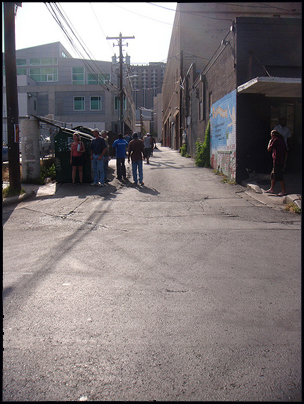
Image by ret0dd, used under its Creative Commons license.

Halloween and People Experiencing Homelessness

San Diego, California, is seeing an unusual Halloween celebration this year, as millionaire Jim Lawlor hosts a party to aid the people experiencing homelessness. Lawlor, now the star of a TV reality show, was once in the situation of not having a roof over his head. This was nearly 20 years ago, and since then he became wealthy by inventing specialized goggles for use in spray-painting jobs. The uncredited press release says,

He now devotes much of his energy giving back to the community. ‘How can we call ourselves ‘America’s Finest City’ when we have one of the worst homeless problems in the nation?’, Lawlor asks.

The reality show in which Lawlor is the featured character is, naturally, about him — a guy who throws a lot of parties at the Pacific Beach Castle, produces a bikini calendar, and also donates time, money and energy to philanthropy. Leading up to Halloween, he recruits “angels” and sends them out with bags filled not with candy, but with healthful munchies. This process of delivering holiday swag to street people is called “Reverse-Trick-Or-Treat.”

The genial host draws donors to his parties by having plenty of gorgeous women on hand. He gets the gorgeous women there by offering hefty prizes for the most alluring costumes. The gender politics may be questionable, but there is no doubt that the results are worthwhile. When the partier-goers arrive, they leave their contributions in a donation box. After the total is tallied up, Lawlor himself matches the amount before passing it on to his chosen charitable organization. This year, the group that benefits is Photocharity, which funds the San Diego Youth Services’ Storefront emergency shelter.

In Cleveland, Ohio, the Girl Scouts are doing their part for the Halloween fun of kids in shelters. Cheryl Bohr, who leads a troop of six- and seven-year-olds, told a reporter that she and her daughter got the idea from an article in American Girl magazine. After collecting “gently used” Halloween costumes, the young Scouts plan to deliver them to Project Hope for the Homeless, where they will tour the shelter.

Via Associated Content, Rebecca Rosenburg offers ideas to the personnel of shelters everywhere, on the subject of creating Halloween fun for the children who find themselves spending the holiday on their premises. Of course, families who don’t even make a living wage can’t be expected to buy these frivolities. So first involve the public, and collect gently used costumes and components, as well as Halloween decorations, paper plates, napkins, pumpkins, carving kits, and anything else you can think of to add to the festivities.

Depending on how the institution usually operates, the staff can prepare a Halloween-themed meal, or, if families do their own cooking, ingredients for Halloween-themed goodies can be provided. And, of course, encourage the residents to decorate their own quarters and the common areas, and even outdoors, if that’s appropriate, and if there are donated items to decorate with.

Of course, when the holiday is over, and if there’s room for storage, it’s a good idea to hold onto the costumes and salvageable decorations. Throughout the year, an effort can be made to save old sheets and blankets and odd bits of clothing that can be used to construct costumes next year.

Rosenburg recommends checking area churches and other institutions that invite children for Halloween fun. In my city, for instance, where there is still a pedestrian shopping area called Old Town, the merchants give out candy during the day. The sidewalks are full of costumed kiddies accompanied by their parents or day-care providers. Many churches host “Trunk or Treat,” or similar events. Put up fliers or write it on a chalkboard, just let the customers know that these events are planned.

The news we had all been breathlessly waiting for was announced on the 15th of this month, when Sophie Forbes reported on the Halloween activities of Paris Hilton and her main squeeze, Cy Waits. The celebrity couple first shopped for a carload of pumpkins, then delivered them, along with many other treats, to the Union Rescue Mission in downtown Los Angeles (a.k.a. Skid Row).

It’s one of the biggest family shelters in the country, and certainly the largest in Los Angeles, with not only transitional housing, but clothes, recovery programs, medical and dental programs, job training, and counseling. The tour that Paris and her boyfriend took of the facility offered, of course, lavish photo opportunities, and it looks like a good time was had by all.

Now, here is a question that apparently is on a lot of people’s minds, going by the evidence of online forums and discussion groups, anyway. At Halloween, is it cool for a housed person to wear a hobo costume, or some other outfit implying homelessness? Is it a consciousness-raiser, or a thoughtless, hurtful deed? Is it offensive, or merely in bad taste? Reactions?

Source: “A Halloween Party To Help Solve The Homeless Problem In San Diego?,” Free Press Release, 10/24/10
Source: “Scouts look to bring Halloween to homeless kids,” The News-Herald, 10/08/10
Source: “Homeless on Halloween: Celebrating Halloween at the Homeless Shelter,” Associated Content.com, 10/07/10
Source: “Good deed of the day: Paris Hilton delivers Halloween goodies to a homeless shelter,” Daily Mail, 10/15/10
Image by Beau B, used under its Creative Commons license.
Statistics Show Just How Bad American Poverty Is

America’s Poor: Where Poverty Is Rising In America” comes with a handy map that answers the question, “Where in America is poverty getting worse?” The answer is, just about everywhere. As a whole, we are in the worst shape we have been in since the Census Bureau started publishing these numbers 51 years ago. Economic homelessness, the plight of people who can’t afford housing even though they are working, is a growing condition.

From The Huffington Post via Yahoo! News:

Income inequality hit an all-time high before the recession, according University of California, Berkeley, economist Emmanuel Saez. States, faced with an estimated budget shortfall of $380 billion for 2011, have started to cut crucial services and have laid off thousands of workers.

The interactive map that accompanies the article was created by the personal-finance website Mint, and if you happen to feel like getting really depressed, spend a few minutes rolling your cursor over the various states so the numbers will appear. What’s the percentage of people in your state living in poverty? Here in Colorado, it’s about 12%, which is not bad, not bad at all. And that reaction is indicative of the depth of the problem. When the fact that only 12 out of every hundred people are destitute (or heading that way fast) sounds like good news, something is seriously wrong.

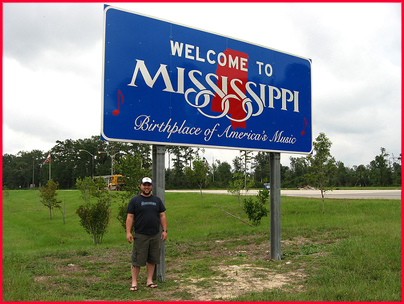
Because hey, it could be worse! This could be Mississippi, where more than 20% of the people are officially defined as poor. Although Mississippi is the worst, the Southern states in general are pretty much one big poverty pocket. People in rural areas are poor. And so are people in the big Northern and Western cities like New York and Los Angeles. And just so nobody feels left out, people in the suburbs are poor too. In fact, one-third of the poor people in America live in the suburbs, the neat, snug Ozzie-and Harriet-land where life was always supposed to be perfect.

To put it another way, one in seven Americans now lives in poverty. To put it yet another way, 43.6 million Americans are now living in poverty. The jobs are gone, and with them went the health insurance. The minimum wage is a joke, the working poor can’t afford even the cheapest housing, and the mental health status of people is perilous as a result of dealing with all this. Even those who are working to house the homeless are looking over their shoulders, fearing that their turn will come next.

The article mentioned above provides plenty of links to related articles, like the one from The Huffington Post titled, “The Poorest States in the U.S.,” by Nathaniel Cahners Hindman, from which we learn that the statistics can be sliced another way. Hindman reports,

The percentage of Americans living on incomes that were less than half of their state’s poverty threshold — or had an income-to-poverty ratio below 50 percent — grew to 6.3 percent from 5.6 percent in 2009, and was highest in Washington, D.C.

We’re talking about people whose income levels don’t even make it halfway to “poor.” They are truly “looking up at the bottom line.” And the place where this is happening most is in the District of Columbia, in the city of Washington. People, this is our nation’s capitol. The proud monuments of our history cast their shadows over some of the most down-and-out residents of the entire country, who live in the same geographical region as some of the wealthiest beneficiaries of the screwed-up mess this country has become. Because, oh yes, there is even more news on this front.

A thing called “income inequality” is worse than it has ever been, too. That means the gap, the difference between being really poor and really rich, has stretched to its furthest extreme. The wealthy are not just five times better off than the poor, or even a hundred times better off. The disparity factor is 1,500%, as we learn from a preview of Arianna Huffington’s book, Third World America.

Is there hope? Yes, if we do the right thing. Richard R. Troxell of House the Homeless says,

America can change this entire paradigm. We need to stop guiding and directing people to get on the dole. We are about to break the back of the average taxpayer. We need to make work pay. We need to encourage people to work, and we can do that by ensuring that anyone working 40 hours in a week can afford the basics: food, clothing, and shelter (including utilities), no matter where that work is done throughout the entire United States. That my friend, is the Universal Living Wage.

Reactions?

Source: “America’s Poor: Where Poverty Is Rising In America,” Yahoo! News, 10/19/10
Source: “The Poorest States in the U.S.,” The Huffington Post, 09/29/10
Source: “8 Surprising Facts About the Shrinking Middle Class,” The Huffington Post, 08/09/10
Image by Ken Lund, used under its Creative Commons license.
Homeless Camping in Eugene, Oregon

Eugene, Oregon, is a city with the reputation of doing something to house the homeless, and of doing its best to extend other kinds of help in the meantime. Eugene’s innovative Homeless Camping Program was instituted in 1998, so it has been operating long enough that other municipalities look to this city as an example. The program is under faith-based management by St. Vincent de Paul, the Catholic charity organization with a long history of helping those in need.

Vehicle camping is allowed in designated places, under strict rules. The aim is to give a person or family a certain amount of stability for three months, in a safe place, and without being penalized, while they try to figure out how to stop being homeless.

Keith Heath is in charge of screening the candidates, who are generally underemployed or unemployed, and often disabled, and matching them up with available spaces. When interviewed by Joanne Zuhl for Street Roots, Heath said the program is generally considered successful. On his wish list right now is an intern, someone to personally approach more businesses and organizations about creating more legal spaces.

Of course, the ordinance bans on-street camping, but supposedly the police are not zealous about enforcement. Apparently, personnel from St. Vincent de Paul have agreed to be the first responders when there is an on-street camping complaint. Supposedly, the police only show up in extreme situations. Often, housed residents don’t object to one vehicle camper on the street, but when two or several start to congregate, they raise the alarm. Heath says,

Some in the community argue that the police should be more aggressive at enforcing the camping laws. This is an approach that has been tried and the result was increased police time spent on this issue (at the expense of other enforcement needs), greater anger and stress on the streets among homeless people and no greater success at reducing homelessness.

A homeless activist at one point lobbied the City Council for a more liberal street-camping ordinance, allowing those who passed a police background check to stay parked in a street location for up to four nights, but that proposition didn’t pick up any support.

One of Heath’s “happy ending” stories concerns Sue Scott, who ran an auto salvage yard with her father, and was left alone to protect the place from vandals and parts thieves when her father died. She donated camping space to two couples with motor homes and a single person with a trailer. They gained sanctuary, and the presence of all those extra eyes and ears put an end to the break-ins.

Early in 2010, Associated Press reported that Edward Russo did a story about Scott. After two years of sharing her property with campers, she felt pretty good about how the arrangement was working out. In the beginning, she laid down some basic ground rules, such as not letting trash lie around or accumulate because “We don’t want the place looking like a junk yard,” which is unintentionally funny, considering that’s exactly what it is. Or maybe Scott was making a little joke on purpose, which wouldn’t be surprising, because we all need a sense of humor to get through these difficult times.

At the time of Russo’s story, Scott was one of 12 Eugene business owners participating in the Overnight Camping Program. (That is its official name, despite the fact that the campers stay longer.) The city pays for portable toilets and garbage collection at these sites. On non-residential property, which pretty much covers city land, churches and businesses, there can only be three vehicles per location. The participating churches tend to favor families. In the spaces designated for single campers, the person has to be 18 or older.

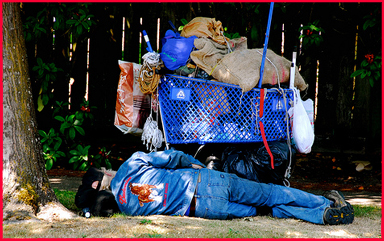
Of course, the program doesn’t solve everything — there are only 20 spaces available, and far more than 20 people need space. Sometimes, three times as many are on the waiting list. As for the fellow in the picture on this page, although he is in Eugene, his shopping cart wouldn’t exactly qualify as a vehicle.

According to St. Vincent de Paul figures, in the past year, the Overnight Parking Program has aided a total of 81 individuals, and 27 families that included 41 children. But the numbers of the needy continue to increase, and Keith Heath points out a worrisome trend:

The number of people who are chronically homeless has grown from 16 percent of the local homeless population four years ago, to over 50 percent today.

In other words, fewer are in a transitional situation, the kind of awkward hiatus where they just need a couple of months to save up for a security deposit, or just need a place to stay until some relative can refinish a basement for them to live in, or whatever. More and more of the people experiencing homelessness are falling, through no fault of their own, into the hard-core, permanently homeless zone.

Even though services can never keep up with need, Keith Heath and other Oregonians like him are not prepared to quit. There is an old story, often told by the socially conscious, about a beach where thousands of starfish are washed up on the sand. When a little boy picks one up and flings it back in the water, his father says, “It’s pointless, you can’t save them all.” With relentless logic, his son replies, “Maybe not, but I saved that one.”

Reactions?

Source: “Happy (legal) campers — Eugene, Oregon,” StreetRoots, 03/12/10
Source: “Eugene looking for more places for homeless to camp,” Ashland Daily Tidings, 02/27/10
Source: “Overnight Parking Program,” St. Vincent de Paul
Image by Don Hankins, used under its Creative Commons license.

Economic Yardsticks and Social Policy

In Looking Up at the Bottom Line, Richard R. Troxell asks us to envision America’s socioeconomic structure as a yardstick, where approximately one foot of its length is taken up by students, who are not expected to make a significant financial contribution to society because their full-time job is learning. Another foot of its length represents those who have finished their years of toil, and who are no longer expected to make a significant financial contribution to society.

The middle “foot” represents the workers, and this section of society supports not only itself but the other two sections as well. These days, it can’t even sustain itself, and it’s only going to get worse. As the rather rudimentary graphic on this page illustrates, some members of the student group will be moving into the working group, but a great many more members of the working group will be moving into the retired group.

Already, the situation of the middle group is grim. As Troxell points out in chapter six, this middle section includes about 20 million people who are working at, or slightly above, an hourly wage of $7.25 per hour, which is not enough for basic rental housing as individuals. He says,

The work ethic is there; however, the wage is not.

The Universal Living Wage would fix this. The idea is based on three premises: a 40-hour work week; the expenditure of no more than 30% of one’s income on housing; and a minimum wage indexed to the local cost of housing. The Universal Living Wage, Troxell states, will stimulate the overall demand for goods and services, which is beneficial to the economy. He writes,

Families become dramatically more credit-worthy and can avail themselves of more goods and more services. The overall demand for goods and services will increase demand for low-wage workers as industry responds to this demand and stimulation.

However, until the Universal Living Wage becomes reality, at least we have excellent visual tools to help us understand the precipitating factors. The Living Wage Calculator is an online tool created by Dr. Amy K. Glasmeier, which shows exactly how poor (almost) everybody is. The University of Pennsylvania gets part of the credit too, for being the institution at which Glasmeier does her work. (Don’t miss the “About” page.)

Packed with information, yet simple to understand, the Living Wage Calculator’s informational tables reveal what it takes to make a living wage in your community. Pick your state, and then pick your county. Read it and weep.

This calculator uses a different definition of a living wage than the one mentioned above. In this context, a living wage is defined as what it takes to support a family if the sole provider works full-time. We’re not talking about a middle-class lifestyle. This is the least amount you can get by on, to maintain the standard of the working poor. In a family with two adults and two kids, somebody’s got to bring in $28.84 per hour, or $59,000 a year before taxes, and still they will be hanging on by their fingernails. Glasmeier says,

Our tool is designed to provide a minimum estimate of the cost of living for low wage families… The original calculator was modeled after the Economic Policy Institutes’s metropolitan living wage tool. Users should know there are many researchers contributing tools and resources to the movement to achieve living wages. Diana Pearce at the University of Washington, Seattle is an important contributor to the living wage movement.

No researcher in this field, or any other, can or should claim to have the final word on exactly what is going on. Even sociology and economics are vulnerable to the Uncertainty Principle — where something is and how fast it’s going cannot be known at the same time. These fields and many others are also at risk of being influenced by the Schrodinger’s Cat phenomenon: The very act of studying something changes it.

So it’s kind of cool when a scientist will fess up to not being the ultimate authority, and admit that many other intelligent and well-meaning people are working on a problem, and, while they are not all getting the same answers at the moment, they are all intelligent and well-meaning nonetheless. Such a refreshing attitude is worth remarking on.

Reactions?

Source: “Looking Up at the Bottom Line,” Amazon.com
Source: “Introduction to the Living Wage Calculator,” LivingWage.com
Background image by Charlyn W (Charlyn Wee), used under its Creative Commons license. (Thanks to Julie Thomas Brown.)0
Homeless Demographic Shifts to Youth

On any given night in Portland, Oregon, there are at least 1,500 homeless youth, and an estimated 1,000 in Seattle, Washington. These cities and also San Francisco, California, are particularly hard-hit, because they are all places that attract the young for cultural reasons.

The West Coast situation is, believe it or not, relatively good, because there is more of an effort to provide separate shelters for young people experiencing homelessness, rather than throwing them in with the adults, as is the custom in most American urban areas.

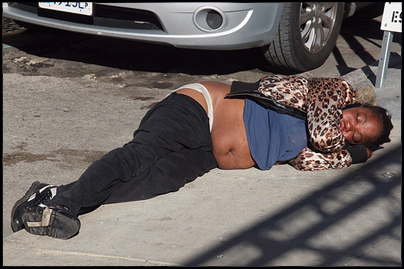
These are some of the conclusions drawn by Carol Smith, who writes for InvestigateWest, a nonprofit investigative journalism center. Anyone who holds a mental stereotype of people experiencing homelessness as a bunch of grizzled old bums is in for a surprise, because an awful lot of them are between the ages of 18 and 24.

How many? Around two million this year nationwide. It’s hard to be exact because by the time any kind of a count is performed and tallied up, and the results publicized, the national economy becomes even worse and the numbers are even larger.

Smith describes the day of a homeless youth as one of constant motion, always being encouraged to move along. At a 27-bed shelter called ROOTS in Seattle, executive director Kristine Cunningham told Smith how disheartening it is to keep turning away more and more young adults. You know how a military person will tell you that the very worst duty of all is notifying family members about a death? Shelter volunteers must have nightmares about having to say “No… Sorry… No room… Sorry…” as many times as they are forced to say it. Such horror is one of the founts of the social-worker burnout.

Sadly, too many young women see pregnancy as the answer. The very compassion that urges society to take care of mothers with young children turns out to contribute to the problem, when young women are so desperate they can’t even think straight, and are deluded enough to see this as a solution. Cunningham also spoke with Smith about that particular Catch-22:

For some of these young people, getting pregnant is perceived as a way out of homelessness. There’s a perception among young people on the street that if you’re about to give birth, you can get housing. ‘We’ve incentivized becoming pregnant,’ Cunningham said.

The thing is, being young and relatively healthy and relatively abled, youth are at the bottom of the list when need is assessed. Because, of course, the sick, the elderly, the disabled, and mothers with children are seen as having the most urgent need.

An able-bodied youth with no visible disabilities is the easiest person to dismiss with the time-honored instruction to “Get a job!” And a lot of them are thinking, “Whoa, what a brilliant idea! Get a job — why didn’t I think of that?” Sarcastically, of course. Because, where are the jobs? What jobs? As Richard R. Troxell reminds us, wage insufficiency knows no boundaries. The simple inability to make enough money to live on is destroying families at every level, and preventing families from being started, too, because the young can’t get enough economic traction to even think about establishing a home and being responsible for babies. Here is a statistic that Smith looked up:

In 2009, 80 percent of college graduates moved home after finishing school, according to job listing website Collegegrad.com…

Four out of five college graduates can’t find work, and wind up back in their parents’ refinished basement. And even if they can find a job, it probably doesn’t pay a living wage, just enough to throw Mom and Dad a couple of bucks for rent. (That’s “economic homelessness” — when you’re working and still can’t afford to rent an apartment.) If kids with an education have it that bad, what kind of hell are those other kids enduring, the ones with neither an education nor a family to fall back on?

Here is a very important insight that Smith obtained from Mark Putnam, a Washington State consultant on homeless issues. It’s a bizarre and sinister new twist to the famous “trickle-down theory.” In the homeless community, the only thing that trickles down is unemployment. Putnam says,

The 30-year-olds are taking jobs from 20-year-olds, because the 40-year-olds are taking the 30-year-olds’ jobs. These guys are truly employment victims of the recession.

Aside from college, where else are all these unemployed youth coming from? The System. Every year, about 20,000 kids “age out” of foster care. How and why they got put into foster care is another question that demands some pretty intensive investigation. But that is for another day. Here is today’s atrocity story:

The largest driver of the young adult homeless population is the foster-care system…
The majority of young people using the shelter system come from foster care.

This brings up one of the major tenets of Richard R. Troxell’s creed in his work to end homelessness: the conviction that no institution, no hospital, no military branch, no social service agency should ever turn a person loose to the streets. The avowed goal of every such institution must be, “Discharge no one into homelessness!”

Source: “Generation Homeless: The New Faces of an Old Problem,” AOL News, 10/19/10
Image by Franco Folini, used under its Creative Commons license.
“One Step Away,” Fatimah Ali, and the Philadelphia Homeless

You might find Fatimah Ali on a sidewalk or in a store, talking to people about the need to house the homeless, offering them copies of a publication called One Step Away. Or you might find her putting the paper together along with her co-workers, the shelter residents, of whom she says,

I’ve found two common threads — compassion for each other and for those who may have hurt them, and determination to recover from whatever burdens they’ve encountered. Often it’s a long and arduous road finding the road back to stability, but it can be done.

Along with being a regular contributor to the Philadelphia Daily News, Fatimah Ali writes for One Step Away, and also serves as the homeless newspaper’s development manager. One Step Away, sponsored by the nonprofit Resources for Human Development, is designed to emulate similar street newspapers established in other cities. Known for its vision and creativity, the paper was recently honored with a Community Service Award by the Philadelphia, Pennsylvania chapter of the NAACP.

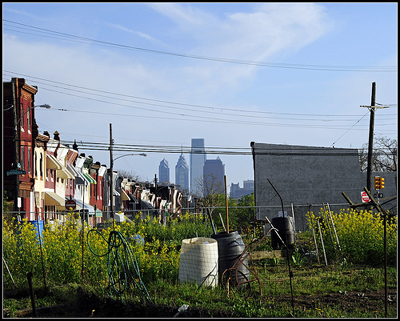
Readers of Looking Up at the Bottom Line will recall the significance of Philadelphia, where Richard R. Troxell, a veteran experiencing homelessness, learned the art of community organizing from consumer rights activist Max Weiner. He later formulated the Philadelphia Stabilization Plan and was invited to submit it to the search for best practices initiatives sponsored by the United Nations International Year of Shelter for the Homeless (1987).

Getting back to One Step Away, the name refers to the very small margin of error that exists between being housed and being homeless. Ali says,

My mission is to encourage everyone to care about homelessness because so many people are just a paycheck or two away from having the bottom fall out… Not every homeless person is strung out, uneducated or lazy. Plenty of folks just got a bad break, or had banks that took advantage of them.

How many examples of bad breaks can we think of? Well, first, there are the literal breaks. If, tomorrow, one of your legs was fractured in three or four places, how do you see the future scenario playing out? For many Americans, homelessness is quite literally only one “bad break” away: The building your apartment happens to be located in burns down, or maybe there’s a foreclosure in your future.

Job loss is another vicious jolt on the path of life, obviously. Some unemployment situations do not arise from quitting, or being fired or laid off. If you’re a private-duty nurse, for instance, your patient might expire. In better times, you would take another case. In hard times, another patient might not be available, for reasons having to do with the economy in general. Whether or not it appears in the statistics, it’s a job loss.

One Step Away debuted in December 2009 and is published monthly in tabloid format. The distributors are people experiencing homelessness and joblessness. Most of the content originates with residents of the Woodstock Family Shelter and the Ridge Shelter. Affordable housing is only one of the issues discussed and worked for. It included, for instance, the World Homeless Awareness Day, which was October 10. Fatimah Ali was disappointed that very few other news sources even mentioned it.

True, it doesn’t seem to be widely recognized based on a search on Google either. But then, we have an entire week coming up in November, the National Hunger and Homelessness Awareness Week. The important thing to remember is the second meaning of the paper’s title, One Step Away. The folks who work on it are also busy keeping the faith, believing that they are one step away from getting off the street. As Ali reminds us,

For every hard-luck story that ends in failure, there are also those who successfully turn their lives around and work miracles for their own self-empowerment.

Source: “Philadelphia’s homeless citizens are still under the radar,” Philadelphia Daily News, 10/12/10
Source: “One Step Away, Philadelphia’s first street newspaper, gives voice of advocacy to city’s homeless,” Resources for Human Development, 12/15/09
Image by Tony the Misfit, used under its Creative Commons license.
B. N. Duncan and the “Telegraph Street Calendar”

It was just over a year ago when B. N. Duncan died at age 65, and he is still missed daily in his old haunts, the streets of Berkeley, California. Duncan’s death and the memorial held for him were covered by a number of publications. He even made the CBS Evening News, where, in a story titled “Documenting the Homeless with Dignity,” John Blackstone told the world how Duncan was remembered by the street people he has found endlessly fascinating.

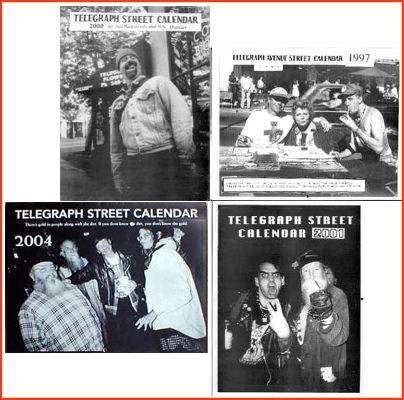
A fixture of the Berkeley scene, Duncan was always going around photographing the floating population, and many of his photos have ended up in the Telegraph Street Calendar, a unique cultural artifact that was produced for 15 years throughout the ’90s and in the early 2000s. His subjects thanked him for it. As one friend explained, street people don’t even look in mirrors, so it can be a touching and empowering experience for them to be represented and commemorated in this way. The story quotes Elaine Duncan, the photographer’s sister, who said,

He was a voice where there was no voice, and this meant a great deal to him.

Though Duncan could be something of a crusty character, his interest and compassion were endless, and he derived more enjoyment from getting to know the human flotsam of Berkeley than most solid citizens find in their own family circles. He took everybody with equal seriousness and equal light-heartedness. His publisher called him a genius.

In poor health toward the end of his life, Duncan himself was protected from the elements by his small apartment, but he spent his days among the ever-shifting yet never-changing denizens of this university town.

In Looking Up at the Bottom Line, Richard R. Troxell makes an excellent point:

We find that, while the majority of people experiencing homelessness may continue to reside in the same place, they are referred as ‘transients’… When you label someone as ‘transient,’ it paints a picture that he or she is just passing through. It implies that such persons have no relationship to our community and, therefore, we have no relationship to, and no responsibility for them.

Nowhere is this permanence of “transients” more evident than in Berkeley. There are people who have been on the scene for 10 or 20 years, or even since the 60s, when Berkeley was one of the centers of the world. They include people suffering from mental illness, drug dependency, alcoholism, and just general inability to handle modern life — folks who are so disconnected that even joining the “working poor” is far above anything they could aspire to. Even the dream of qualifying for any kind of subsidized housing is beyond what many of these lost souls could ever hope to achieve.

A lucky few get by on Social Security payments, while many depend on panhandling and various ingenious ways of scraping together a few bucks. But, despite their ongoing problems and the rigors of addiction recovery and the temptation to give up all hope, the homeless population of Berkeley contains the highest concentration of feisty community activists anywhere. They’re always out there demonstrating for something or protesting against something, and social justice is on their minds 24/7. The ongoing struggle for People’s Park was a recurring theme in the calendars, and the world-famous Naked Guy of Berkeley appeared in its pages more than once.

B. N. Duncan was not the only force behind the Telegraph Street Calendar, which became a tradition for the local people experiencing homelessness who have appeared in its pages. Duncan’s partner in creativity during those years was cartoonist/street chronicler Ace Backwords, who admits to letting the very first printing of the work hit the streets with a typo on its front cover — “calender” instead of “calendar.”

Back in 2002, Gina Comparini interviewed Backwords for the Berkeley Daily Planet about the yearly social document which included not only photos of the street people, but samples of their artwork, cartoons, and statements to the world. Depending on the circumstances, 700 to 2,000 copies of each edition of the calendar were published, with the profits distributed to the participants. Comparini quotes Backwords:

It’s gratifying that what started as a personal thing now means so much to so many people… [W]e try to show them as people first, without the stereotypes… We’re showing them as creative people trying to live productive lives.

Like Duncan, Backwords has always felt compelled to bring these stories to light. Sadly, many of the biographies of street people have ended up being memorial pieces that he had written after their suicides. But he has also certainly celebrated the living, putting many hundreds of hours of labor and many donated dollars into a CD compilation of the work of the various street musicians indigenous to the area.

In yet another tribute to Duncan, community activist Dan McMullan wrote,

The calendar he co-produced had the wonderful effect of showing people that we walk by and ignore every day, as something special and worthy of note… I was always amazed how many students bought his calendars to send back home to show the family and friends what a wild and original place they were calling home for the next four years or so.

Source: “Documenting the Homeless with Dignity,” CBSNews.com, 08/09/09
Source: “Telegraph calendar records street’s spirit and mood,” The Berkeley Daily Planet, 01/12/02
Source: “B.N. Duncan: A Telegraph Avenue Fixture,” The Berkeley Daily Planet, 07/30/09
Images of the Telegraph Street Calendars courtesy of Ace Backwords, used with permission.

We Are All Leaders: The Coalition of Immokalee Workers

Down in Florida, the Coalition of Immokalee Workers (CIW) has been involved for 10 years in an active struggle against the tomato growers over, among others issues, a living wage. The pickers are the very definition of the working poor, a combination of migrant workers and American citizens who are experiencing homelessness. A lot of those tomato farms have not raised the pay rates in 30 years, and some say this industry is the closest thing we have to slavery in America today.

The tomato harvesters need better pay and better working conditions. There have been boycotts and federal investigations, and finally the workers hit on the effective combination of right target and right tactic. The Campaign for Fair Food began by focusing its efforts on the fast-food industry, then went after the food-service sector, announcing in August:

The foodservice industry — the companies that, operating largely behind the scenes, manage cafeterias in the nation’s grade schools and universities, hospitals and hotels, government agencies and institutions, and more — is comprised, almost in its entirety, of its three largest members, Compass, Aramark, and Sodexo. With today’s announcement, all three of those companies have now signed Fair Food agreements.

The CIW is into education, investigation, and agitation. Its members and supporters are vocal, articulate, persistent, and sincere organizers and activists who are great at demonstrating, and are very adept at winning the support and help of the general public. They go into stores and talk to the customers, and deliver letters to the managers, stating,

It is imperative that your company seize the opportunity to be part of the solution to Florida’s longstanding shame of farmworker exploitation.

They believe that those who hold great power in the world also have a great responsibility, a notion that used to be called noblesse oblige. The giant supermarket chains are their next target. To make sure that corporations meet their responsibilities, the CIW has a couple of major actions planned for this coming spring, one in Florida and one in Quincy, Massachusetts, at a corporate HQ.

If you are cheered and heartened by stories of how public shaming can affect a corporation, you will enjoy Richard R. Troxell’s tale of the actions aimed at Best Buy, in chapter two of his book, Looking Up at the Bottom Line.

Wall Street Journal reporter Evan Perez has covered real estate, home builders, cruise lines, and airlines, and now his beat is the Justice Department. Lately, he has been writing about the struggle in Florida, and brings us up to date on part of the movement’s history:

Taco Bell was the first target. After four years of protests and boycotts, Taco Bell corporate parent Yum! Brands Inc. in 2005 agreed to pay the surcharge to suppliers that would be passed along to workers. Next, the farm workers group went after McDonald’s, which signed a similar agreement in 2007, and then Burger King Holdings Inc. a year later.

Perez quotes Reggie Brown, who is executive VP of the Florida Tomato Growers Exchange. The indignant Brown has warned his fellow tycoons:

This type of tactic could be used against any company in corporate America. They’d be well advised to take note.

Exactly! That’s the whole idea! That’s what made the Pacific Tomato Growers, for example, agree to pass along the extra-penny-a-pound surcharge that McDonald’s is paying them.

Why, you may ask, should paying these workers even require a special surcharge, which will be passed on to the consumers who, after all, are also trying to stay solvent? Isn’t paying the employees a basic built-in cost of doing business? Why don’t McDonald’s and the other corporations take it out of their own profits, which are surely abundant? That is one of the mysteries of the Universe.

A raise of one cent per pound of tomatoes would result in something much closer to a living wage for the workers, but, although the CIW has put a lot of energy into trying to convince the growers, it was no use. They even got some of the huge corporate customers to pay the extra penny per pound, but the growers were forbidden by their trade association from passing it on to the tomato pickers. Outfits like Taco Bell have been keeping it in escrow.

Labor Notes reporter Mischa Gaus, formerly a writer for In These Times, knows all about workers — in communications, the postal system, the steel industry, the health care field, and the tomato fields. He quotes CIW leader Lucas Benitez, who says,

We are not today claiming that we have achieved the changes sought by the Campaign for Fair Food. Rather, we are announcing that we have forged a plan of action that gives us a realistic chance to bring about those changes.

In other words, there is still plenty to do. But things are looking better. Along with better pay, the workers want some other kinds of social justice too. They have convinced some companies to agree to the CIW’s code of conduct, which includes third-party monitors to make sure that the wage increase actually makes it to the workers’ pockets. There is also a health and safety program, a complaint-resolution system, and a guarantee that CIW representatives are allowed to talk with workers in the fields.

Source: “Ready to take action now?,” Coalition of Immokalee Workers, 10/11/10
Source: “Major Grower to Join Wage Plan,” The Wall Street Journal, 10/13/10
Source: “Tomato Pickers Secure Path-Breaking Deal with Florida Grower,” SouthernStudies.org, 10/13/10
Image by Dion Hinchcliffe, used under its Creative Commons license.