
Our Mission

Founded in 1989, HtH is the oldest all volunteer, action, homeless organization in the state of Texas. The mission is Education and Advocacy around the issues of ending and preventing homelessness.

Urgent Issues

Re-Criminalizing Homelessness — Speak up now!

HtH supports the direction being taken by the City of Austin’s relatively new Homeless Strategy Office, led by a very committed and responsive David Gray, and with the commitment of Charles Loosen and other staff. We further strongly advocate ALL positions below that preceded The vote to basically criminalize homelessness — especially:

reinstating a camping ban must consider that those with disabilities, the aged, and in fact anyone with no place to go. The no sit/no lie ordinance is absolutely inhumane and unconscionable we must have at least 15 minute respites particularly for those with disabilities and make other provisions.

Mayor Kirk Watson, elected in 2023, is working to secure funding for homeless services from the State and within the City Budget.

2025 interests:

City Council approved a resolution making homelessness a top financial priority.

Increase the capacity of the Homeless Strategy Office to address and implement a comprehensive approach to strategic advancements in homelessness response. (Plan detailed in a 50-page memo from David Gray, June 2025).

Examples:

1. Expand HOST (Homeless Outreach Street Team) support including team members:

APD officers, EMS paramedics, behavioral health clinicians, social workers, peer support staff.

2. Support for Marshaling Yard operations.

3. Rapid Response housing and safe housing, especially for families.

4. Increase shelter beds with support; and more.


The Austin city council recently voted to put on its May 2021 ballot a vote to reinstate the no camping ban including the no sit/no lie ordinances. Now is the time to contact your mayor and council members particularly those who have supported decriminalizing homelessness, such as Mayor Adler, Kathy Tovo, Ann Kitchen, Greg Casar, Sabino Renteria, and others, we pray.

First call to action is cold weather shelter. Anyone that reads this, our urgent plea is to email our mayor and city council in this urgent time of cold weather. House the Homeless is encouraging to use the Convention Center or other alternatives sites that are already over burdened due to Covid-19 or at capacity.

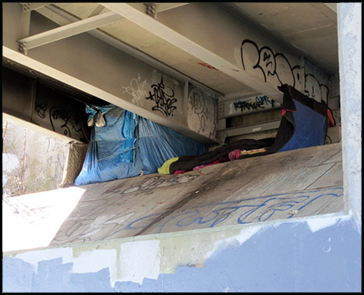
A second call to action is to not displace unsheltered neighbors from bridges and the four major camp areas without having an immediate plan for alternative shelter/housing.

Finally, advise your mayor and council members that the wording for the May ballot regarding reinstating a camping ban must consider that those with disabilities, the aged, and in fact anyone with no place to go. The no sit/no lie ordinance is absolutely inhumane and unconscionable we must have at least 15 minute respites particularly for those with disabilities and make other provisions.

Federal Minimum Wage Debate

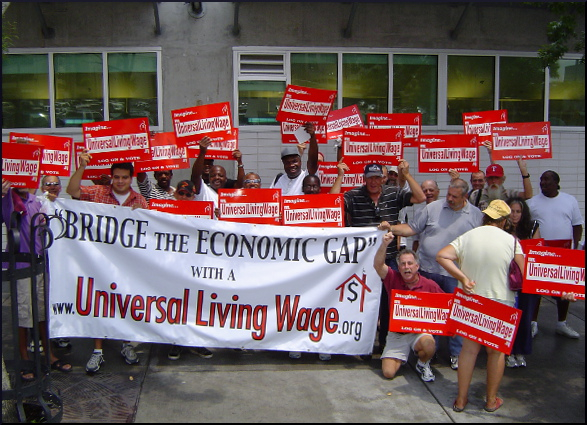
Federal resolve is insufficient; highly recommend Universal Living Wage formula indexed on the cost of housing wherever the person lives and works. 

Richer Rich, Poorer Poor, and PSC

House the Homeless looked at the Associated Press journalist Hope Yen’s report on the recent Pew survey about attitudes concerning class in the United States. It turned out to be so interesting, there’s more to say about it.

Increasing poverty and “stubbornly high unemployment” are mentioned, societal conditions that are no longer fresh news to anyone. We have seen months of Occupy movement activities, including in many places the welcoming into the ranks of people experiencing homelessness.

The media have been full of photos of peaceful demonstrators being struck, stunned, sprayed, and otherwise brutalized. The impression such pictures give is that the members of America’s police forces are desperate to keep their jobs. The police seem to be so panicked by the thought of unemployment, they are willing to drop the charade of protecting the people, to become the tools of an elite class that does not even have their best interests in mind. Afraid of losing their security, of becoming broke and powerless, they are overtaken by a primal urge to attack the thing they fear becoming.

Oddly, what really struck a public nerve was not an instance of out-of-control violence, but the iconic photo of protesters sitting peacefully on the ground, being pepper-sprayed by a UC Davis cop. His perfectly casual attitude of “business as usual” is far more insulting and frightening than a display of temper. Going about his job with all the composure of a gardener watering flowers, Pepper Spray Cop (PSC) became an Internet meme.

Hundreds of adaptations were generated by creative people with graphics software, and Tumblr has a great collection. The PSC on this page has been separated from its original context and touched up, for the convenience of anyone inspired to do some PSC art.

Hope Yen quoted one of the survey analysts from the Pew Research Center, Richard Morin, who sees “a growing public awareness of underlying shifts in the distribution of wealth in American society.” In 2005, the top 10% of the population held 49% of the wealth. By 2009, the top 10% held 56% of the wealth. Meanwhile, almost half the people in America are in a condition of poverty, and no matter how generous and caring they might be, a great many Americans are simply not in a position to help those who are in the worst condition of all, the actually homeless and out on the streets or packed in shelters.

Yet, incredibly, Reason magazine’s Veronique de Rugy, a senior research fellow at the Mercatus Center, seems to think everything is okay because “income mobility is actually alive and well in the United States of America.” She interviewed a University of Chicago economist named Steven Kaplan, whose main point seems to be that, whoever the top 1% were in 1990, they were not the same individuals as the top 1% in 2000, and so on. Things get churned around, and there is plenty of “income mobility.”

In other words, some people get rich but don’t stay that way, and some people who were not wealthy become wealthy. It’s as if, because different people take turns in the poverty sector, that somehow makes everything okay.

Yen quotes Scott Winship, from the Brookings Institute, who talks about other measures of economic distribution. He says:

These accounts generally conflate disappointing growth in men’s earnings with growth in household income, which has been impressive. Growth in women’s earnings has also been impressive…

We’ve got scholars claiming that the average household has a higher income than at some point back in history. Big whoop! Even if the average family income is higher, it’s achieved at the cost of both parents working. Two adults have to work, if they can find work, to maintain a household economic standard that, in the past, could have been attained with only one adult working. This is not progress.

Yen asks the rhetorical question: “So why are people still sleeping outside in protest?” A better question is, why are so many people still sleeping outside because they don’t have anyplace else to sleep? If things are so economically rosy, why are thousands of Americans still homeless? Maybe because we don’t yet have the Universal Living Wage, which promises to end homelessness for over 1,000,000 minimum-wage workers, and prevent economic homelessness for all 10.1 million minimum-wage workers.

But what about economic charts and graphs? Glad you asked. Here are some magnificent ones, gathered by various sources and presented by Business Insider. The charts have such titles as:

The gap between the top 1% and everyone else hasn’t been this bad since the Roaring Twenties.

Half of America has 2.5% of the wealth.

The last two decades were great… if you were a CEO or owner. Not if you were anyone else.

Despite the myth of social mobility, poor Americans have a SLIM CHANCE of rising to the upper middle class

In introducing the charts, Gus Lubin says,

The rich are getting richer and the poor are getting poorer. Cliché, sure, but it’s also more true than at any time since the Gilded Age… The poor are getting poorer, wages are falling behind inflation, and social mobility is at an all-time low.

Reactions?

Source: “Conflict between rich, poor strongest in 24 years,” Statesman.com, 01/11/12
Source: “For Richer and for Poorer,” Reason.com, 02/12
Source: “15 Mind-Blowing Facts About Wealth And Inequality In America,” Business Insider, 04/09/10
Image by DonkeyHotey, used under its Creative Commons license.
Perceptions and Poverty

Associated Press reporter Hope Yen recently wrote about a telephone survey conducted by the Pew Research Center in December of 2011. More than 2,000 adults were questioned about class tensions, which researchers conclude are at their most intense in 25 years.

The article says:

About 3 in 10 Americans polled said there are ‘very strong’ conflicts between the rich and poor…. That is double the share who believed so in July 2009 and the largest proportion reporting that view in the 24 years the question has been asked in surveys.

The thing is, this survey is about perceptions, otherwise known as opinions, concerning the economic divide. It used to be mainly Democrats, African-Americans, and youth who were conscious of an upsetting disparity between the rich and the poor. But now, this survey reveals, even white folks are seeing the huge chasm between the richest and the poorest, and not liking what they see. Why? Because a lot of formerly middle-class Americans see themselves sliding closer and closer to the abyss.

It’s the kind of issue that people get emotional about, and form opinions about, but can we really understand what they think, when the framework of questions is so rigid? Thanks to this study of attitudes, we now know that:

… about 46 percent of Americans hold a disapproving view that rich people are wealthy because they were fortunate enough to be born into money or have the right connections. But almost as many people — 43 percent — say wealthy people are rich ‘mainly because of their own hard work, ambition or education.’

Why are the pollsters asking respondents to choose one or the other? In the real world, both are true. The correct answer is, some people have money because it was given to them, or they were granted unfair opportunities to acquire wealth. And, even worse, some are rolling in dough because they threw their souls overboard to make room for greed. As Balzac and many others have said, “Behind every great fortune there is a great crime.”

The rest of the correct answer is, a lot of people have become wealthy because of their ambition, drive, work ethic, integrity, talent, ingenuity, and a whole lot of other desirable qualities. There is a quite a number of different ways for a person to reach the high-income brackets.

But the more disturbing question is, why is there so much concern about asking Americans their opinion about things, whether it’s the motherhood fitness quotient of Britney Spears, or the qualifications of their fellow citizens to have big bank accounts? What people think doesn’t really count for much. If the majority of people think that the Earth is balanced on the back of a giant turtle, that doesn’t make it so, and no progress is made toward solving the planet’s problems.

There is another difficulty. This kind of either/or thinking encourages Americans to polarize: x% believe that the homeless deserve all the help a society is capable of giving, and y% believe that people experiencing homelessness are lazy specimens who deserve their bad fortune and that they have brought it on themselves.

Well, guess what? In the real world, both are true, and many other things, too. Many of the people experiencing homelessness are disabled, either mentally or physically. There just isn’t any kind of work they can do — especially when unemployment is so high, with hordes of massively overqualified workers available for even the most menial jobs.

And many, of course, are children. Surely, nobody expects them to go out and get jobs. Their lives are difficult enough, just trying to keep up in school. That’s their job. Keep the kids in mind when learning about the Universal Living Wage, which has the potential to end homelessness for over 1,000,000 minimum-wage workers and prevent economic homelessness for all 10.1 million minimum-wage workers. Including the ones with kids.

Reactions?

Source: “Conflict between rich, poor strongest in 24 years,” Statesman.com, 01/11/12
Image by eflon (Alex), used under its Creative Commons license.

Looking Back at 2011

Amongst the year’s news research, one of the more interesting comments from the public to be discovered came from “pdquick,” who worked in the streets for years as a paramedic, and later as a doctor in a program for people experiencing homelessness. This person was reacting to a video clip about San Francisco‘s sit-lie ordinance, and to unkind remarks by other commentators:

If people could overcome addictions with a snap of the fingers, they wouldn’t be addictions, they would just be bad habits… You have no idea the barriers to housing — internal and external — that people face. We have a whole set of policies in place, from draconian drug laws, to public housing policies that essentially make evictees permanently homeless, that stand in the way. Then we put people into buildings where drug dealers knock on the doors all night trying to get you to buy drugs. These are collections of people whose mental illnesses often don’t mesh with each other at all. Then when they ‘fail’ in housing, we send them back to the streets with less stability and less chance at housing than they had before.

The organization Faith Advocates for Jobs, in the winter issue of its newsletter, named Looking Up at the Bottom Line as a “Books of Note” recommendation. This is, of course, the book we see over on the right-hand side of the page, written by Richard R. Troxell, and it is the place to find out how the Universal Living Wage can help you, me, and everybody.

For The Libertarian Alliance (a think tank headquartered in Britain), Kevin Carson wrote a lengthy and well-considered piece on Looking Up at the Bottom Line.

In July, when Austin’s city government announced the sale of a dozen subsidized homes, KUT News reporter Nathan Bernier interviewed Richard. The good news is, the construction of these houses was part of an ongoing program which had already put 30 families into houses. The bad news is, despite the city’s administering nearly 2,000 low-income units, and managing the Section 8 voucher program which affects 5,000 units, both programs have waiting lists numbering in the hundreds of applicants. Richard says,

Most of our ‘affordable housing’ programs have nothing to do with homelessness… We’re talking about people who don’t have anything, and don’t qualify for anything.

Instead, he thinks better results could be obtained by creating a living-wage jobs program that would help homeless people work their way off the street. While roughly half of the people experiencing homelessness in Austin (and the nation) are so disabled they cannot work, the other half are capable of working and indeed want to work. Meanwhile, House the Homeless has been kept extremely busy dealing with the citywide restructuring of funding for all social services that caused the Salvation Army, the Children’s Shelter, and Legal Aid to lose city funding.

John Joel Roberts, of PovertyInsights.org, cited Richard’s book in The Huffington Post article, relating its message to his own locale of Los Angeles:

… [T]he average rent for a one-bedroom apartment, as of May 2011, is $1,315 per month. Many housing experts believe that in order for a person to be able to pay for housed-living (such as food, utilities, transportation and clothing), a person should not pay more than one-third of his monthly income toward rent. That means in Los Angeles, the homeless man standing near the freeway needs to earn $22.76 per hour to afford the average rent for a one-bedroom apartment… Minimum wage in Los Angeles, however, is only $8 per hour. A person earning this rate could barely pay his rent, and would have nothing for food, utilities or anything else. In other words, he would be sitting in an empty apartment, darkened because of no electricity, and hungry because of not enough income to buy food.

If it makes sense to you that a person working 40 hours a week should be able to afford a roof over his or her head other than a bridge, then the Universal Living Wage makes sense too. Every member of Congress and every state Governor have been sent a copy of Looking Up at the Bottom Line. So has the President. Why not write or email them? Tell them that Troxell’s idea will stabilize small businesses, stimulate the housing industry and the economy generally, end economic homelessness for over one million minimum-wage workers, and prevent it for all 10.1 minimum-wage workers, including our returning veterans.

Reactions?

Source: “Homeless React to Sit/Lie,” MissionLocal.org, 11/11/10
Source: “Richard R. Troxell. Looking Up at the Bottom Line: The Struggle for the Living Wage,” The Libertarian Alliance: Blog, 04/27/11
Source: “City Selling 12 Subsidized Homes For $110,000 Each,” KUT News, 07/05/11
Source: “Unlivable Wages Mean Unlivable Conditions,” The Huffington Post, 06/09/11
Image by jdn (Jack Newton), used under its Creative Commons license.

Homeless in the Capitol of America

Eric Sheptock, the media-savvy “Homeless Homeless Advocate,” has posted a 14-minute video detailing the events of 2011 in Washington, D.C. He gives a little of the back-story of homeless activism in the nation’s capitol, especially the years-long battle for the Franklin School Shelter which was finally closed. (Recently, an attempt was made to re-occupy it, which is a whole separate story.)

Yes, Washington has initiated a permanent housing program, but when the last count was made (January 2011), the capitol city of the greatest country in the world still contained at least 6,546 people experiencing homelessness.

Sheptock makes a conclusion and offers a solution:

In spite of the programs that are being created, we can’t seem to house people more quickly than they become homeless… We need to figure out how people are becoming homeless, and we need to capture them before they enter shelters

The analogy he makes is a leaky water supply in a house. Sure, you mop the floor — but first, you shut off the water. “You stop the flow into homelessness and then you clean up what you already have,” says Sheptock. Hopes were raised when Washington acquired a mayor who came to the position via the Department of Human Services. Unfortunately, the effect of that coincidence was negligible, because in April the mayor’s budget proposal indicated a $20.5 million shortfall for homeless services because of a reduction in federal funding.

Somehow, D.C. shelters had been managing to operate year-round. But the budget cuts would mean that they would scale back to only being open during the five coldest months of the year, which is the bare minimum required by the city’s law. It looked for a while as if all the shelters in Washington were fated to close in April of 2012, not to reopen again until November.

After the mayor’s announcement, 250 activists showed up at City Hall urging the government to find the money somewhere. A sub-group from Coalition of Housing and Homeless Organizations started meeting even more often at the Community for Creative Non-Violence, where Sheptock lives. The upshot, as described in one of his website reports, was:

After we put enough public pressure on them, they found $17 million for shelter (while taking $18.4 million from the fund that creates affordable housing — an asinine move, to say the least). We thought that the shelters were saved (and lamented the loss of funding for affordable housing).

This same blog entry also critiques a couple of other federal institutions, starting with the president, who visited what is probably the country’s largest shelter without saying anything about what he planned to do about ending homelessness:

It only took him 2 years and 8 months of being in office to ride the 1 mile or so from the White House to the shelter which sits right on the edge of Capitol Hill… Still, that’s more than I can say for the U.S. Department of Labor. Their building is right across the road from this ginormous shelter and they’ve yet to walk over and see what they can do to employ its residents.

Of course, there are more problems. Federal funding for Section 8 housing vouchers in Washington was threatened with a 50% cut, and then the cut was changed to a smaller proportion. That’s the kind of thing that passes for good news these days.

As we know, it takes time for the gathering and collation of statistics to catch up with reality. Sheptock gives the figures from the Washington metro area between January 2008 and January 2009, during which time the number of homeless families grew by 25%. He goes on to say:

All over the country, the fastest-growing segment of the homeless population is families… You see, when individuals become homeless, folks tend to blame that individual for their own missteps, whether it was drug addiction, or alcoholism, or not paying the rent, or some other personal vice. But when families become homeless, people tend to blame the economy. They’re more sympathetic to families that become homeless. But that sympathy doesn’t house people.

But hey — at least we’re not in Hungary! Last month, BBC News reported that Hungary has outlawed homelessness. Not only that, but its capitol city beats Washington, because Budapest has about 10,000 people experiencing homelessness. And the government has decided to solve that by making their very existence illegal, punishable by either a fine (money they obviously don’t have) or jail (which just costs the taxpayers even more money). Way to go, Hungary! The fact that America hasn’t quite reached such a point yet is, again, what passes for good news these days.

Reactions?

Source: “2011 State of Homelessness Address inour Nations Capital,” YouTube.com, 12/24/11
Source: “Obama Fails To Address Homeless Crisis While at Kitchen,” streatstv.blogspot.com/, 09/15/11
Source: “Hungary outlaws homeless in move condemned by charities,” bbc.co.uk, 12/01/11
Image by Daquella Manera (Daniel Lobo), used under its Creative Commons license.
Occupy Occupied — by People Experiencing Homelessness

The homeless community and the Occupy movement agree on many points:

— The yawning chasm of wealth disparity is not to be tolerated.
— People need jobs.
— Corporate greed is at fault. (Maybe not all corporations. Greedy ones, definitely.)
— Also guilty is the whole mess with the banks and the foreclosures.
— There needs to be a separation of money from politics, and vice versa.

Still, some cosmically absurd things have been going on. A bunch of protesters take over a private or public space, to bring attention to their oppressed status. They are supported by some and vilified by others, who are even willing to use force to make them leave. The protesters’ cause is just, and all right-thinking people ought to agree with them.

Then… a bunch of people experiencing homelessness comes into that occupied space, and their claim is a legitimate one, of even more oppressed status. They are supported by some, but others would prefer that they stay out. The homeless people’s cause is just, and, to their way of thinking, all good people ought to support it. What a situation!

What happens when Occupy gets occupied? Sometimes, the homeless are treated as intruders and hazardous nuisances. They are said to jeopardize the legitimacy of the Occupy movement. From that standpoint, it’s a public relations nightmare. But the news is not all bad.

From Boston, MA, John Zaremba reports that the city will not act to prevent Occupiers from spending the winter on Dewey Square, as long as rules for public safety are observed, including a ban on open fires and kerosene heaters. The reporter interviewed a logistics and supplies person from the Occupy Boston camp, Kristopher Eric Martin, who said of the homeless members:

These guys are experts at staying warm and staying dry. All these guys are used to living on the streets and sleeping with one eye open.

Among the helpful hints offered by the people experiencing homelessness: Extra protection from the cold can be obtained by stuffing hay or straw between layers of clothing. First off, where do urban street people get hay and straw? Good grief, what story will we see on TV on Christmas Eve? News of a homeless person arrested for taking the straw out of a church’s nativity scene to insulate their clothing?

Remember Otzi the Ice Man, the 5,300-year-old frozen corpse found in the Alps? He wore a cloak of woven grass, and his shoes were stuffed with grass and moss for warmth.

So, here we are in America in 2011, with some citizens teaching other citizens the survival skills of a Neolithic hunter. Now, that’s progress.

From Seattle, WA, Paula Wissel wrote about the ongoing struggle concerning Westlake Park, where protesters continued to stay despite being officially forbidden. The mayor has been ambivalent. He sympathizes with the protesters, but there are local residents and businesses to consider. Apparently, the movement has sparked some hope among the city’s urban indigent people. The reporter sought an opinion from a citizen named Delmar Bryant:

He says he’s lived on streets all over the Northwest. He believes Occupy Seattle is the start of something special.

The situation in Atlanta, GA, seems to be kind of strange. Early last month, Gwynedd Stuart titled a post, “Occupy Atlanta uniquely OK with homeless ‘interlopers.’”

Well first of all, Atlanta is not so unique in being okay, as we have seen. But here’s the unusual slant. Stuart speaks of:

… Occupy Atlanta’s acceptance of the homeless — which is probably best demonstrated by the decision to actually move into a homeless shelter…

Apparently, when demonstrators were ejected from Woodruff Park, about 100 of them moved into the top floors of the Peachtree-Pine homeless shelter, where around 600 homeless people already lived. In other words, Occupy Atlanta occupied the homeless shelter.

The controversial shelter’s future was already precarious. Later in the month, Bob Cramer, who was chairman of Atlanta’s Task Force for the Homeless for 14 years, wrote:

With the loss of so much public housing, low-income Atlantans have few choices and little hope. With the possible loss of the Peachtree-Pine shelter, homeless people may once again need to use Woodruff Park as a refuge, perhaps standing shoulder to shoulder with Occupy Atlanta, perhaps to die once more on our streets.

Eugene, OR, is on the cusp of major change, with an upcoming vote on whether to allow continuing life to a large encampment of people experiencing homelessness. Edward Russo reports:

The council is to vote on whether to let Occupy Eugene continue its camp of mainly homeless people in Washington-Jefferson Park… The protest group wants to remain in the park and work with city officials to find a place to build a permanent camp for the homeless.

The settlement is said to consist of between 150 and 200 people, some protesters and the rest representing a very small fraction of the city’s estimated 4,000 homeless people. The occupiers want to help collect donated materials and build kitchens, showers, and necessities. But opinions differ of the advisability of this. City Councilor Chris Pryor, who works for United Way, told the reporter:

I am part of the human services world that doesn’t think living in a tent is a step to solving homelessness. The long-term solution is to get people into jobs and housing.

On the other hand, St. Vincent de Paul Director Terry McDonald told Russo:

Occupy Eugene has engaged homeless youth. The group’s gatherings and workshops in the campsite are giving the youths something to do other than simply try to survive on the streets… bringing them from a more feral society to one that is more civil…

House the Homeless has communicated with dozens of Occupy groups throughout the nation, encouraging them to get behind the Universal Living Wage. Richard R. Troxell says:

According to the last several U.S. Conference of Mayors reports, no one working at a full-time minimum wage job can afford to get into and keep a one-bedroom apartment anywhere in the country. According to the National Coalition for the Homeless, this will result in 3.5 million homeless minimum-wage workers this year alone.

The situation is summed up by a comment from “Kiddo”:

Homeless Americans most directly represent the impact of our exploited brokedown financial system. Their very living situation IS part of the protest. That they lack regular shelter and means, and are (unfortunately) available to protest via occupation is to all our benefit…. We all have a place in this movement.

Reactions?

Source: “Occupiers turn to homeless for tips,” Boston Herald, 10/19/11
Source: “Homeless find home at Occupy Seattle, so is it still a protest?,” KPLU.com, 10/10/11
Source: “Occupy Atlanta uniquely OK with homeless ‘interlopers,’” clatl.com, 11/01/11
Source: “25 years of poverty vs. power,” ajc.com, 11/25/11
Source: “Homeless find ally in Occupy,” RegisterGuard.com, 12/11/11
Image by Kalinago English (Karenne Sylvester), used under its Creative Commons license.

Occupy Homelessness

Barbara Ehrenreich published a very significant book called Nickel and Dimed: On (Not) Getting By in America. More recently, she pointed out the similarities between the Occupy political protesters and people experiencing homelessness, who both engage in urban camping:

Homeless people confront the same issues every day: how to scrape together meals, keep warm at night by covering themselves with cardboard or tarps, and relieve themselves without committing a crime.

Whoever defined the three basic needs of humans as food, clothing, and shelter, could have been more accurate. For starters, clothing and shelter are both subsets of the same class, coverings to protect the body from the elements. Clothing and shelter have more similarities than differences. There are places where people get along pretty much without clothing, and even places where they can survive without shelter. There are situations where either clothing or shelter will do. So, neither of them can be called an absolute necessity at all times and places.

But nobody survives without going to the bathroom (or the vacant lot or alleyway, if necessary.) It would be much more in alignment with reality to define the three basic needs as food, body covering, and elimination.

Ehrenreich goes on to say:

As the Occupy Wall Streeters are beginning to discover, and homeless people have known all along, many ordinary and biologically necessary activities are illegal when performed in American streets — not just urinating but sitting, lying down and sleeping.

This is what Richard R. Troxell says when inviting members of the various Occupy groups nationwide to consider the Homeless Protected Class Resolution and the Universal Living Wage as issues to coalesce around. Excerpts follow:

We certainly know the pain of homelessness here in Austin. As hard as we are working to end homelessness by getting people mental health care and safe, decent, affordable housing, there are still thousands of folks right here in the Austin area that are sleeping in their cars and living on our streets and in our woods.

While they are experiencing the trauma of losing their homes and being separated from their loved ones, they are getting ticketed, abused, their cars and belongings stolen and arrested… We fixed the No Sit No Lie ordinance… We can fix this as well.

Ehrenreich, in fact, specifically mentions Austin as exemplary, before summing up:

In Portland, Austin and Philadelphia, the Occupy Wall Street movement is taking up the cause of the homeless as its own, which of course it is. Homelessness is not a side issue unconnected to plutocracy and greed. It’s where we all could be headed — the 99%, or at least the 70%, of us, every debt-laden college grad, out-of-work schoolteacher and impoverished senior — unless this revolution succeeds.

There is, in some quarters, debate over whether the homeless qualify as bona fide Occupy protesters. The answer seems obvious: they are certainly not members of the elite, all-possessing 1%. An anonymous commentator asks readers to think deeply about the difference between the homeless and the Occupy protesters, reasoning that what’s good for one is good for the other:

I have entrepreneurial spirit and I’ve decided to start a homeless camp along the river in Harrisburg… I’m going to buy some $99 tents, then charge the homeless, say, ten bucks a night… When the police show up to displace the homeless, I as their spokesperson, will insist that this is merely a protest. And we have the right to occupy as long as we want, just like our bothers and sisters down the street… I do not understand how any city can roust homeless folks when the occupy crew get to do whatever they want. And heaven forbid we should trample on their rights.

This person meant to be sarcastic, but you know what? Heaven forbid we, as a society, should trample on the rights of either the protesters or the people experiencing homelessness.

Reactions?

Source: “Tomgram: Barbara Ehrenreich, Homeless in America,” TomDispatch.com, 10/23/11
Source: “Treating the Homeless the Same As Protesters,” whptv.com, 1/18/11
Image of Invisible Homeless used under Fair Use: Reporting.

Minimum Wage and the Rental Market

Big cities usually have apartment shortages. This is nothing new. But, nowadays, the prospective tenants come from a different demographic. Many of them are former (attempted) home buyers who couldn’t hold on. Some are people who, in a better economy, would be perfectly capable of buying a home, if they found work in the field they were trained for instead of washing cars or collecting unemployment. (And some have listened to Rich Dad, Poor Dad author Robert Kiyosaki, who says, “Your home is not an asset.”)

Ben Markus of Colorado Public Radio discusses recent events in Denver, and starts by talking about his visit with a couple renting a two-bedroom apartment for more than $900 per month. Before getting into that, here is some background. The page called “Living Wage Calculation for Denver County, Colorado,” explains that:

The living wage shown is the hourly rate that an individual must earn to support their family, if they are the sole provider and are working full-time (2080 hours per year).

They figure a typical two-adult household spends $692 a month on housing. But, in order to do that, each one of them has to be making at least $8.64 per hour. The minimum wage is $7.25 per hour. This means that a pair of minimum-wage workers would be hard-pressed to afford a $692 apartment, which probably has only one bedroom anyway, and certainly would not be able to afford the two-bedroom that goes for $900.

A family with two adults and two children needs $27.00 per hour coming in. But even if both adults are working, if they’re working for a minimum wage, there is less than $15 per hour coming in. That’s a pretty big discrepancy.

A fiscally prudent person doesn’t budget more than a quarter of their income for housing — that’s what they used to teach in home economics classes. Then somebody sneakily raised the bar. Now we are told, it’s wise not to spend more than one-third of the income on housing. And we’re supposed to feel just as prudent. (But one-third is more than one-fourth.)

Getting back to Markus, he next speaks with David Zucker, a land developer who is putting up a building different from the building originally planned for the spot, near Denver’s downtown. Markus says:

This project was originally planned as condos. But when the housing market collapsed, Zucker went back to the drawing board. Eventually, his financers looked at all the renters entering the market, and they liked his new idea of retooling the project from 60 condos to more than 200 apartments… Now, more than a dozen apartment buildings are going up in the Denver metro area, and dozens more are planned.

Then, he quotes economist Patrick Newport, who says:

We’re going to see more renting, less homeownership. And the recovery that we see in the housing market is going to be one that’s characterized more by more apartment construction, and less by single-family construction.

Markus also quotes investment broker Greg Benjamin, who says that financing is available for these projects now because demand exceeds supply, “allowing landlords to charge higher rents.” Well, of course, builders are getting into this apartment trend because they anticipate charging high rents. What they don’t seem to take into account is that there may not be many tenants who can pay high rents. But they don’t seem interested in creating low-rent housing.

Still, it’s possible that many existing renters will upgrade their lifestyles, leaving behind, and available, the older, less desirable apartments. Such units might even be affordable to the working poor. At any rate, although the increased number of apartments is good news, it’s only half the equation, the half that comes from the top. We also need the other half of the equation, the one that comes from the bottom. What we need is the Universal Living Wage – ULW (National Locality Wage – NLW), to put well-deserved adequate pay into the hands of people who want to rent those properties.

About the effect of a minimum wage hike, blogger Kasey Steinbrinck says:

Studies show that people at the lower end of earning tend to put the money right back into the economy. They get their car fixed, pay for needed home repairs, buy new clothes and spend money at many local businesses.

And spend it on apartment rent, if they get half a chance. A lot of people would like to move out of their vans, or off their mother’s couches, and find places of their own.

Steinbrinck also says this about minimum-wage workers:

When adjusted for inflation, the real value of their compensation actually fell by 5% since the federal minimum wage was last raised in 2009 to $7.25 an hour. If the minimum wage had kept pace with inflation over the past 40 years it would be almost $10.40 an hour… The Economic Policy Institute estimates that that raising the minimum wage to $9.50 would result in more than $60 billion in consumer spending. Now that’s a pretty nice economic stimulus!

But, of course, we have all traveled and know that the cost of living (the cost of housing) is not the same in Cleveland, Ohio, as it is in Santa Cruz, California, or in Washington, D.C., etc. In fact, we are a nation of 1,000 economies, each with its own cost of living. That is what the Universal Living Wage will address. It will ensure that a person working 40 hours in a week will be able to afford the basics: food, clothing, shelter (utilities included), wherever that work is done throughout the United States.

And the other wonderful aspect of the Universal Living Wage – ULW (National Locality Wage – NLW) is that it will stimulate the housing construction industry all across America and create jobs as we put the difference between the Federal Minimum Wage and the Universal Living Wage into the pockets of millions of working poor who all need the same thing: truly affordable housing. Finally, this will happen over a 10-year period in order to accommodate the business community. In this fashion, we can end homelessness for over 1,000,000 minimum-wage workers. Wow!

Reactions?

Source: “Demand For Denver Apartments Outstrips Supply,” NPR.org, 11/29/11
Source: “Living Wage Calculation for Denver County, Colorado,” Living Wage Calculator
Source: “Boosting Minimum Wage to Boost the Economy,” The Check Advantage Blog, 07/25/11
Homeless hole
Photo credit: Aydun via VisualHunt.com / CC BY

Business, the Government, and Homelessness

The relationship between homelessness and business is multi-faceted. Traditionally, the union and the factory owner in a company town had a certain kind of relationship, and the relationship between an apprentice and his boss, the craftsman, was something else.

In the past, employment often guaranteed a place to live, even if it meant sleeping on a floor. Today, when business and society cause homelessness, one of the results is even more underpayment. Any employer who can offer living quarters can get away with paying peanuts because the fear of homelessness is so pervasive.

Then, when the government gets into it, there is a whole new set of relationships, causes, and effects. Things are complicated because small businesses are different from big businesses. Today, giant corporations can influence the amount of homelessness in any city or state. Then, there are contract workers, independent professionals, and other kinds of workers.

The relationship between homelessness, business, and government shows up in different ways, both obvious and subtle. Obviously, underpaid or unemployed workers are at greater risk for losing their places to live. Some are the “economic homeless,” working full-time or even more, and still unable to afford housing.

The situation in the Antelope Valley is very interesting because it’s a microcosm that displays so many of the things that are wrong nationwide. Wrong how? Wrong in promoting homelessness. Across America, everybody is running around scratching for limited dollars to try and alleviate the ugly consequences of homelessness. This section of California is like a laboratory demonstration of the rapacious and coercive tactics that create homelessness.

Mars Melnicoff blew the lid off the situation in the LA Weekly with a piece called “L.A. County’s Private Property War,” with coverage so comprehensive, there is a major aspect of it we didn’t even mention yet. The thing is, an awful lot of truckers live in the area, independent operators who own their vehicles. Consulting DMV figures, Melnicoff estimates that in this small area, over a thousand people are directly supported by the 266 Class A drivers among its residents.

She interviewed Joe Rajkovacz of the Owner-Operator Independent Drivers Association and learned that 96% of the trucking industry is made up of small business owners, with 20 or fewer trucks. One-truck owners account for about half of all the registered motor carriers in the country.

The journalist quotes Rajkovacz:

A person owning one truck is not going to own a terminal … They live in the high desert… There’s a reason they live in rural, downtrodden areas — because that’s all they can afford.

Exactly. And they are mightily angered by the ignorance of the Nuisance Abatement enforcers, who don’t have clue about the trucking industry or the slightest understanding of why the huge, expensive vehicles need to be closely protected from vandalism and theft. Because of ridiculous codes, truckers are forbidden from parking in many places on the land they own out in the middle of nowhere. LA County labels their spare parts, tools, machinery, and construction materials as trash, junk, and debris, and uses that as an excuse to kick them off their own land.

Representatives of the government show up with guns and treat taxpayers like criminals, with no respect for their needs as small business owners or even for their rights as Americans. And every dollar the truckers lose in defending themselves against these incursions is a dollar they can’t spend on something else, so the domino effect rolls on to hit other local businesses.

Seems like the bureaucrats would think twice before messing around with truckers who, in this commercial nation, are responsible for bringing all the products from where they are made or grown to where they are sold. But no. A local resident told Melnicoff that the county government is “almost immune to common sense,” which is readily believable when some of their actions are pondered.

A typical story is of a trucker who has spent his off-season with his sister for years, parking his rig on her land in the midst of the desert nothingness. Which is fine with the sister, but not at all okay with the Nuisance Abatement Teams. The harassment and legal actions appear likely to continue until all the truckers, who are the backbone of everything America holds dear, are forced to abandon their properties and go elsewhere — or maybe nowhere permanent, winding up as just more drifters experiencing homelessness.

Reactions?

Source: “L.A. County’s Private Property War,” LA Weekly, 06/23/11
Image by Jesse Wagstaff, used under its Creative Commons license.

Animals Exploited to Force People From Homes

In “Creating Homelessness in the Antelope Valley,” we talked about how the residents of that part of Southern California are being systematically pushed out of their homes for some as-yet-unknown purpose. It’s not a conspiracy theory, it’s a conspiracy that has pretty much been successfully accomplished already.

Mars Melnicoff of the LA Weekly did wonderful reporting on the domestic terrorism practiced by Los Angeles County’s Nuisance Abatement Teams. (For a brief introduction, see Reason TV‘s 10-minute video, “Battle for the Desert: Citizens Fight for their Right to Live on Their Land.”) The object is to make these people homeless, and typical language for these complaints says the property is substandard, and a public nuisance. Property itself can be convicted of being injurious to health or offensive to the senses. The big sin is when it “obstructs the free use of neighboring property so as to interfere with the comfortable enjoyment of life and property.”

A local couple had an old rowboat, destined to become a decorative planter. But the county came around saying a neighbor had registered a complaint about unsightly “debris.” The catch is, the Castanedas have no neighbors. Apparently, the government is wasting resources doing flyovers or beaming pictures from orbiting satellites, or some outrageous thing, to find a reason to make people tear down their homes.

Folks who repair machinery are made to get rid of inoperable cars and parts. It’s insane. People live in rough, inaccessible areas so they can do things like auto repair. That’s what the outback is for. It’s for people who like to “use it up, wear it out, make it do,” as the old saying goes; people who are into things like recycling. There is almost no way to maintain an attractive-looking storage area for objects meant to be recycled. The bins and containers made for the purpose are almost as ugly. But who cares, when the nearest neighbor is half a mile away? The county cares, very much.

One guy’s violation was having two seagoing containers on his property. It’s a very practical storage option, it’s recycling, it’s green… and it’s forbidden. A building at the end of a five-mile private road had to be moved because it wasn’t sufficiently “set back.” The officials make people do ridiculous, difficult, ruinously expensive things to comply, and then demand more and more, and end up throwing them out anyway.

We spoke before of how the authorities forced Kim Fahey and his extended family to leave Phonehenge West and destroy the home they built. Here is Fahey’s description (from a Facebook message) of how the predators descend:

The last time the County came out, just before they bulldozed the place, here’s who they arrived with… The D.A. and five armed bodyguards. Four sheriff N.A.T. Team guys with automatic weapons, three Fire Chiefs, Animal Control, Health and Safety, Regional Planning, Building and Safety… Nineteen in total. I say to them at my front gate, ‘You guys can’t come on my property without my attorney here!’ They walked right past me….

Fahey faces as much as five years in prison and was supposed to be sentenced in November, but the sentencing was put off again until February 10, 2012. Apparently, the reason for the delayed sentencing is that, once sentenced, he can file an appeal to put further demolition orders on hold. Meanwhile, the court can force demolition of other structures to continue. The main building on his property has already been destroyed, and there is a dispute with the demolition contractor who didn’t clean up as agreed, which adds more penalties.

California F.A.C.E.OFF. runs a lively blog full of spirit, whose description is,

A Grassroots Citizens’ Movement Dedicated to Restoring Property Rights by Exposing and Eliminating Abusive, Aggressive, Illegal and UnConstitutional Code Enforcement Practices…

Those practices are, of course, the very ones responsible for creating homelessness. California F.A.C.E.OFF. quotes one of the stories Fahey told about a neighbor on a recent radio show:

One morning a few months ago, he gets a knock at his door. He finds he’s being visited by a… ‘Nuisance Abatement Team’. The old man is informed by seven ‘officers’, each with bullet proof vests, fully-auto assault rifles and real attitudes, that he has to remove all offending trucks and equipment, or go to jail. The old man is then told he has to vacate the premises until he has complied with all of their requests. The old man, now homeless and scared to death, starts sleeping in one of his old trucks with his pets. It hits below thirty degrees. He makes a small fire to stay warm. His truck catches on fire and he burns to death with his pets.

There is even more to that particular ugly tale but you’ll have to go to the website to read it. House the Homeless also elicited more information about the perverse way in which the authorities use the residents’ animals as pawns in their quest to seize property.

A message from Fahey says,

It is so insidious what these County goons are doing, it’s almost beyond comprehension. In our situation, we placed all our animals at friends and family members, long ago, to thwart the N.A.T. Team goons.

Others? Not so lucky. A favorite tactic is to come out with twenty ‘Intimidators’ to run a family off. The first thing they do is have their animal control reps take possession of horses, dogs, goats, etc. ‘For health reasons’! They can say whatever they want.

Next, they red tag the ‘Unsafe home’, putting the people in the street. By the time you get into court, you’re already dead. Most trade their homes to get their animals back. End of story…

Naturally, we can’t leave the subject of homeless pets without recommending the 2012 House the Homeless Pet Calendar, which is a free download, with only the mildest, most subtle suggestion for a donation. And if you can’t donate, may you and your pets enjoy it anyway throughout the upcoming new year.

Reactions?

Source: “L.A. County’s Private Property War,” LA Weekly, 06/23/11
Source: “The Unsolicited Opinion on Code Enforcement!,” californiafaceoffmovement.blogspot.com, 06/29/11
Image by Kevin Lawver, used under its Creative Commons license.

Thanksgiving All Year Round

Thanksgiving greetings to all the volunteers and donors who provide holiday dinners for people experiencing homelessness. We also honor those who attend to the nutritional needs of the homeless throughout the year through a variety of programs.

Not long ago, Fox News carried an article written by Rabbi Abraham Cooper about activist Jay Goldinger:

For the last 805 Sundays, he and a small cadre of volunteers have stood on the frontline of Los Angeles’ forgotten jobless and homeless population and delivered change we can truly believe in. Goldinger’s initiative called ‘Food on Foot’ does not merely give out food and clothing to the down and out but has helped turn many of them into productive taxpayers.

The method is described as a tough-love approach. The author relates how Goldinger will give a new participant a mirror and say,

Take a good in the mirror. You are looking at the enemy; the only person holding you back from a bright future.

There’s nothing wrong with telling people that. It’s what plenty of sages have told us, from Gautama Buddha to Sigmund Freud to Werner Erhard. Of course, technically, it’s only true some of the time. There are other things that can hold a person back.

Richard R. Troxell enumerates some of those things:

However, it perpetuates the stereotype that people experiencing homelessness are drug addicts. Let’s just suppose that if it were true, it does not change the fact that after they go about looking into that mirror and ‘turning their lives around,’ they will be returned to a world that pays them ‘slave wages’ that are so little, it prevents their escape from poverty.

And what if we consider for just a moment that it may well have been those ‘slave wages’ that caused them to lose hope, and cause them to turn to drug use, and possibly drug sales as their only escape for their situation? And what is the criminal charge for the Federal Government that created the ‘slave wage’ standard that drove them to using drugs and selling drugs in the first place?

And what about the employer who surrendered his ethical standard to a non-living, non-feeling, non-thinking, non-human institution? What criminal charge is there for the employer who is a real-life human being who hides behind this ‘thing’ and takes a worker’s wage for less an amount that affords him a roof over his head… other than a bridge?

Where is the righteous indignation? How can we expect to change the way the world looks at this if we don’t promote it like a steady drum beat?

At any rate, the purpose of the “Food on Foot” program is to motivate the participants to take responsibility for their actions. Actually, that’s an excellent principle for all of us to follow, and many would approve the fact that the program has never taken any funding derived from taxes.

Cooper goes on to say,

Backsliding is never rewarded. And there is another key component. Jay demands of everyone — random acts of kindness — like sharing some food, guiding a blind person across the street, helping an elderly person with their shopping… These simple acts challenge people clinging to the lowest rung of society to validate their self-worth and to realize that victimhood isn’t a coat that protects you from the elements but a straitjacket that locks you in to a cycle of misery.

Obviously, this is not a program for everyone. But for those who apply and are accepted, the success rate is said to be 89%. If that impressive claim is accurate, it’s a program that needs to be replicated.

In Seattle, Washington, they have FareStart, a nonprofit organization that has been training at-risk kids to work in the food industry, not as counter help but as actual chefs. Thanks to FareStart and the network it inspired, Catalyst Kitchens, a lot of homeless lives have turned around since 1992.

Associated Press reporter Gene Johnson lists the three goals pursued by these entities:

… feeding hungry people, providing housing and other support to those on the margins of society, and giving people the skills they need to lift themselves out of poverty.

Johnson interviewed some of the participants who are trying out new ways of interacting with society, like being on time, and being sober on the job, or at any point during the day. Some have been through anger management therapy and other self-improvement programs, and it appears that the overwhelming majority of students flourish and go on to brighter futures.

He also interviewed a staff chef, Sam Clinton, who was once a successful and well-compensated professional, until he became a homeless addict. And this quotation from Clinton is one of the most profound things ever said:

If you want to be sober, you need to be with people who want to be sober.

Reactions?

Source: “Could LA’s Jay Goldinger Hold the Key to Defeating Homelessness?,” Fox News, 08/20/11
Source: “Seattle program teaches homeless to feed hungry,” The Washington Times, 09/04/11
Image by Vadim Lavrusik, used under its Creative Commons license.