
Our Mission

Founded in 1989, HtH is the oldest all volunteer, action, homeless organization in the state of Texas. The mission is Education and Advocacy around the issues of ending and preventing homelessness.

Urgent Issues

Re-Criminalizing Homelessness — Speak up now!

HtH supports the direction being taken by the City of Austin’s relatively new Homeless Strategy Office, led by a very committed and responsive David Gray, and with the commitment of Charles Loosen and other staff. We further strongly advocate ALL positions below that preceded The vote to basically criminalize homelessness — especially:

reinstating a camping ban must consider that those with disabilities, the aged, and in fact anyone with no place to go. The no sit/no lie ordinance is absolutely inhumane and unconscionable we must have at least 15 minute respites particularly for those with disabilities and make other provisions.

Mayor Kirk Watson, elected in 2023, is working to secure funding for homeless services from the State and within the City Budget.

2025 interests:

City Council approved a resolution making homelessness a top financial priority.

Increase the capacity of the Homeless Strategy Office to address and implement a comprehensive approach to strategic advancements in homelessness response. (Plan detailed in a 50-page memo from David Gray, June 2025).

Examples:

1. Expand HOST (Homeless Outreach Street Team) support including team members:

APD officers, EMS paramedics, behavioral health clinicians, social workers, peer support staff.

2. Support for Marshaling Yard operations.

3. Rapid Response housing and safe housing, especially for families.

4. Increase shelter beds with support; and more.


The Austin city council recently voted to put on its May 2021 ballot a vote to reinstate the no camping ban including the no sit/no lie ordinances. Now is the time to contact your mayor and council members particularly those who have supported decriminalizing homelessness, such as Mayor Adler, Kathy Tovo, Ann Kitchen, Greg Casar, Sabino Renteria, and others, we pray.

First call to action is cold weather shelter. Anyone that reads this, our urgent plea is to email our mayor and city council in this urgent time of cold weather. House the Homeless is encouraging to use the Convention Center or other alternatives sites that are already over burdened due to Covid-19 or at capacity.

A second call to action is to not displace unsheltered neighbors from bridges and the four major camp areas without having an immediate plan for alternative shelter/housing.

Finally, advise your mayor and council members that the wording for the May ballot regarding reinstating a camping ban must consider that those with disabilities, the aged, and in fact anyone with no place to go. The no sit/no lie ordinance is absolutely inhumane and unconscionable we must have at least 15 minute respites particularly for those with disabilities and make other provisions.

Federal Minimum Wage Debate

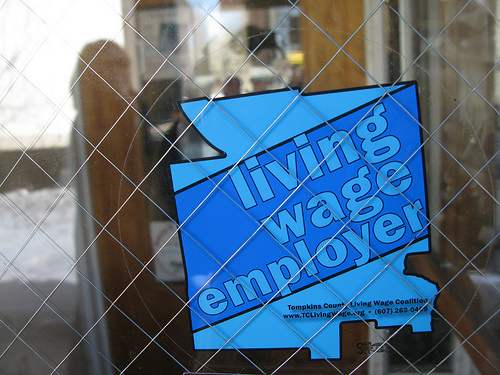
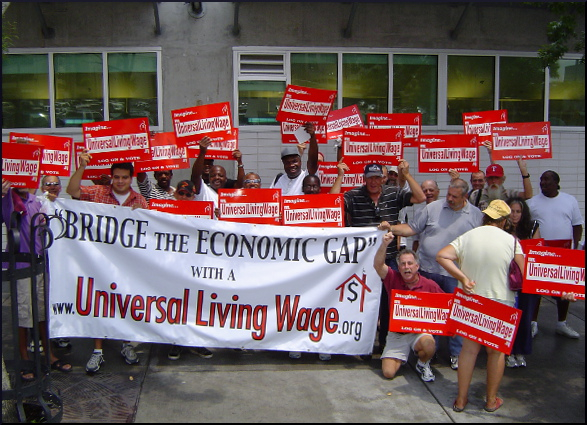
Federal resolve is insufficient; highly recommend Universal Living Wage formula indexed on the cost of housing wherever the person lives and works. 

Heroes on the Homeless Front

Twenty years ago, Dr. Roseanna Means looked around Boston and didn’t much care for what she saw — homeless women on the streets. She started volunteering at homeless health clinics, and in 1998 started her own nonprofit, Women of Means, which now encompasses a team of 16 volunteer doctors who collectively chalk up 10,000 professional visits per year with women experiencing homelessness.

For CBS News, Elaine Quijano learned what inspired such activism. Dr. Means told the reporter:

When I see these women, I see this could be me, it could be you, It could it could be any one of us, because there’s nobody that goes through life without having any problems. My own personal life, I’ve been through cancer, I lost a child, I’ve been through divorce, I have steel knees — I’ve been through lots of personal things in my life.

Last year, the same news agency profiled another Massachusetts medic, Dr. Jessie Gaeta of Quincy. This success story, reported by Seth Doane, merits close attention from other cities. Working in the emergency room at the Boston Medical Center made one thing very clear to Dr. Gaeta — for many homeless patients, it was a “revolving door.” She is quoted here:

It wasn’t until I had just a couple of patients housed that I saw this turnaround in their health. Basically I was seeing that if I could write a prescription for keys to an apartment that that was going to do more to improve the health of the patient sitting in front me than the prescription I can write for anything else.

In 2006, Dr. Gaeta got state funding for the program known as “Home and Healthy For Good,” which espouses the “housing first” principle, i.e., first get the person under a roof and between some walls, then bring on the counseling, substance abuse programs, and other measures (a model embraced by House the Homeless at its inception in 1989, as may be guessed from the name).

Here’s what happened in Massachusetts, and watch out, because this part will knock your socks off:

The program has helped reduce homelessness by 63 percent in Quincy and has also cut medical costs for formerly homeless people by more than two-thirds.

‘It was astonishing that a year into this project, we saw such a decrease in medical costs, that we could basically more than afford to pay for the housing,’ said Gaeta.

The “Housing First” philosophy is based on the concept of meeting people where they are, and the reason it works is because where they are is really the only place at which people can be met, no matter how fervently opponents might wish it were otherwise. We hear it again, from Ken Stevens of Waterville, Maine, who says:

My mission is meeting people at their point of need.

The North East Dream Center is where it happens, we are told by journalist Amy Calder. Volunteers pick up or drop off donations for the food warehouse. “Unemployable” people experiencing homelessness and ex-convicts are set to work making furniture and learning skills. Clothes and counseling are also available. The furniture sales help pay for gas to get more donated food so Stevens and his crew can deliver it to food pantries, soup kitchens, and senior citizens all over the surrounding area.

Now Stevens, with the help of Mid-Maine Chamber of Commerce president Kimberly N. Lindlof and other supporters, is raising money for a larger space where these activities can continue with the addition of more ambitious plans. Calder writes:

A big part of the plan is to launch a manufacturing incubator that would provide administrative support and space for 20 startup businesses, as well as jobs and training for people, including those who are ‘unemployable.’

When asked if he has formal training to run such an enterprise, Stevens answers:

Yes. I got trained by the best — God’s spirit.

Reactions?

Source: “Boston doctor’s kindness helps save homeless,” CBS News, 04/23/13
Source: “Mass. doctor’s prescription for homelessness,” CBS News, 02/23/12
Source: “From homeless and hopeless to vital link in the food pantry chain,” KJOnline.com, 03/24/13
Image by Matt Lemon.
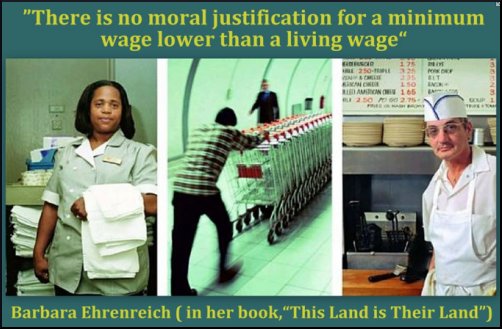
Minimum Wage on the Front Burner

MINIMUM WAGES (hourly):

  • Fought for by President Franklin D. Roosevelt 1938 — 25 cents, which would be more than $4 now
  • In 1974 — $2 per hour
  • Now — $7.25
  • Proposed by President Barack Obama in State of the Union Address — $9.00 per hour
  • How much it would need to be, if equivalent in spending power to 1974 — $9.31 per hour

These are a few of the pertinent facts presented by Angelo Young for International Business Times, before going on to demolish several anti-minimum-wage arguments. He quotes Roosevelt’s 1938 speech:

Do not let any calamity-howling executive with an income of $1,000 a day, who has been turning his employees over to the Government relief rolls in order to preserve his company’s undistributed reserves, tell you […] that a wage of $11 a week is going to have a disastrous effect on all American industry. Fortunately for business as a whole, and therefore for the nation, that type of executive is a rarity with whom most business executives heartily disagree.

Strong words! Young says:

It’s not likely that the debating points will change under Obama’s call to pass wage-increase legislation. His proposal to link the federal wage increase to the rising cost of living will definitely be met with Roosevelt’s ‘calamity-howling.’

What with one thing and another, the minimum wage topic did not, for a while, reside on the front burner of the national stove. That there should even be a minimum wage is still not an idea espoused by all, but as House the Homeless discussed last week, acceptance has made great strides.

It’s a debate that has been in progress for 75 years, and the last 39 years have been especially rough, cost-of-living-wise, Young says, and adds:

[…] [W]ages have not kept up with America’s cost of living, making it more difficult for the working, taxpaying bottom-bracket earners in this country to pull themselves up by their proverbial bootstraps […] working Americans in lower income brackets who live paycheck to paycheck, where any fluctuation […] means much more than just canceling premium cable subscriptions.

To that list at the top of the page, we could add:

  • Amount that Sen. Elizabeth Warren asks why workers are not paid — $22 per hour

Michael Rathbone explains:

Sen. Warren probably is referring to [a] study by the Center for Economic and Policy Research that showed what the minimum wage would be if it had kept up with increases in worker productivity… The study […] talks about average productivity. Average workers do not earn the minimum wage. This study does not track changes in the productivity of workers who make at or below the minimum wage. Isn’t it possible that the largest increases in productivity have been among more skilled employees who already earn above the minimum wage?

This is not exactly an anti-minimum-wage argument, but Freakonomics co-author Steven Levitt has an interesting take on it. In The Huffington Post‘s capsulization of his recent Q&A session via Reddit, Levitt says:

Honestly, I don’t think the minimum wage matters all that much to the economy.

Why? Because relatively speaking, the number of minimum-wage workers is small, with about 5.2% of hourly workers making the minimum or below. The article notes:

Some studies have reinforced President Barack Obama’s argument that raising the minimum wage would boost the economy. Raising the minimum wage by $1 would give households comprised of minimum wage workers $2,800 per year more to spend, according to a 2011 study from the Federal Reserve Bank of Chicago cited by CNN.

There is a corny but true parable which has many versions. This one one was adapted by the Starfish Greathearts Foundation:

An old man had a habit of early morning walks on the beach. One day, after a storm, he saw a human figure in the distance moving like a dancer. As he came closer he saw that it was a young woman and she was not dancing but was reaching down to the sand, picking up a starfish and very gently throwing them into the ocean.

‘Young lady,’ he asked, ‘Why are you throwing starfish into the ocean?’

‘The sun is up, and the tide is going out, and if I do not throw them in they will die.’

‘But young lady, do you not realize that there are miles and miles of beach and starfish all along it? You cannot possibly make a difference.’

The young woman listened politely, paused and then bent down, picked up another starfish and threw it into the sea, past the breaking waves, saying, ‘It made a difference for that one.’

It’s not accurate that only 5.2% of workers would benefit from a minimum-wage raise. There is more to it. But putting that aside, even if the lives of only 5.2% of workers were improved, like the starfish, it would make a difference for them.

Reactions?

Source: “State of the Union 2013: Obama Calls For $9 Minimum Wage,” International Business Times, 02/14/13
Source: “The $22 (An Hour) Question,” Show-Me Daily, 03/31/13
Source: “Freakonomics’ Steven Levitt: The Minimum Wage Doesn’t Matter ‘All That Much’ ,” The Huffington Post, 02/19/13
Source: “Sex Trafficking,” WomanStats, 10/17/12
Image by Barbara Ehrenreich0

Minimum Wage Logic Accepted

“Consider the source” is usually said skeptically, and, of course, we always do consider it, whether skeptical or not. Here, the source is pretty impressive. It is The Economist, which Steve O’Keefe, writing for House the Homeless, described as “the house organ of the economics profession, the gold standard of consensus among economists.” He discussed an article about the minimum wage in which The Economist said, in effect, “Hey, if you do this, it increases everyone’s wealth, not just those earning the minimum wage,” and said it to the finance ministers of every country in the world.

What’s going on here? O’Keefe says:

Minimum-wage laws actually don’t reduce employment. In fact, they increase the welfare of minimum-wage workers and their employers. The Economist notes, ‘Not only has [the minimum wage] pushed up pay for the bottom 5% of workers, but it also seems to have boosted earnings further up the income scale — and thus reduced wage inequality.’

Like the Magna Carta and common law and other refinements of civilization, this study came from Great Britain, which O’Keefe says:

[…] introduced a national minimum-wage law in 1999. The British government requires a minimum wage equal to about 46% of median earnings — compared with a less generous 40% in the United States. When Great Britain instituted the national minimum wage ‘worries about potential damage to employment were widespread,’ says The Economist (itself a major worrier), ‘yet today the consensus is that Britain’s minimum wage has done little or no harm.’

In Austin, TX, the minimum wage question has been the subject of controversy. That is where House the Homeless is centered, and co-founder Richard R. Troxell was asked by Commissioner Judge Sam Boscoe to give his point of view. In an email that was circulated to all the Austin City Council members, Richard wrote:

The Fed has determined that based on a sophisticated formula that includes a two-year time lag (so as not to be distorted by new housing startups), that in the Austin Fair Market Rent Area, one can reasonably expect to pay $681 for an efficiency apartment and $834 for a one-bedroom apartment.

Apparently, in Austin, tenants would have to be making more than $16 per hour to meet the rest of their living expenses while renting a one-bedroom apartment. That’s barely enough space for a couple, or a parent and a child. In which case the parent would have to be working full-time and bringing in $16 an hour. Who makes that much? Or if it’s two adults, they both have to be working full-time for at least $8 an hour. Minimum wage is $7.25 an hour. Austin was debating whether, in light of its intense downtown renewal efforts, it should mandate a minimum hourly wage of $11.

By combining existing governmental guidelines, we establish something called the Living Wage, which means enough to allegedly live on. And even those figures are based on the idea that nobody should be spending more than 30% of their income on housing. Many people are forced to spend a much larger percentage.

As head of the campaign for a Universal Living Wage, Richard tells the world that greater income at the bottom of the economic ladder leads to greater spending at the bottom, and boosts the whole economy. Companies benefit from stabilizing the economic situation of their employees, because turnover is expensive. Then there is the matter of lower government spending, when the lowest echelon of workers rely less on government subsidies.

Richard was also recently quoted in a Fortune CNN article by Eleanor Bloxham, CEO of The Value Alliance and Corporate Governance Alliance. The subject was the need for increased transparency in corporate dealings, for instance:

One such disclosure would be whether the company pays a living wage to all its employees — and if not, what percentage of workers don’t receive it.

Bloxham’s article went on to quote Richard about the Universal Living Wage. But let’s get back to another interesting thing about The Economist‘s breathtaking discovery, which isn’t such new news after all. Here is a quotation from Richard’s book, Looking Up at the Bottom Line, which is available via Amazon, Nook, and Kindle:

Ben Bernanke, during his first month of serving as the newly appointed Federal Reserve Chairman, testified before the House Financial Services Committee. Congressman Bernie Sanders asked Mr. Bernanke if Congress should raise the Federal Minimum Wage…

Mr. Bernanke responded: ‘The concerns that some economists have raised about the minimum wage […] does it have any employment effects? That is, do higher wages lower employment of low-wage workers?’ […] Mr. Bernanke then definitively declared, ‘My response is that I think it doesn’t lower employment.’

Reactions?

Source: “Major Reversal: Economists Agree Minimum Wage Works!,” HousetheHomeless.org, 12/12/12
Source: “How to fix rampant CEO mistrust,” CNN.com, 03/14/13
Source: “The Argument in the Floor,” The Economist, 11/24/12
Image by Aidan Jones.

KFC Says, Get a Job — LOL!

Last June, this Question & Answer appeared in the online forum ExpertLaw.com:

Question:

Is it legal for an employer to deny employment to an individual who they consider otherwise qualified, if it is discovered that the individual currently lives in a homeless shelter?

Short answer: yes. Neither federal anti-discrimination laws nor most state anti-discrimination laws preclude disparate treatment/employment discrimination against individuals residing in a homeless shelter. (ESteele, Senior Member)

A few weeks ago, in Tupelo, MS, after months of job-hunting, Eunice Jasica found work and seemed to be on track for the next phase of life — saving up to move out of the Salvation Army lodge. But when she reported for her first day on the job, fast-food franchise owner Chesley Ruff withdrew the offer of employment “due to lack of residence and transportation.”

Say what? Then, a couple of days later, the manager backpedaled and said his refusal to honor the hire was really because Ms. Jasica had no experience in the difficult and demanding field of fast-food preparation. Plus, he doubted that the 59-year-old woman could lift the 40-pound boxes in which the food arrives. So never mind, no job after all.

Adding insult to injury, he implied that the job applicant had misunderstood and was delusional about having been hired in the first place. This shabby treatment is legal according to both the great state of Mississippi and the Kentucky Fried Chicken corporation. Reporter Emily Le Coz writes:

KFC operates more than 5,200 restaurants nationwide and follows all applicable employment laws, but its independent franchisees make their own hiring decisions, said KFC Corp. spokesman Rick Maynard.

Mississippi is an at-will employment state. That means the employer or employee can terminate the relationship at any time for any reason as long as it doesn’t violate anti-discrimination statutes based on factors like race, age, color, religion, sex, national origin or disability.

In Tupelo, Maj. Sue Dorman of the Salvation Army was shocked, possibly because this didn’t fit with Mr. Ruff’s customary behavior. He had previously hired a man who was not only homeless but a former convict, who had done very well in the business, and whose success story had been featured in a newspaper. The same manager had also hired other Salvation Army residents in the past. Dorman called Ruff, who told it is not company policy to hire people who don’t have stable housing or transportation, which made it sound more like a corporate-level matter.

And indeed, when The Huffington Post made inquiries, Ruff had nothing to say, but referred questions to the chicken vendor’s head of media relations, Rick Maynard, who emailed:

KFC Corporation believes in a culture of respect toward all people, and we abide by all applicable employment laws. The restaurant in Tupelo is operated by an independent franchisee who shares our beliefs, but is responsible for making hiring decisions for the restaurant he owns.

So this was starting to resemble what is colloquially called a runaround. Meanwhile, the Huffington Post story garnered well over 1,000 comments from all over the map, both geographically and philosophically. Typical is the response of “EarthMonkey07,” who wrote:

So now in order to even get a job, you can’t appear to need it in any way? You need to already be employed (since the statistics say they won’t hire you if you’re already unemployed), housed (since they won’t hire you without an address), with transportation (they won’t hire you if you don’t have a vehicle) AND have a bank account (because they won’t hire you if you can’t do direct deposit). This is getting crazy.

Exactly. And the craziness is not exclusive to the USA. A report from a prominent organization in Great Britain, St. Mungo’s, revealed that two out of three homeless job seekers had been rejected for employment because of their homeless condition. Half had found the lack of a mailing address to be an obstacle, and two out of three lacked the appropriate clothing, tools or equipment for the jobs they applied for. Universally, even those who are lucky (or adept at hiding their true circumstances) find that the low-paying jobs they land do not come near to providing enough for housing anyway.

The really imposing feature of the St. Mungo’s report was the contrast between 1986 figures, showing that 83% of the homeless people surveyed then had some kind of paid employment, and their 2005 numbers, which revealed only 5% of their homeless clients holding jobs.

Meanwhile, because of the publicity surrounding this debacle, Ms. Jasica received several other job offers and was “tentatively hired” by On Time Transportation to drive Medicare and Medicaid patients to their doctors’ appointments. While this promises a happy ending for her particular story, many other homeless people throughout the country are not so fortunate.

Not surprisingly, House the Homeless has been involved in this struggle for years. Its Homeless Employment Survey of 2007 inspired the state of California to conduct a similar survey in 2009. Here is House the Homeless co-founder Richard R. Troxell’s candid response to Eunice Jasica’s plight:

Very sad. I for one am outraged! So while the Puritan Work Ethic remains intact for someone who has lost all of their worldly possessions, the compassion, empathy and love for one’s fellow human being has dissipated like water on the sidewalk. Shame on that franchise and shame on KFC for allowing this act of inhumanity to occur in their name. It’s only a matter of time before people will no longer accept this kind of treatment. Then what? There are 3.5 million people experiencing homelessness again this year.

In the Sacramento survey, 70% of the respondents identified the reason for their homeless condition as economic, 87% wanted to work and felt they were able to, and 42% identified their homelessness as the most significant barrier to working. Lack of transportation, as always, plays a big part in the employment equation. One of the recommendations resulting from this survey was:

Expand mail, email and voicemail services: We recommend universal coverage of a mailing address, email and voicemail services for homeless people to dramatically increase their chances for employment.

This excellent idea is, of course, one of the things that objectors are currently complaining about. They are against any plans that are put forward to provide cell phones to the homeless, because why should street people get fancy technology for free? And so it goes…

Reactions?

Source: “Q & A,” ExpertLaw.com, 06/06/12
Source: “Woman fired for being homeless,” ClarionLedger,com, 03/21/13
Source: “Eunice Jasica Claims KFC Franchise Reneged Job Offer…,” The Huffington Post, 03/28/13
Source: “Hard Work for Homeless People,” samhsa.gov, 2005
Source: “Homeless Employment Report: Findings and Recommendations,” National Coalition for the Homeless, August 2009
Image by Joe Schlabotnik.

Aspects of the Minimum Wage Conversation

What, you may ask, is depicted here? It’s an artwork called “Minimum Wage Machine, (Work in Progress),” a simple but elegant interactive demonstration by which anyone may comprehend the implications of those words. Here is the explanation provided by Blake Fall-Conroy, creator of the device:

The minimum wage machine allows anybody to work for minimum wage. Turning the crank will yield one penny every 4.97 seconds, for $7.25 an hour (NY state minimum wage). If the participant stops turning the crank, they stop receiving money.

Wow, virtual reality at its finest! What if one of these could be placed in the lobby of every office building in Washington and in the chambers of the House and the Senate? Wouldn’t it be instructive if every bureaucrat and elected official could have a taste of what (per the Bureau of Labor Statistics) 3.6 million at-or-below-federal-minimum workers experience every day?

We don’t see that happening any time soon, but in the meantime, here are some aspects and facets of the current struggle to raise the minimum wage in the United States.

How small business owners feel

The CBS MoneyWatch report on this question, written by Erik Sherman, states:

According to a poll of 500 small business owners conducted on behalf of Small Business Majority, an advocacy group, 67 percent of these firms favor boosting the minimum wage from the current rate of $7.25 an hour and adjusting it annually as the cost of living rises… Two-thirds also agreed with the following statement: ‘Increasing the minimum wage will help the economy because the people with the lowest incomes are the most likely to spend any pay increases buying necessities they could not afford before, which will boost sales at businesses.’

The poll, conducted by Greenberg Quinlan Rosner Research, also found that 85% of the surveyed small businesses already pay more than the federal minimum. So those who argue that while big corporations may not feel the hit, small businesses would suffer drastically, appear to be mistaken.

Giving a little background, the Associated Press notes that:

The minimum wage has become an issue since President Barack Obama proposed during his State of the Union address in February that the federal minimum be raised to $9 from $7.25 an hour. Democrats in Congress introduced a bill to raise the minimum to $10.10 an hour in March, but it was rejected by the House.

The survey, commissioned by a group called Small Business Majority, was carried out in early March, a month after the President had addressed the question.

And what about those tips?

For Bloomberg, journalist Jeanna Smialek interviewed an individual in a position to both speak from personal experience and to see the big picture. Gina Deluca quit being a food service industry server two years ago and started a blog called Wiser Waitress. It was an interstate relocation that changed her life. In California, even workers who got tips had to be guaranteed at least $6.75 per hour, even if their tips didn’t bring them up to that.

But when she moved to New Mexico, Deluca was shocked to learn that her wages could fall as low as $2.13 per hour — the federal minimum for workers who get tips. But wait, there’s more. Deluca says on the Wiser Waitress “About” page:

I found that there were many employers abusing the tip credit. Not only were they taking the tip credit, thus allowing them to pay servers a small tiny wage of $2.13, they were also requiring these servers to share tips with back of the house employees, sometimes the whole staff. And unfortunately , these employers were not the exception as I found the practice to be widespread and prevalent.

Smialek writes:

Legislation in Congress this year would raise the $2.13 base for the first time since 1991. The move would help many of American’s 2.3 million servers, advocates of an increase say, as well as manicurists, bellhops and other workers who rely on tips for much of their earnings. It could also spur firings and reduced hours as thin-margin businesses grapple with higher costs, say some restaurant owners and economists.

Worse and worse

Where have we heard that before? And get this: While the nation has changed from a manufacturing economy to a service economy, with more people than ever forced to settle for low-level, non-union employment, the situation for people in tipping jobs is much more severe than it has been in the recent past:

The cash base was 50 percent of the regular national minimum until 1996 legislation froze the lower rate at $2.13. It now amounts to 29 percent of the full minimum, which has been raised four times since.

Does raising the minimum wage cause some jobs to be eliminated because businesses just can’t afford to pay? Depends on whose survey results you look at. Please see Smialek’s article for more details, and last week’s House the Homeless blog post.

And, for an even better solution that could change the lives of millions of workers, please get acquainted with the Universal Living Wage.

Reactions?

Source: “Small businesses back minimum wage hike,” CBS News, 04/24/13
Source: “Small business owners support increase in federal minimum wage…,” The Washington Post, 04/23/13
Source: “Waitresses Stuck at $2.13 Hourly Minimum for 22 Years,” Bloomberg, 04/25/13
Image by Blake Fall-Conroy.

Counting the Homeless in Austin

To satisfy the federal requirement for the information that is needed to fairly distribute available funding, the people experiencing homelessness are counted every year. House the Homeless blog has taken an extended look at the “how” of the annual point-in-time count, which could be described as “different strokes for different folks.”

In a way, it’s good that communities can use different techniques, because if somebody discovers how to do it right, they can share that information. Just imagine, if one city could figure out how to correct the numerous flaws, and create a process that is humane, safe, dignified, and productive of justifiable results. If a community could demonstrate a good common-sense approach, their procedure would no doubt be gratefully adopted all across America.

In Texas, during the stipulated time period this January, 300 Austinites under the auspices of ECHO (Ending Community Homelessness Coalition) fanned out to enumerate the unhoused. At the beginning of February, a newspaper report stated that the number of homeless people in Travis County had decreased by 39% since 2008.

For the Austin American-Statesman, Andrea Ball learned that in the field of homelessness alleviation, despite favorable statistics, workers “on the ground” are sometimes unable to discern much improvement. Many advocates, like Alan Graham of Mobile Loaves and Fishes, question the usefulness of the annual count, saying it’s a faulty measure. He pointed out that conditions on the appointed count day may vary wildly from one year to the next. Success is influenced not only by the meteorological weather but by the law enforcement climate, which may at any particular time “crack down” in ways that drive the chronic homeless further into hiding.

In the original reportage there was some confusion about daily and weekly figures relating to shelter admissions in Austin. Apparently, the total of homeless people, inside and outside, amounted to less than the number of people who use the inside shelter in a single day. Much depends on these numbers, we are reminded by Richard R. Troxell of House the Homeless.

Richard was invited to share his thoughts with radio station KLBJ-FM, and in preparation wrote out his thoughts, some of which are rather caustic:

Excellent news! The number of people experiencing homelessness has been dramatically reduced in Austin by 39% since 2008! Or so you think if you believe the front page headlines in The Austin American Statesman. It is not until you read the 3rd page of the story that you learn that the 2012 count of the homeless (2,121) in the woods, streets, and shelters was less than the actual daily number of people served in the shelters alone (between 2,650 and 2,750 on a daily basis).

Richard also asks how much sense it makes to count people at dusk or in the dark of night. He also finds the 24-hour concept to be flawed, and fears that trying to get it done all in one day is counterproductive. He writes:

Why don’t we count them over a two week period? Because the federal government is afraid of a possible multiple survey responses by homeless folks. The same people might fill out the questionnaire more than once, and skew the numbers. For starters, this assumes that anybody is willing to do it more than once. Do we really think that homeless folks will rush to complete multiple forms? They probably don’t even like doing it once. And the result is, the numbers are skewed even more.

We could best count the folks experiencing homelessness by asking Willie Nelson to throw a bash. We’d get the city of Austin to cordon off a part of Zilker park, suspend the No Camping Ordinance and the No Sit/No Lie Ordinance, and hold a three-day love fest called ‘Everybody Counts.’ We could count and survey the homeless to our hearts’ content. We’d get the highest head count ever, and bring more federal dollars to Austin than ever before.

This homeless count process that has been used since 2000 has always been flawed, dangerous, and foolish. But now the flaw is glaring and staring us all in the face, on the front page of our paper, and on the Internet, and if you think HUD is going to accept these results then you have another think coming. On the other hand, if HUD does accept these results then we’re all in bigger trouble than I think.

With the federal government setting the minimum wage at $7.25 per hour, rendering more and more people homeless every day, do we really think we are decreasing the tsunami which is homelessness at the rate of 39% since 2008? How in the name of common sense is that possible?

The homeless community nationwide remembers advocate, activist, and hunger striker Mitch Snyder with great respect. In the face of controversy about the numbers he had cited, Snyder once remarked that the homeless can best be counted once they have been brought inside.

What could hasten that day? Please proceed to the Universal Living Wage

Reactions?

Source: “Travis County Homelessness,” Statesman.com, 02/04/13

Counting the Homeless, Continued

Funding for low-income housing projects is decided in part by the federally mandated annual count of people experiencing homelessness. Looking around at how it is done in different parts of the country, it’s easy to see that not everyone agrees about the way things should be, or even about the way things are.

Only last month, from San Francisco, the director of the Western Regional Advocacy Project voiced discontent, calling the census “hit-or-miss” and its result “an unreal number.” Paul Boden presents a case that the head count is ineffectual in showing an accurate picture of what actually goes on with programs designed to alleviate homelessness.

The accuracy is certainly questionable. An example he gives ends with the suggestion, “You figure it out,” and when a person stops to do that, an amazing conundrum emerges.

In 2011, the Department of Housing and Urban Development said that America contained 636,017 homeless people. (This is the same HUD, by the say, that since 1996 has sold or demolished 210,000 housing units.)

Yet, in the same year, the Department of Education reported the number of homeless school children as 1,065,794. In other words, the number of homeless school kids is much larger than the total number of homeless people — a logical impossibility. And the million-plus figure doesn’t even begin to count those kids’ parents.

Boden seems to imply that the homeless count is not a meaningful activity but an empty pro forma ritual. Actually, it’s more than an implication. He says:

The headcount doesn’t show us anything… Point-in-time counts are a minimum number, always. They undercount hidden homeless populations because homeless persons are doubling up with the housed or cannot be identified by sight as homeless. Families and youth most often are among the undercounted. On cold winter nights, churches often open their doors, and anyone forced to sleep outside will try to escape the raw elements. Children sleeping in vans hardly will be visible.

An uncredited editorial from the Deseret News talks about how numbers somehow showed that Utah’s population of “chronically homeless” has been reduced by 70% in seven years. Yet, somehow, on any given night, there are more homeless people than ever before. This presents a vision of agencies struggling heroically against an overwhelming trend.

According to the author, the count, which is carried out by volunteers:

[…] doesn’t take into account the ‘at-risk’ population that lives just on the verge of homelessness, which some experts suggest also has grown. Furthermore, the surveys have shown an increase in the number of entire families thrust into at least temporary homelessness…

In North Carolina, the Herald Sun asked Minnie Forte-Brown of the Homeless Services Advisory Committee for her take on the census, which was:

One night, the nation counts. No way does that say we’ve counted everybody.

The reporter goes on to say:

It rained the night of the count, which may have driven some to dry shelter. Even in good weather, though, at best this is a representative sample. It can’t take into account the homeless who — for one reason or another – go out of their way to remain unseen, squatting in abandoned buildings, living in cars or camping in the woods.

Pat LaMarche reported for The Huffington Post that the state of Texas has around 95,000 school-age kids. The distribution is very uneven, with one out of 10 American kids in that demographic residing in Texas, and House the Homeless will be taking a closer look at the beautiful city of Austin next week. Meanwhile, critics on the national scale are unhappy with the status quo for many reasons.

Joel John Roberts of Poverty Insights articulates some of them:

If you look at the last few decades, this country has dramatically ignored real solutions to ending homelessness… Political leaders grandstand in front of television cameras, ‘Homelessness should not be tolerated in this country!’ But when the lights turn off, political business continues as usual. Homeless agencies practically beg for resources to help the lines of people wanting help. But the number of homeless persons in this wealthy country continue to be obscene.

Roberts encourages readers to learn about the “100,000 Homes” campaign, which almost 70 American cities have signed on to, and which reports a success number of 38,575 people housed by its efforts.

House the Homeless co-founder Richard R. Troxell knows far too well about the inaccuracy of the homeless count and declares that the current policies of the federal government are the greatest single fabricator of homelessness in this nation. To that end, he is in the process of collaborating on writing the nation’s first White Paper on the subject. It’s entitled “Homelessness Prevention” (at its core). Stay tuned.

Reactions?

Source: “Homeless head counts help no one,” SFGate.com, 02/05/13
Source: “In our opinion: Counting the homeless,” Deseret News, 02/08/13
Source: “Rhetoric won’t solve homeless dilemma,” The Herald-Sun, 02/24/13
Source: “About 1 in 10 Homeless Kids Live in Texas,” The Huffington Post, 02/19/13
Source: “We Cannot Count on Homeless Counts to end Homelessness,” PovertyInsights.org, 02/07/11
Image by John Jewell.

Cell, Sweet Cell — Part 2

Before we get started, let’s just mention that Richard R. Troxell, co-founder of House the Homeless, has once again been quoted in the national media, this time CNN.

Last time, we finished up with a mention of a guy in New Jersey who wanted to go to jail so badly he publicly consumed alcohol in front of police officers. But rather than time in a penal institution, they just gave him a ticket. It’s a pathetic story and an illustrative one, but with not much damage done to society in general.

And then you get people whose desperation causes serious consequences to others. Last month, in York City, PA, a man who had only been able to afford one night in a motel set a fire just before check-out time. He surrendered to the authorities, as he had intended to do all along, because he had nowhere else to go, and jail looked pretty good right about then.

The fire turned out to be more than he had bargained for. (The possibility of a defective alarm system is under investigation.) An employee suffered burns, fortunately minor, and the fire did $750,000 worth of damage to the place. Plus, it made several more people homeless.

This isn’t only happening in the U.S. In September, word came from Ireland of a man who was mugged and severely beaten, and who then became an assailant himself, attacking paramedics who tried to come to his aid. Then, Oliver Cleary punched a police officer, and that got him arrested for sure, which turned out to be okay with him.

Deborah McAleese reported for the Belfast Telegraph:

District Judge Bagnall said she would consider suspending a prison term. But standing in the dock Cleary shook his head and the judge asked his lawyer: ‘Is a short custodial sentence more helpful in the longer term?’

After speaking to Cleary, the lawyer said: ‘Bizarrely, he would prefer a short custodial sentence because he has nowhere to go to.’

Ms Bagnall agreed to sentence Cleary to one month behind bars for disorderly behaviour.

And it isn’t only jail that people are trying to get into. Last May, in a small Kentucky town, a 27-year-old woman made a desperate bid for accommodation in a domestic violence shelter. Scott Sutton reported:

[Ashely] Basham claimed she was walking in the parking lot of a Murfreesboro Walmart last Saturday when her ex-girlfriend stabbed her multiple times with a knife. Police investigated and saw injuries to the woman’s stomach, shoulders and legs. The injuries were so severe that she had to get staples in her leg.

Further investigation revealed that it didn’t happen that way, and the wounds were self-inflicted. Basham was arrested for filing a false report, but there doesn’t seem to be any further news on whether she went to jail, the hospital, or the shelter.

Crazy as it seems, things are set up in such a way that imprisonment is the best answer some people are able to find to the overwhelming challenges of life. One such person is commemorated in a song called “Joe,” written by Mike Laureanno of Providence, RI. One verse goes like this:

Every now and then a day in jail is warm
Three hots and a cot
A misdemeanor works like a charm
The sergeant knows his name
Slips him some change

One last thought — a recent House the Homeless survey learned that:

[…] 47% of the survey respondents, have been given a ticket with a court date only to show up on that date and be told to return sometime in the future either because the accusing officer did not show up and/or because the ticket had not yet been processed in the system.

HTH has been told this is a regularly occurring event with multiple returns per ticket. Note that if at any time, the person experiencing homelessness fails to report on the assigned/reassigned date, the ticket ‘goes to warrant’ and the individual becomes subject to arrest and jail time. A class ‘C’ misdemeanor (e.g., no camping ticket) is a criminal offense and serves to be one a more barrier to housing, employment, and escaping homelessness.

So, the lesson here is, when living outside gets too miserable and jail seems like the better alternative, a person does not even need to be violent or larcenous. All they have to be is unable to keep up with a Kafka-esque runaround.

Reactions?

Source: “Police: Homeless man said he torched York City motel so he could go to jail,” YorkDispatch.com, 02/04/13
Source: “Homeless man begs to be jailed,” BelfastTelegraph,co.uk, 09/15/12
Source: “Police: Homeless woman stabs self for free room,” WLOX.com, 05/17/12
Source: “2013 HtH Civil Rights Survey Summary,” HouseTheHomeless.org, 02/27/13
Image by ibm4381 (John Benson).

Perspective: Living Wages

On March 3, 2013, the Austin American-Statesman banner masthead read, “’Living Wage’ Proviso Targeted.”  (See the article, “Dallas legislator aims to stop wage requirements in incentive deals.”)

Apparently, the Dallas legislature does not want Texas municipalities, Austin-led, to require companies to pay “living wages.” The federal minimum wage is $7.25/hour, but Austin, like the federal government, has now plucked an imaginary number out of the air and dubbed it a “living wage” at only $11.00/hour. For the moment, let’s put aside the issue as to whether or not a municipality should be able to exercise its power position of employer to extract better wages for its employees.

To be clear, $11/hour is not a living wage.

A living wage is an amount that ensures that a person working 40 hours in a week will be able to afford basic: food, clothing, shelter (including utilities), and public transportation. In Austin, it is $13.10/hour. This is calculated by using a 40-hour-a-week job, spending no more than 30% of one’s income on housing ( a national banking standard), and HUD’s Section 8, Fair Market Rent Formula. It is also calculated based on the cost of an efficiency apartment in Austin, which is $681 on average.

To pay a lower wage can result in economic homelessness. At this pay scale, 3.5 million people will again face homelessness in our nation this year.

Image by Ari Moore.0

Cell, Sweet Cell — Part 1

In a neglected film called Fast-Walking, James Woods portrays a prison guard whose relationship with a prisoner called Wasco is complex. This Wasco guy delivers one of the finest soliloquies in cinema, a rant about how much he loves it inside those walls. The prison is his world, where he is the uncrowned king.

Fortunately, most people don’t feel that way, and besides, each prison can only have one king. In jail, there is little opportunity for career advancement, and a very good chance of being assaulted or catching tuberculosis.

For these reasons and many others, humans don’t really enjoy being inmates. Why, then, is there a trend of people intentionally trying to get locked up?

Last July, in Missouri, a 25-year-old woman bashed in the rear window of a police patrol car and did it some further damage, then went into the station to confess. She told them she was homeless and wanted to go to jail. The police obligingly arrested her and placed her on 24-hour hold. There doesn’t seem to be any news of what happened after that.

In the same month, in Florida, a 19-year-old man called the police to report a robbery, and a fleeing suspect, armed with a knife, whose description matched his own. When he was apprehended, the youth told the police he had just wanted to be arrested. Didn’t he realize he could have been shot on sight? Apparently, it’s possible for a person to be so desperate, such a detail doesn’t matter. Fortunately, he was only arrested, charged with making false statements to the police, and held with bail set at $1,000. Which, in this case, might as well be $1 million, because the person had no intention of paying, because he wanted to be in jail.

Also last summer, in Washington state, an 18-year-old broke into a house and subsequently told the authorities he had wanted to be arrested because he had nowhere to go. Two months later, however, he ran away from a work crew, but had no luck finding food or transportation, and was re-apprehended a couple of days later. The episode added substantially to his sentence, which may have been exactly what he was aiming for — but of course, with no more outdoor work details. How out-of-options does a person have to be for any of this to seem, even remotely, like a good idea?

In Santa Monica, CA, a 63-year-old man broke into a restaurant, was stopped for questioning nearby, and happily explained to the police what he had done and how. They charged him with burglary, and took him to jail, and a judge named $20,000 as his bail.

On the other coast, in Florida, a homeless man who relieves his condition with periodic spells in jail has perfected a technique. Apparently, he always contacts someone in the same condominium complex, and asks them to call the police. Stephanie Wang writes:

He’s done it about 30 times since 2009, jail records show, as often as twice a month and a couple of times with an added burglary charge. Sometimes, he racks up multiple counts of trespassing in one trip… Early Sunday — not four full days out of Pinellas County jail from his last arrest — Treasure Island police say Santiago remained faithful to his routine. He didn’t seem to be drunk, on drugs or crazy, an affidavit noted. Around 5:30 a.m., 58-year-old Santiago went back to jail.

In December, a person experiencing homelessness in New Jersey conspicuously flaunted an alcoholic drink in front of the police, in hopes of being taken to jail. The officers disappointed him by only throwing away the drink, and writing him a ticket.

(To be continued…)

Reactions?

Source: “Homeless woman shatters patrol car window, happy to be arrested,” ConnectTriStates.com, 07/16/12
Source: “Homeless man made false report to get arrested, police say,” Gainesville.com, 07/30/12
Source: “Homeless Man Changes Mind About Okanogan Jail,” The Wenatchee World, 08/30/12
Source: “Homeless Man, 63, Breaks Into Santa Monica Bistro Then Confesses To Police,” Santa Monica Mirror, 10/01/12
Source: “Police: Homeless man’s path to jail starts at Treasure Island condos,” Tampa Bay Times, 10/07/12
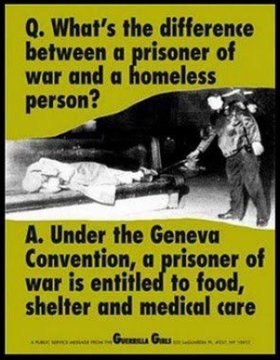
Image by GuerrillaGirls.