

Our Mission

Founded in 1989, HtH is the oldest all volunteer, action, homeless organization in the state of Texas. The mission is Education and Advocacy around the issues of ending and preventing homelessness.

Urgent Issues

Re-Criminalizing Homelessness — Speak up now!

HtH supports the direction being taken by the City of Austin’s relatively new Homeless Strategy Office, led by a very committed and responsive David Gray, and with the commitment of Charles Loosen and other staff. We further strongly advocate ALL positions below that preceded The vote to basically criminalize homelessness — especially:

reinstating a camping ban must consider that those with disabilities, the aged, and in fact anyone with no place to go. The no sit/no lie ordinance is absolutely inhumane and unconscionable we must have at least 15 minute respites particularly for those with disabilities and make other provisions.

Mayor Kirk Watson, elected in 2023, is working to secure funding for homeless services from the State and within the City Budget.

2025 interests:

City Council approved a resolution making homelessness a top financial priority.

Increase the capacity of the Homeless Strategy Office to address and implement a comprehensive approach to strategic advancements in homelessness response. (Plan detailed in a 50-page memo from David Gray, June 2025).

Examples:

1. Expand HOST (Homeless Outreach Street Team) support including team members:

APD officers, EMS paramedics, behavioral health clinicians, social workers, peer support staff.

2. Support for Marshaling Yard operations.

3. Rapid Response housing and safe housing, especially for families.

4. Increase shelter beds with support; and more.


The Austin city council recently voted to put on its May 2021 ballot a vote to reinstate the no camping ban including the no sit/no lie ordinances. Now is the time to contact your mayor and council members particularly those who have supported decriminalizing homelessness, such as Mayor Adler, Kathy Tovo, Ann Kitchen, Greg Casar, Sabino Renteria, and others, we pray.

First call to action is cold weather shelter. Anyone that reads this, our urgent plea is to email our mayor and city council in this urgent time of cold weather. House the Homeless is encouraging to use the Convention Center or other alternatives sites that are already over burdened due to Covid-19 or at capacity.

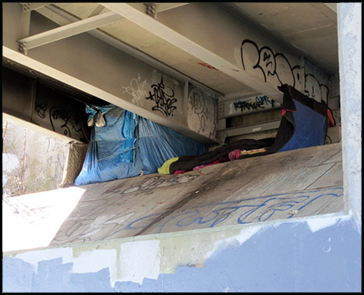
A second call to action is to not displace unsheltered neighbors from bridges and the four major camp areas without having an immediate plan for alternative shelter/housing.

Finally, advise your mayor and council members that the wording for the May ballot regarding reinstating a camping ban must consider that those with disabilities, the aged, and in fact anyone with no place to go. The no sit/no lie ordinance is absolutely inhumane and unconscionable we must have at least 15 minute respites particularly for those with disabilities and make other provisions.

Federal Minimum Wage Debate

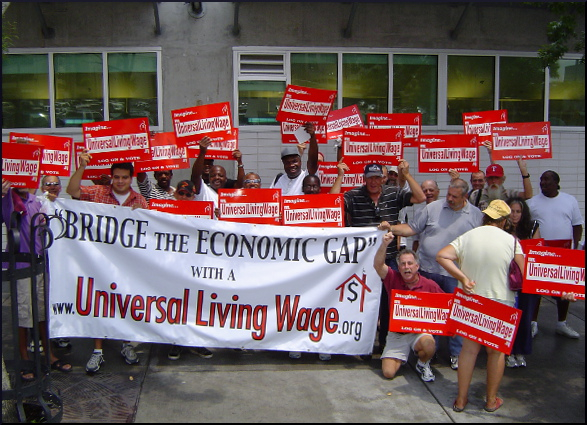
Federal resolve is insufficient; highly recommend Universal Living Wage formula indexed on the cost of housing wherever the person lives and works. 

Homeless Shelters Encounter Hard Times

Thanks to Andrea Ball, who writes for The Austin American-Statesman, the public is very well informed about homeless issues in the Texas capital. Case in point: her meticulous description of the Austin Resource Center for the Homeless (ARCH) at a crucial juncture of its existence, which includes a concise history to put it in context.

Every day, approximately 800 humans throng the ARCH. A large number of people sleep here, with more stopping by to wash clothes or take a shower. Offices are here too, for the administration of services. House the Homeless is one of several agencies located within the ARCH.

Although, in 2005, the American Institute of Architects named the building one of the year’s Top Ten Green Projects, it was never designed for so much traffic or such heavy use. It all adds up to a lot of wear and tear on the physical plant. The building is only seven years old, and parts of it are described as “decaying.”

Ball cites a partial list of infrastructural deficiencies:

Moldy bathrooms, broken showers, a peeling roof, and solar power and water reclamation systems that worked intermittently… About 300 people a day shower at the facility, more than double what was anticipated. That relentless humidity was a big factor in problems with the bathroom, which is expected to cost $250,000 to fix…

Apparently, the showers are built over a parking area, so if the floor collapses, a bunch of folks will be calling for a ride home. To make matters worse, the contractor seems to have cut some corners. And who knew that a building would only come with a one-year warranty?

Ball explains that the shelter was build for 100 beds, which brought its capacity up to only 27 more than the old shelter it has replaced. She quotes Richard R. Troxell, founder of House the Homeless:

It was insane. We spent $8 million, and we did nothing to increase the capacity.

The reasons why the ARCH stands where it does are found in Richard’s book, Looking Up at the Bottom Line, where he tells the complete story of that challenging episode from personal experience, having been chair of the Land Search Committee.

Currently, the financial situation is bleak, and at the same time the need is greater than ever. Ball says,

The maintenance staff has increased from four people in 2006 to eight in 2011. During that time, the shelter started sleeping 215 men a night instead of the 100 for which the building was designed. Its day center also started providing services seven days a week instead of the five originally planned.

That last item shows a degree of enlightenment that people have come to expect from Austin, which is, after all, a pretty cool place. In any sane world, services are available seven days a week. If there is enough need for something that an institution has been created to provide it as a service, then it’s reasonable to assume that the need would be there every day, not just on the ones designated “weekdays” by the calendar.

Of course, shelters everywhere are in dire straits. In Lawrence, Kansas, the Community Shelter doesn’t even have enough plastic storage bins to allot one per family, to keep their possessions in. Shaun Hittle’s story conveys the details of daily life in an environment where the children of several families rise from the floor mats where they sleep and get ready for school at the same time. It takes the logistical skills of a general, as the reporter learned from one resident:

Theresa Reeder, mother of six, says she’s become an expert in ushering her kids in and out of the three showers and two bathrooms they share with the other families… Reeder explains the process while she serves as coordinator of the morning rush. Five of the Reeder children, ages 9 to 12, are in school-preparation mode. It’s noisy, but the kids joke and play while grumpy parents try and get them dressed and ready to go.

*****

Do you know about iGive?

Here is a way to donate to your favorite cause, such as House the Homeless, simply by shopping online. According to iGive’s literature, its members have donated $5,600,000 to more than 28,000 causes in this painless way. They promise “No pop ups, ads, toolbars, special search engine, or unwanted emails.” Check out iGive’s FAQ page (PDF) and Facebook Page, or just proceed to the sign-up page and get started.

Reactions?

Source: “Homeless shelter repairs pile up,” Statesman.com, 09/13/11
Source: “‘It’s heartbreaking’: Families adjust to homeless life together at shelter,” LJWorld.com, 09/04/11
Image by Gideon Tsang, used under its Creative Commons license.
Three Cities and Scott Bransford, Part 1

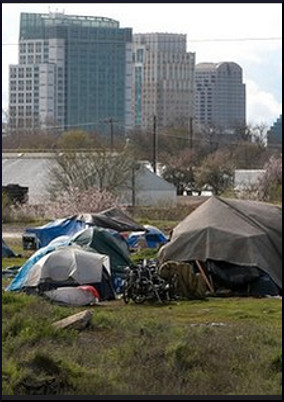
Two years ago, the print publication High Country News published a long and detailed story by Scott Bransford, concentrating on tent cities in three American cities. Fresno, California, was rated by the Brookings Institution (a public policy institute, or think tank) in 2005 as the poorest American city. At the time when this piece was written, Fresno was estimated to contain about 2,000 people experiencing homelessness, of whom about 40% were said to have been incarcerated at some point.

Seeing a statistic like that, don’t you wonder how many of those incarcerations were a direct result of homelessness? Society and its laws have created a diabolical revolving door. What a futile exercise of power it is, to throw people in jail for vagrancy and then point the finger and say, “Look how many of those homeless people have criminal records!”

In his classic article, Bransford interviewed some of the 200-or-so people camping on Union Pacific Railroad land in the midst of Fresno, in a “squatter village” known as Taco Flat or Little Tijuana. He wrote,

Just to the south, under a freeway overpass, there’s another camp of roughly equal size called New Jack City where most of the residents are black. Even more makeshift dwellings are scattered throughout the neighborhood nearby.

The reporter named “tough-love social policies” and heedless real estate speculation as the main factors that have knocked people out of their jobs and homes. Humans don’t always make the best choices, and even if they are paragons of individual and social behavior, they can still be brought low by illness, disability, flood, fire, misguided financial investments, and a thousand other misfortunes.

Bransford suggests that the United States take a look at the rest of the world, where he contends that the “predominant mode of city-making” is from the ground up, with cities that develop out of slums. He says,

Informal urbanism, characterized by unauthorized occupation of land, makeshift construction, and lack of public utilities, is how many burgeoning nations meet their housing needs. It thrives in places like Fresno, where poverty is endemic and there is a wide gap between rich and poor.

As in Sacramento and Portland, the dispossessed people of Fresno won a lawsuit a few years back. They filed suit against their city and state, for destroying their property in a series of “sweeps.” The city and state were told to pay $2.3 million for damages. Yes, that is a good thing. It’s wonderful that the people experiencing homelessness also experienced some justice for a change.

But think how much good that money might have done if it had been used earlier, and in a different way. If that green energy had been spent some other way, maybe those particular people would not have been camping out, being vulnerable to having everything taken from them by the police. Maybe they would have had jobs and/or places to live.

Money is green energy, so this is reminiscent of words written in another context, but with a parallel meaning, by Richard R. Troxell:

Clearly, homelessness has taken root in America. It is very sad when we spend such energy to deal with the evils of homelessness instead of creating pathways to end it.

Nowadays, Fresno is one of the hot spots extensively covered by New America Media, or NAM, an organization with connections to more than 3,000 ethnic media. The young, a similarly “invisible community,” are NAM’s other important constituency. Prime example: Rebecca Plevin’s “Young and Homeless.”

We recently talked about Ontario, California, in relation to the irrational stupidity of police “sweeps.” But there is plenty more to say about Portland, Oregon. That will be coming up next.

Reactions?

Source: “Camping for their lives,” Utne.com, 2009
Image by Peta-de-Aztlan, used under its Creative Commons license.
The Irrational Stupidity of Sweeps, Part 3

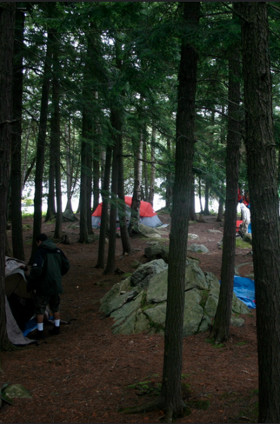
Back in June 2009, Lise Fisher, staff writer for The Gainesville Sun in Florida, told readers about the arrest of a man for stabbing two other men (both admitted to the hospital in critical condition) in the section of town known as Tent City.

For the same publication, less than a week later, Karen Voyles gave the next installment of the story. It was decided that Tent City must go. The inhabitants were forewarned and the squatter village was depopulated and deconstructed. An estimated 200 campers were rousted and, according to the police, “scattered to other places around Gainesville.”

Capt. Lonnie Scott told the reporter,

Some have moved to other parts of the property. Others have moved to other wooded areas as well. Our goal is to have as safe an environment as we can for everyone, and it wasn’t safe in the other location.

Yes, the authorities spun the evacuation and razing of Tent City as a beneficent measure, undertaken for the sake of the inhabitants. According to the official party line, the encampment had to be cleared out for the safety of the people living there — which makes about as much sense as the Vietnam war’s “destroy the village in order to save it” rationale.

Question: After the stabber had been taken into custody, where was the threat? Question: If a knife attack happened in your neighborhood, would the police order you to grab what you could carry and get the hell out, and then tear your house down?

Leaving aside questions of private property and numerous other issues that could be brought up here, the point is the pointlessness. Hold onto that thought, and you will see why. And, meanwhile, keep this number in mind: 1,500. That’s how many people were experiencing homelessness in the Gainesville area at the time.

Voyles tells us,

Commissioners officially declared the clearing of Tent City an emergency, which allows St. Francis House homeless shelter and soup kitchen to house 60 people a night, far more than the regularly permitted 35.

Wow, how exceedingly humane! The city granted people permission to squeeze in and double up at the shelter, while for every one of them, 24 others remained out there somewhere, on the streets or in the woods.

A few days later, another writer, Arupa Freeman, picked up on the story and covered it from her perspective, expressed in the title of the piece, “Gainesville turns a blind eye toward the homeless.” Many of the Tent City people had been told they could move to an adjoining piece of land. But almost immediately that parcel too was posted with “No Trespassing” signs and the people were given one week’s notice to vacate.

Freeman wrote,

Residents will now be dispersed almost entirely, making it incredibly difficult for the Home Van and other community groups to bring people the food, water and other supplies they so desperately need.

Freeman noted that probably half of the Tent City residents should, by right, have been in the hospital, suffering as they were from old age, many kinds of physical handicaps and illnesses, and disabling mental conditions. She went on to say,

I have seen cruelty and horror in my life, but the forced evacuation of Tent City is the worst atrocity I have ever personally witnessed.

The writer went into detail about the criminalizing, bulldozing, neglectful, and abusive ways of the local government, sparing a kind word only for Commissioner Jack Donovon, who had expressed the opinion that the Tent City people should be helped like any other refugees.

Freeman affirmed,

He is right. They are refugees created by a society that does not pay its workers a living wage, which has almost no low-income housing (the waiting list for Section 8 housing is literally years long!), and little access to health care for the poor… When you exclude people, isolate people, and treat people with hatred and indifference, you are creating hell. When you include people, love people, and take care of people, you are creating heaven.

Well, the more things change, the more they stay the same, and heaven has not been created yet. Two years later, in late June of 2011, Tent City was once again a going concern. Apparently, the property owner had a change of heart somewhere along the line and granted permission for certain people to live on the land. The problem is, other people keep showing up who are not wanted by either the owner or the current residents.

Another staff writer for The Gainesville Sun, Cindy Swirko, quotes police crime prevention specialist Officer Ernest Graham:

For a very long time, folks in Tent City were kind of a quiet group… We’re starting to see an increase in trouble there. If we see more violent crime there, we may have to take a different approach…

Indeed, two weeks before that ominous warning was issued, a Tent City woman was viciously beaten and admitted to the intensive care unit with massive injuries, in need of extensive reconstructive surgery. The attacker, also a Tent City resident, was charged with attempted murder. Will this lead to another clear-out and clean-up of the area? Another episode of disruption, as pointless and futile as the previous clear-outs and clean-ups? Another round of community-busting and the dispersal of people experiencing homelessness to other corners of the inhospitable city? Stay tuned.

Reactions?

Source: “GPD: Stabbing suspect had prior homicide convictions,” The Gainesville Sun, 06/03/09
Source: “Tent City homeless in limbo,” The Gainesville Sun, 06/09/09
Source: “Arupa Freeman: Gainesville turns a blind eye toward the homeless,” The Gainesville Sun, 06/16/09
Source: “Homeless are back in Tent City, and so is the crime,” The Gainesville Sun, 06/24/11
Source: “Homeless woman beaten in Tent City,” The Gainesville Sun, 06/04/11
Image by ryanlachica (ryan kuonen), used under its Creative Commons license.
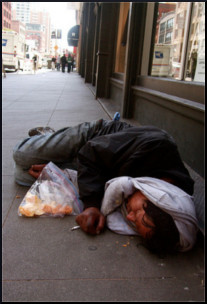
Property Theft in Sacramento

In May, Cynthia Hubert reported for The Sacramento Bee on a very unusual class-action lawsuit in which people experiencing homelessness sued Sacramento, California, for violating their constitutional rights by seizing and disposing of their property.

Spoiler alert: Here is the outcome of this legal action, the most significant line in the piece… On second thought, it’s not much of a spoiler. No surprise at all, in what is also the most predictable line:

But [Senior Deputy City Attorney] Trimm said he expects no immediate changes in city policy on the homeless.

You have to admire the guy. He tells it like it is, in a city with tough rules that prohibit staying in “undesignated areas” for more than 24 hours, and with apparently very little consideration for the belongings of street people anywhere, at any time.

One of the attorneys for the plaintiffs, Mark Merin, is known as a longtime advocate for the homeless. The suit was filed in 2009, against both city and county, and the county agreed to a $488,000 settlement payment. (A similar outcome recently occurred in Oregon.) But the city of Sacramento refused to settle.

Chance Trimm, who is, as we mentioned, Senior Deputy City Attorney, told the jurors a sad story about how, at times, it is unclear “what is usable property, and what is junk that no one wants.” He talks as if this whole lawsuit is about the necessity to clean up the disgusting messes that people leave behind when they vacate a tent city or a camp.

Does this make sense? Who leaves a tent city? Individuals may come and go, but everybody doesn’t clear out at once, unless there is a good reason, such as a sweep or cleanup, or whatever the current local terminology may be. If camps are tolerated, they tend to stabilize and grow. If a tent city is unpopulated, it’s because the people were forced to leave, and to leave their stuff behind.

If, as Trimm says, the problem is distinguishing usable property from junk, why not just ask somebody: “Hey, what about this tarp? Is this usable, or junk?” Problem is, in the circumstances he’s talking about, nobody is around to ask. The people have already been removed from the area and the police and their hirelings are busy throwing everything into dumpsters. In other words, the authorities try to make it sound like the issue is abandoned property of questionable usefulness.

But some of the plaintiffs are talking about having stuff taken right out of their hands. Linda McKinley recounted her experience of being awakened in the middle of the night when sleeping on the street.

The journalist reports,

‘They put all our stuff in a trailer,’ she said. ‘They just picked it up and threw it in there like garbage.’ Among the items she lost that day, she said, were her identification card, eyeglasses, medication, legal papers and photographs. ‘I just lost everything,’ she said. ‘It was really devastating. It was like losing my house in a sense. It was like I had been stripped.’

Senior Deputy City Attorney Trimm also testified that policies are applied equally to everyone, and that homeless people and their property are not treated differently from any other people or property. Could there have been a straight face in the courtroom?

Something else is wacky here. If a previous criminal record is allowed to be discussed, the purpose is to discredit a witness in the eyes of the judge and jury. During the course of these proceedings, the state got Marinthia Hunt to admit she’s had 10 tickets for illegal camping. Well, duh! That’s why the woman is here, because the trial concerns the things that happen to people on the streets, such as receiving tickets for, basically, the crime of breathing while homeless.

How did the lawsuit, the homeless against the city, turn out? Hubert reports,

Technically, homeless men and women… won a constitutional victory Tuesday in federal court. But following a mixed verdict in a civil lawsuit that questioned the city’s handling of property collected during police sweeps of homeless camps, it is unclear whether anything will change in the ongoing cat-and-mouse game between cops and the down and out.

The jury deliberated for more than five days and decided that the city had failed in the areas of proper notification about how to recover any seized belongings, and of implementation of whatever policies previously existed. But the jury rejected the claim that the city’s bad habits constitute a “long-standing custom and practice.”

Actually, the outcome sounds rather vague. Hubert writes,

The lawsuit did not ask for specific damages, and it remains unclear exactly what remedy the plaintiffs will seek. Instead, attorneys from both sides, with the court’s help, will try to sort out how the plaintiffs should be compensated for constitutional violations cited by the jury.

John Burdett writes novels about Sonchai Jitpleecheep, a Buddhist cop in Thailand, probably the only uncorrupted representative of the government in the entire country. His boss seems to keep him on the force as kind of a token, or mascot, or good-luck charm. For some reason, one of Hubert’s paragraphs about the Sacramento trial brings that fictional character to mind:

In his opening statement, Trimm said officers assigned to homeless issues have reached out to campers, at times helping them connect to services or transporting them to court dates. Officer Mark Zoulas, part of a city police team that homeless people fondly refer to as ‘Batman and Robin,’ will be the city’s star witness. ‘He cares for them. He cares for their safety,’ Trimm said of Zoulas.

Okay, some kind of ersatz comic book hero of an officer is helping the homeless and, incidentally, being used to put a good public relations face on the Sacramento police force. Meanwhile, a genuine, U.S. government-certified hero is robbed of the tangible reminders of his courage and sacrifice.

Hubert relates the story of plaintiff Kendall Gabriel:

[…] An Army veteran who said he lost a Silver Star and a Purple Heart for combat service during a police sweep downtown on Ahern Street in 2005. Gabriel, in a hallway interview, said police grabbed a bag containing those items and others and refused to give it back. It took him two years to replace the medals, he said, and the new ones are not engraved with his name like the originals.

Reactions?

Source: “Federal court hears from homeless about police seizing their possessions,” The Sacramento Bee, 05/10/11
Source: “Sacramento homeless gain mixed verdict on loss of possessions,” The Sacramento Bee, 05/25/11
Image by Risiger, used under its Creative Commons license.

The Irrational Stupidity of Sweeps, Part 2

St. Petersburg, Florida, is said to be making progress. Here is Associated Press writer Mitch Stacy’s account of the city’s recent history:

Four years ago, St. Petersburg’s struggles with some of the most rampant homelessness in the country reached a crescendo… The 2007 tent city raid… became a chamber of commerce nightmare after a cellphone video of officers slashing tents showed up on YouTube and TV… and didn’t make a dent in the growing crowd of people living on the city’s streets.

Then somebody came along with a better idea. Robert Marbut is a student of urban problems, with a record of turning things around in San Antonio, where he was mainly responsible for the existence of the huge Haven for Hope complex. He attributes St. Petersburg’s glut of people experiencing homelessness to several causes, one of the chief causes being the large number of veterans with mental health issues.

Marbut is quoted as saying,

What was incredible to me was how much money was being spent, how much energy was being spent and there was no success.

Marbut’s “velvet hammer” plan for the city is described by Stacy as:

… forcing the homeless off the streets but taking them someplace better — a sprawling, one-stop complex where people could be housed, fed and start to get help with mental illness, addictions and the other problems that put them on the streets. More than a just big shelter, it would be a ‘transformational campus…’

The complex is called Safe Harbor, and if there is a bed available there or at the St. Vincent de Paul shelter, the police can make a person either go to one of the shelters or go to jail. Of course, the solid citizens appreciate the cleaned-up aspect of the downtown area. But what about the folks who wind up at the transformational campus? That is a topic for another day.

Ontario, California, used to have quite a sizeable squatter village of some 400 people. Scott Bransford tells how, instead of destroying the camp, the authorities spent $100,000 to turn the place into something like a minimum-security penal institution.

The reporter says,

… [P]olice and code enforcement officers issued color-coded bracelets to distinguish Ontario residents from newcomers, then gradually banished the out-­of-towners. Then they demolished the shanties and set up an official camp with a chain-link fence and guard shack. Residents were issued IDs and a strict set of rules: no coming and going after 10 p.m., no pets, no children or visitors, no drugs, and no alcohol.

Dauntingly restrictive as all that sounds, not everyone has left. Some residents saw this change as a welcome respite from chaos and violence, looking at the place as a (very) low-rent version of a gated community. But for those excluded from the camp, the ones who just couldn’t take it (or had children or pets), there was nowhere else to go, except back to sleeping in cars or on some other vacant lot.

Everybody’s gotta be someplace,” and even a relatively gentle and non-hostile sweep disperses the residents to new venues, annoying the citizenry even more, offering even more opportunities for arrests. The reporter adds,

Many of these outcasts see the camp as a symbol of injustice, a cynical and inauthentic gesture of compassion… Whenever officials act to destroy or stifle them with punitive regulations, they not only wipe out the pride of residents struggling to survive, they also jettison a spirit of self-­reliance and innovation that could be harnessed to help meet the housing needs of the future.

In Watsonville, California, people experiencing homelessness have been living along the Pajaro River for decades, with the authorities breaking up their camps once or twice a year, and the camps being rebuilt, in a cyclical rhythm. Human waste pollutes the river, and now the state is leaning on the city to make monthly sweeps of the area.

Just last week, a major “cleanup” was carried out, as Donna Jones reports for the Santa Cruz Sentinel. The inhabitants, some of whom have lived along the riverbank for years, were reportedly given at least a couple days warning of the impending eviction. Volunteers were recruited from local drug and alcohol rehab programs to tear down structures and load dumpsters. Of course, the first question that springs to mind is, has anybody considered providing some toilet facilities, maybe even some washing facilities? This article doesn’t say.

Reactions?

Source: “St. Pete making progress with legions of homeless,” Santa Cruz Sentinel, 09/05/11
Source: “Camping for their lives,” Utne.com, 2009
Source: “Watsonville chases homeless out of river,” Santa Cruz Sentinel, 09/01/11
Image by majerleagues (Andrew Majer), used under its Creative Commons license.
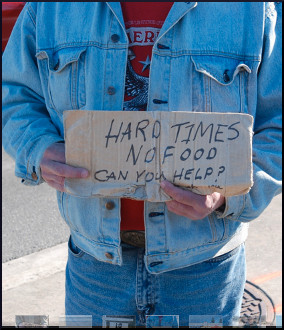
0

The Irrational Stupidity of “Sweeps”

There is a growing trend, and it’s not a good one. In some quarters, people experiencing homelessness are persecuted with a ferocity previously reserved for witches and suchlike. Here, in America, an amazing number of people live like refugees, and there is no sane reason to make the situation worse. But that is exactly what the sweeps, cleanups, and raids on homeless encampments seem perversely designed to accomplish.

If the goals are law and order, busting up a settlement doesn’t even begin to make sense in terms of law enforcement’s own logic. Traditionally, since the world began, all societies have labeled certain groups, whether religious, ethnic, or political, as undesirables. The tendency has always been to herd the underclass together, the better to keep an eye on them. The efficacy of this policy was demonstrated in Riverhead, New York, not long ago. From a purely authoritarian standpoint, containment is a definite advantage. That’s how ghettos got started.

Look at the gypsies. After hundreds of years, the authorities in Europe and Great Britain finally realized that it’s no use chasing the gypsies away, because they always come back. Okay, if you can’t make them stay away, the next best thing, in control terms, is to make them stay in one place. Tie down that troublesome crowd and insist that they act like regular people. And the push was on to legally require gypsies to take up permanent residence, or else.

They have sweeps in Atlantic City — 150 of them last year alone, says Associated Press reporter Wayne Parry. As of May 2011, an estimated 500 people were experiencing homelessness in the gambling capital. (Doesn’t it kind of make you wonder how many were ushered into homelessness by gambling habits? They helped the casinos get rich, and now the ungrateful businesses owners want to get rid of them.)

The local authorities hint that the Boardwalk sweeps could become even more frequent. That’s the disincentive for hanging around. But unlike many other places, Atlantic City arranges for people to go back to whatever their closest approximation of “home” is. Even if home is the Philippines, there’s a chance of getting the fare to return.

A privately administered shelter has run a Travelers Assistance Program for many years, but the promise of fresh funding from the state of New Jersey (reportedly close to $100,000) will take the relocation program to a whole new level. This is not, officials say, your typical “Greyhound therapy.”

Parry notes,

The program is strictly voluntary; no homeless person who wants to stay put will be forced to leave. And before anyone leaves, the mission will make sure there is someone back home who is willing to take them in.

On the other hand, as explained by the soup kitchen cook Joseph “Papa Joe” Bocchino,

You can’t just put them on a bus, send them back home and forget about it. That’s just moving people around, not solving the problem.

And there’s the rub. If, as the Atlantic City Travelers Assistance Program maintains, some people are really returning to places where they have a chance to make a go of it — great. Maybe, sometimes, it amounts to more than to just moving people around. Let’s hope so.

*****

Here’s a way to donate to your favorite cause, such as House the Homeless, just by shopping online. iGive’s literature says that since 1997, its members have donated $5,600,000 to more than 28,000 causes in this painless way. They promise “No pop ups, ads, toolbars, special search engine, or unwanted emails.” Check out iGive’s FAQ page (PDF) and Facebook Page, or just hop to the sign-up page and get started.

Reactions?

Source: “Atlantic City Looks to Bus More Homeless Back Home,” ABC News, 05/10/11
Image by Elvert Barnes, used under its Creative Commons license.
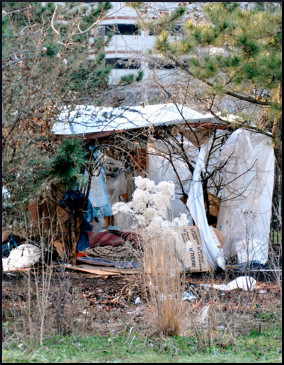
Labor Day

The Labor Day holiday was created, we are told, when things were very shaky and President Cleveland wanted to make a good show of reconciling with the labor movement. We could use a little of that now.

Labor, work, jobs, employment — what do we need to know about that area of life? Looking Up at the Bottom Line explores the idea of economic homelessness and how we can drastically reduce the level of taxpayer dependence on such supports as Food Stamps, TANF, General Assistance, Earned Income Tax Credits, etc. At the same time, the book points the way to stimulate the local housing industry all across America while shoring up new business startups and ending economic homelessness for over 1,000,000 minimum-wage workers.

Image by AR McLin, used under its Creative Commons license.
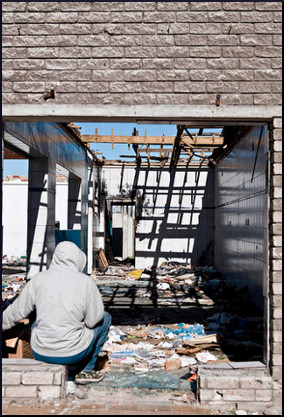
Sweeps and Cleanups

In mid-August, in Riverhead, New York, an emergency homeless shelter located in a motel was subjected to a raid that some local citizens called despicable and Gestapo-like. Ten officers and officials descended upon the shelter and searched 37 rooms, questioning the people and photographing their personal papers and other belongings. What kind of a judge would even sign a warrant for something like that?

Supposedly, the authorities were looking for overcrowded conditions and improvements made to the premises without permits, stuff that all sounds very above-board but offers no justification whatever for interrogating resident families and taking pictures of their ID and possessions. They ran everybody through the computer and arrested a woman for a traffic violation, who had to leave her baby at the shelter.

The raid was cunningly timed for just after the close of regular business hours on a Friday, making it impossible for homeless advocates to reach anyone with the power to stop it.

Around the same time, a camp in Oregon was broken up, as reported for The Register-Guard by Saul Hubbard. Eight people lived on the small bit of land behind an auto repair business, where contractors hired by the railroad cleared away brush that had previously obscured the site, and allowed their machinery to damage structures and tents.

Hubbard writes,

James Potts, director of operations for Northwest HazMat, said that the work was part of a monthlong cleanup all along the tracks. He added that their goal Thursday had been ‘to expose the area so that these people are inclined to leave.’

One of “these people,” a middle-aged woman, told the reporter that the small group of residents had banded together as neighbors, and that she felt safer in the bushes than in many designated homeless shelters. But the neighboring businesses and residents have always been opposed to the settlement, from which some disruptive behavior has originated.

The strange twist to this story is that the land where the camp sits is not owned by the railroad or the repair shop, but by an absentee landlord who leases it to St. Vincent de Paul, the long-term tenant and proprietor of an adjacent used-car lot. The charity organization has been extremely active in serving people experiencing homelessness in Eugene for many years.

The journalist says,

Charley Harvey, assistant executive director of St. Vincent de Paul of Lane County, said he was aware of the homeless camp but that ‘he didn’t have any problems with it.’… ‘Criminal activity has actually gone down there since people started staying there,’ he said.

Eugene, Oregon, once known as a progressive city with a model safe parking and homeless camping programs, is struggling, but is still known as a better place to be homeless than, for instance, neighboring Medford or Central Point.

Sometimes the displacement is not sudden or violent. Back in January, in Fort Worth, Texas, members of the Abbey Church helped a group of homeless people disassemble and clean up an encampment that had held about 50 tents. They had graciously been given a week’s warning by landowner XTO energy, which is more than such settlements have been granted in many other places.

Alex Branch reported for the Star-Telegram,

Volunteers are paying to put some campers in motels for the short term, Paredes said. The long-term plan is to pair the homeless people with churches whose members will try to help them overcome the problems that forced them onto the street.

*****

Here’s a way to donate to your favorite cause, such as House the Homeless, just by shopping online. iGive’s literature says that since 1997, its members have donated $5,600,000 to more than 28,000 causes in this painless way. They promise “No pop ups, ads, toolbars, special search engine, or unwanted emails.” Check out iGive’s FAQ page (PDF) and Facebook Page, or just hop to the sign-up page and get started.

Reactions?

Source: “Social services chief blasts Riverhead for ‘gestapo-like’ raid of homeless shelter,” Riverheadlocal.com, 08/13/11
Source: “Crew breaks up homeless camp,” RegisterGuard.com, 08/19/11
Source: “Church volunteers help clear away homeless camp near downtown Fort Worth,” Star-Telegram.com, 01/15/11
Image by Kevin Burkette, used under its Creative Commons license.
The Fairfax Model for the End of Homelessness

The Fairfax Connection recently published a guest editorial by Gerald E. Connolly, who represents the 11th Congressional District in the U.S. House of Representatives. Located in the state of Virginia, Fairfax County is one of the most affluent areas in the entire nation, so of course its problems would not be the same as, for instance, Los Angeles County’s. Still, it has declared a goal of ending homelessness by the year 2018.

In fact, Fairfax County, Connolly says, reported a 15% decrease in its homeless population over the last four years. He salutes this successful step toward ending homelessness, and attributes it to “a years-long effort by Fairfax County and its community partners.” His career also included 14 years on the board of the Fairfax County supervisors and, back when he was its chairman, he noticed something that may have surprised the supervisors, but does not surprise House the Homeless. Listen to this:

Particularly alarming was the fact that 60 percent of homeless adults in families already were employed.

Yes, Fairfax County in 2003 recognized the people we know as the economic homeless — they have jobs, they go to work, and they still can’t afford a place to live. Two basic reasons for that: they don’t make enough money and housing is too expensive.

Connolly saw a need for affordable housing units. In practical terms, keeping existing housing is just as good as putting up new housing. Either way, people have places to live.

He says,

Knowing government could not tackle these challenges alone, we convened separate community summits to devise action plans to preserve affordable housing and to prevent homelessness. The results were innovative partnerships with the non-profit, faith and business communities that yielded positive results, among them the preservation of more than 2,200 affordable housing units…

The plan approved by the Fairfax board of supervisors in March of 2008 is available online as a 64-page PDF file. Strong participation from the business community is one of its guiding principles. In his guest editorial, Connolly mentions how much benefit comes to the whole community when homelessness is reduced or eradicated. Hopefully, one of the things learned was that homeless people, too, are the community. Once you get the homeless back into housing, it’s kind of hard to tell them apart from anybody else. (That was a bit of dark humor, by the way.)

What was done in Fairfax County is worth looking at for replicability elsewhere. Rep. Connolly thinks so too, which is why he says,

I wish I could bring some of my colleagues from Congress to Fairfax to witness the value of these investments firsthand… At the federal level, I’ve sponsored legislation in the U.S. of Representatives to replicate the Fairfax model with the aim of preventing homelessness for all Americans.

*****

As House the Homeless points out, Congress is always talking about jobs, tax savings, social responsibility, and economic responsibility. As House the Homeless also constantly points out, the Universal Living Wage offers all these things. Now, every member of the Senate and the House of Representatives in Washington has received a copy of Looking Up at the Bottom Line, by Richard R. Troxell. All the state governors and the President himself have received copies of the book. Dare we hope that some might listen?

Reactions?

Source: “Guest Editorial: Partners in Ending Homelessness,” Fairfax Connection, 08/16/11
Image by JanahPhotography (Janah Hattingh), used under its Creative Commons license.

http://www.endhomelessnessblog.com/wp-content/uploads/2011/08/Unemployed-and-Homeless.jpg

Property Theft in Oregon

For people experiencing homelessness, holding onto belongings is difficult. The danger of theft is one reason why shelters are sometimes avoided. And if some desperate person doesn’t take things away, the authorities will. What is called a “cleanup” of an area naturally includes the theft and destruction of property that belongs to homeless people.

It may be property that no one else would want or care about, but if an old bedroll is the only thing a person owns, the loss is grave and significant. For the Portland Tribune, Kevin Harden reports on the “cleanup” of a homeless camp in Oregon, as seen through the eyes of a homeless man named Joel Tucker. Harden says,

In March 2010, while he was away from his campsite near Interstate 205 and Southeast 92nd Avenue, state employees swept through the area, rousting campers and gathering up Tucker’s tent, sleeping bag, clothing, medication and tarp. Tucker returned to discover that his few possessions were missing. It took him 21 days to retrieve them from a state storage facility…

A lot of homeless camps exist on property belonging to the Oregon’s Department of Transportation (and one school of thought says, if it belongs to the state, it belongs to the people — and why should the people not sleep on their own land?). So it’s mainly ODOT employees and law enforcement personnel who carry out these sweeps. One of the problems is that they are none too careful about separating belongings from junk or trash.

Harden says,

In mid-April, Tucker joined five other homeless people who are suing Oregon’s Department of Transportation, the Multnomah County Sheriff’s Office and up to 50 unidentified county and state employees in federal court for what they say were violations of their Fourth Amendment constitutional rights against unreasonable search and seizure and the failure of the agencies to follow state rules on storing personal items found in homeless camps.

The six plaintiffs, who camped in the same area, were relieved of such crucial items as ID cards and birth certificates, bus passes, bikes, sleeping bags, and a personal DVD player. Yes, that’s crucial too. When a person has nothing else, morale can stand or fall on a device that plays music and movies.

Plaintiff Jeff Nelson lost belongings in three different sweeps. Ironically, a few years back, while residing in the Multnomah County jail, he used to be on a crew of prisoners who were paid a dollar a day to “clean up” homeless encampments. There is something distasteful about the state (or the prison’s corporate owner) using inmates to do things against the interests of people who are, in some cases, even worse off, even though they are technically free.

It certainly went against the grain for Nelson. He told the journalist,

I felt that what happened at camps sweeps was stealing from people who had nothing to steal.

The Oregon Law Center represented the plaintiffs, who also wanted an injunction to prevent employees of the county from taking personal property without notice. Apparently, sometimes that “notice” thing just slips right by them. The state is supposed to keep property for at least a month, during which time it ought to be “reasonably available” to the owner who wants to claim it. Which doesn’t always happen, either. In April, Law Center attorney Monica Goracke did not foresee an out-of-court settlement.

But when Harden followed up this story less than a month ago, a settlement had been reached, and ODOT is to pay $14,000 for attorneys’ fees and $10,000 to be divided among the six homeless plaintiffs. The agency also agreed to make some better rules for campsite “sweeps” and tell its employees to follow them.

It seems like business entrepreneurs would be looking for ways to provide cheap storage for the homeless. The space could be anything from a small locker for a winter coat and boots, to whatever size a person could afford. Salvage yards must be full of old metal lockers removed from schools. Mini-storage cubicles must be one of the easiest types of buildings to build. It would be helpful if anyone reading this could point to an example of someone who is doing this.

Reactions?

Source: “Homeless campers sue to block state from destroying belongings,” The Portland Tribune, 04/27/11
Source: “ODOT settles federal lawsuit by homeless campers,” The Portland Tribune, 07/26/11
Image by Garry Knight, used under its Creative Commons license.